
In home care, clear and accurate documentation is essential to guarantee patient safety, legal compliance, and effective communication. You should log every medication given, note patient responses, and record any changes in condition promptly. Protect patient privacy by handling records confidentially and securely. Always sign and date your entries, be factual, and correct mistakes properly. Mastering these practices helps demonstrate professionalism and supports quality care—keep exploring to learn more about expert documentation techniques.
Key Takeaways
- Maintain clear, factual, and objective records of all patient interactions and care activities.
- Log medication details accurately, including dosages, times, and patient responses.
- Protect patient privacy by securing records and avoiding unnecessary personal information.
- Sign, date, and correct entries following organizational protocols to ensure record integrity.
- Keep documentation timely, complete, and compliant with legal and professional standards.
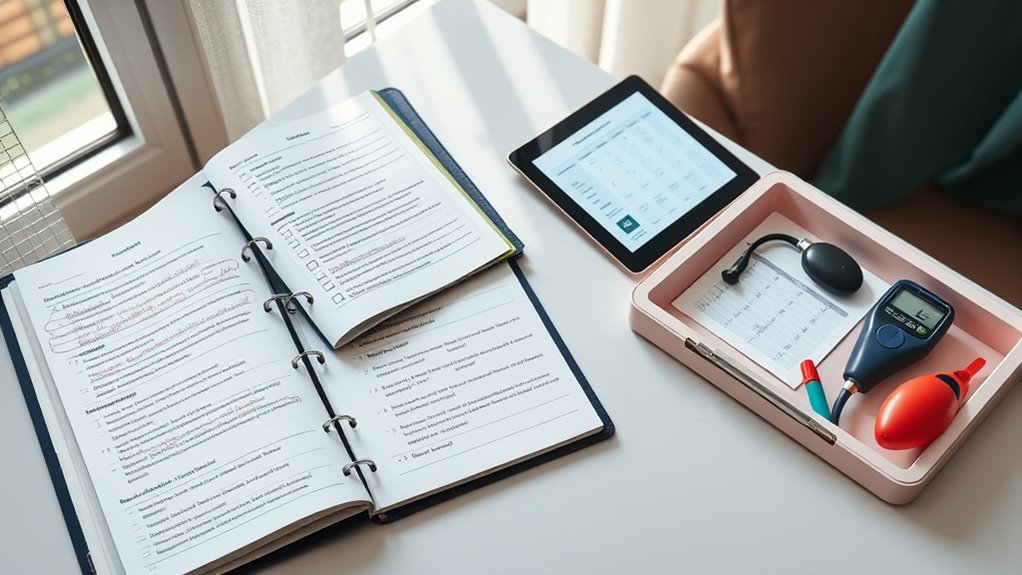
Effective documentation is essential for providing quality home care and ensuring compliance with legal and professional standards. When you accurately record details of each patient interaction, you create a clear record that supports safe and effective care. Proper documentation not only helps track progress but also protects you and your organization from potential legal issues. One critical aspect of this documentation is medication management. You need to log every medication administered, including dosages, times, and any observed effects. This ensures that medications are given correctly and helps prevent errors, which could have serious health consequences. Accurate medication records also facilitate communication with other healthcare providers, ensuring everyone is on the same page about a patient’s treatment plan. But medication management isn’t the only critical element; safeguarding patient privacy is equally vital. You must handle all documentation with confidentiality, following regulations like HIPAA. This means securing written records and electronic data, ensuring only authorized personnel have access. When documenting, be precise but also respect patient confidentiality—avoid including unnecessary personal details that aren’t relevant to care or legal requirements. Every entry should be factual, clear, and objective, avoiding assumptions or subjective opinions that could compromise the integrity of the record. When recording medication management details, use standardized terminology and abbreviations approved by your organization, so your notes are understandable and consistent. Respect patient privacy by maintaining a professional tone and avoiding any mention of sensitive information in public or unsecured areas. Remember, documentation isn’t just about ticking boxes; it’s about creating a trustworthy record that supports ongoing care and legal compliance. Be diligent about noting any changes in a patient’s condition, responses to medications, or concerns they express. If you make a mistake, follow your organization’s protocol for correction—never erase or obscure entries. Always sign and date your notes to verify their accuracy and timeliness. Additionally, keep records up to date, making entries promptly after each patient encounter, so details remain fresh and accurate. Good documentation practices demonstrate your professionalism and commitment to patient safety. By carefully managing medication records and respecting patient privacy, you not only ensure high-quality care but also protect yourself and your organization from legal or compliance issues. When you prioritize clear, accurate, and confidential documentation, you’re contributing to a safe, respectful, and legally sound home care environment. Incorporating best practices from reputable sources can further enhance the quality and reliability of your documentation.
Frequently Asked Questions
How Do I Handle Documentation Errors or Inaccuracies?
When you encounter documentation errors or inaccuracies, promptly rectify them by following your facility’s error correction procedures, such as crossing out errors with a single line and initialing. You should also add a note explaining the correction to ensure clarity. This process helps improve accuracy, maintains compliance, and prevents misunderstandings. Always prioritize timely correction to uphold the integrity of your documentation and provide the best care possible.
What Are the Legal Consequences of Poor Documentation?
Poor documentation is like a crumbling foundation; it can cause your entire case to collapse. If you neglect accurate records, you face legal liability, risking lawsuits or fines. Non-compliance with standards can also lead to disciplinary actions or loss of licensure. Maintaining precise, thorough documentation protects you legally, demonstrating adherence to regulations and safeguarding both your practice and your clients’ trust.
How Can I Ensure Patient Confidentiality in Records?
You can guarantee patient confidentiality by strictly following confidentiality protocols and privacy safeguards. Always lock paper records and store digital files securely, using strong passwords and encryption. Limit access to authorized personnel only, and avoid discussing patient information in public or unsecured areas. Regularly review your privacy policies and stay updated on best practices. By actively maintaining these safeguards, you protect patient rights and comply with legal and ethical standards.
What Are the Best Practices for Digital Documentation?
Imagine your digital documentation is a delicate butterfly—fragile yet beautiful. You should use secure cloud storage to keep it safe and digital templates to standardize entries, reducing errors. Always encrypt sensitive info and log access to track who views what. Regularly update passwords and back up data. These best practices guarantee your digital records stay protected and organized, just like that butterfly in a glass jar—beautiful, safe, and well-preserved.
How Often Should Documentation Be Updated or Reviewed?
You should review and update documentation daily to guarantee record accuracy and maintain the highest quality care. Regular documentation frequency helps catch errors early and keeps all records current. Make it a habit to verify details after each shift or patient interaction. Consistent updates not only improve record accuracy but also ensure compliance with regulations and support seamless communication among care team members.
Conclusion
Mastering documentation in home care isn’t just about filling out forms; it’s about building trust and ensuring safety. As you carefully record each detail, you create a foundation of reliability—like a sturdy bridge over uncertainty. Good documentation might seem small, but it’s the essential link to better care and peace of mind. Remember, your notes are more than words; they’re the crucial link between compassionate care and accountability. Keep practicing, and you’ll see the difference it makes.