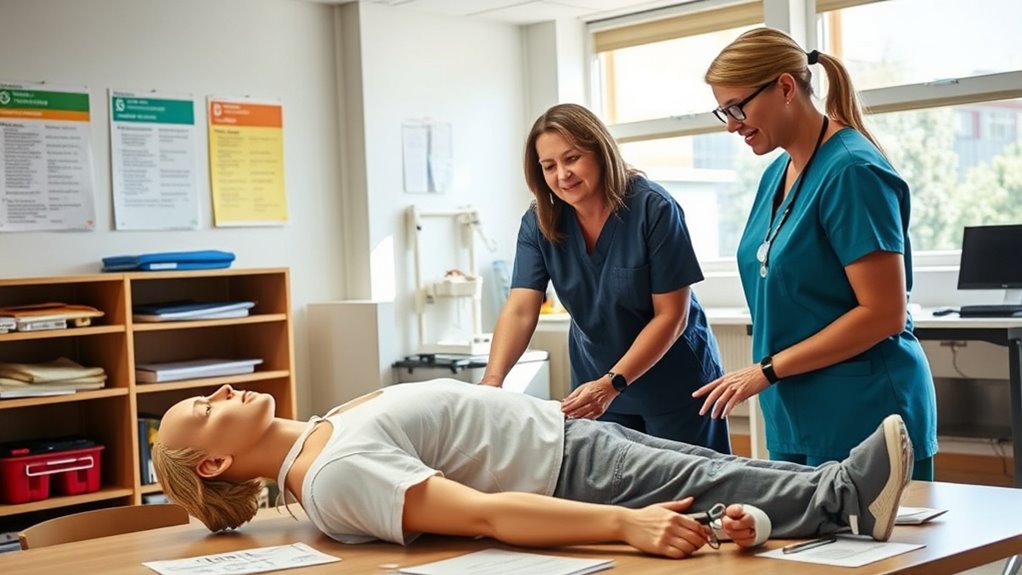

To become a certified caregiver, you need to complete specialized training that covers basic caregiving skills, safety protocols, and common health conditions. You’ll also need to pass a certification exam that tests your knowledge of care procedures and effective communication. Many programs include practical assessments to guarantee you can apply your skills confidently. With dedication, you’ll be well-prepared to provide compassionate support—keep exploring to learn everything involved in becoming certified.
Key Takeaways
- Complete a state-approved caregiver training program covering elder care techniques, safety, and communication skills.
- Pass a written exam and practical skills assessment to obtain certification.
- Gain hands-on experience through supervised caregiving opportunities.
- Pursue ongoing education to enhance skills and stay updated on best practices.
- Obtain and maintain certification as required by your state to work legally as a caregiver.

Becoming a certified caregiver is a rewarding process that opens doors to meaningful work in healthcare and senior support. As a caregiver, your role often involves providing elderly assistance, which requires not only practical skills but also compassionate communication. When working with seniors, you’ll need to be patient and attentive, ensuring they feel respected and understood. Developing strong patient communication skills is essential, as it helps build trust and fosters a positive environment for those you care for. Good communication also allows you to better understand their needs, preferences, and concerns, making your support more effective and personalized.
Certified caregivers provide compassionate assistance, building trust and understanding to improve seniors’ well-being.
To begin your journey, you’ll need to complete the necessary training programs. These programs typically cover basic caregiving skills, elder care techniques, and essential safety protocols. You may also learn about common health conditions affecting seniors, such as arthritis, dementia, and mobility issues. The training often emphasizes elderly assistance strategies, teaching you how to help with daily activities like bathing, dressing, and meal preparation, while maintaining dignity and independence. It’s important to choose a reputable training provider that offers extensive courses aligned with your state’s requirements.
Certification is a key step in establishing your credibility and increasing your job prospects. Most states require caregivers to obtain a certification or license, which usually involves passing a written exam that tests your knowledge of care procedures, safety measures, and elder-specific concerns. Some programs also include practical assessments to evaluate your hands-on skills. During this process, you’ll learn how to communicate effectively with patients, understand their emotional and physical needs, and respond appropriately in different situations. Your ability to convey empathy and clarity can profoundly impact the quality of care you deliver.
Once certified, continuing education can enhance your skills and keep you updated on best practices in elderly assistance. Many employers value ongoing training, especially in areas like patient communication and new care techniques. Improving your communication skills not only benefits your patients, but also makes your work more satisfying and less stressful. Effective communication helps you identify issues early, manage patient expectations, and foster cooperation from those you care for. Remember, your goal is to support seniors with compassion, patience, and professionalism.
Frequently Asked Questions
What Are the Key Skills Required to Succeed as a Caregiver?
To succeed as a caregiver, you need strong communication skills to connect effectively with clients and their families. Developing empathy allows you to understand and respond to their needs compassionately. Patience, adaptability, and attention to detail are also essential. By honing these skills, you create a trusting environment, improve care quality, and build meaningful relationships, making a positive difference in your clients’ lives every day.
How Long Does the Certification Process Typically Take?
The certification timeline typically takes anywhere from a few weeks to a few months, depending on your training duration and program pace. You’ll immerse yourself in dedicated coursework, complete hands-on training, and pass assessments along the way. Your training duration varies, but generally, it spans around 4 to 12 weeks. By staying focused and committed, you’ll soon be on your way to becoming a qualified, confident caregiver.
Are There Online Options for Caregiver Training Programs?
Yes, you can find online courses and virtual classes for caregiver training. These options let you learn at your own pace and from any location, making it convenient to fit training into your schedule. Many programs offer thorough modules covering essential caregiving skills, and some even include certification assessments online. Exploring reputable platforms ensures you receive quality instruction, helping you become a certified caregiver efficiently and flexibly.
What Are the Costs Associated With Certification and Training?
The costs for certification and training vary, but you should expect tuition expenses ranging from $200 to $1,000 depending on the program, while certification fees typically range from $50 to $200. Some online courses may be more affordable, but always verify what’s included. Remember, investing in quality training ensures you’re well-prepared and increases your chances of landing caregiving jobs.
How Can I Find Employment Opportunities After Certification?
Like a seasoned sailor steering the open sea, you can find caregiving jobs by exploring the job market and utilizing networking strategies. Check online job boards, agency websites, and local community centers for opportunities. Attend industry events and connect with other caregivers to expand your network. Referrals and word-of-mouth often lead to the best positions. Stay proactive, and you’ll find employment opportunities that match your skills and passion.
Conclusion
Now that you know the steps to become a certified caregiver, you’re ready to make a real difference in people’s lives. With dedication and the right training, you’ll be able to provide compassionate care and support to those in need. Remember, like Florence Nightingale once did in her time of upheaval, your kindness can bring hope and comfort. So, don your apron and step forward—your journey as a certified caregiver begins today.