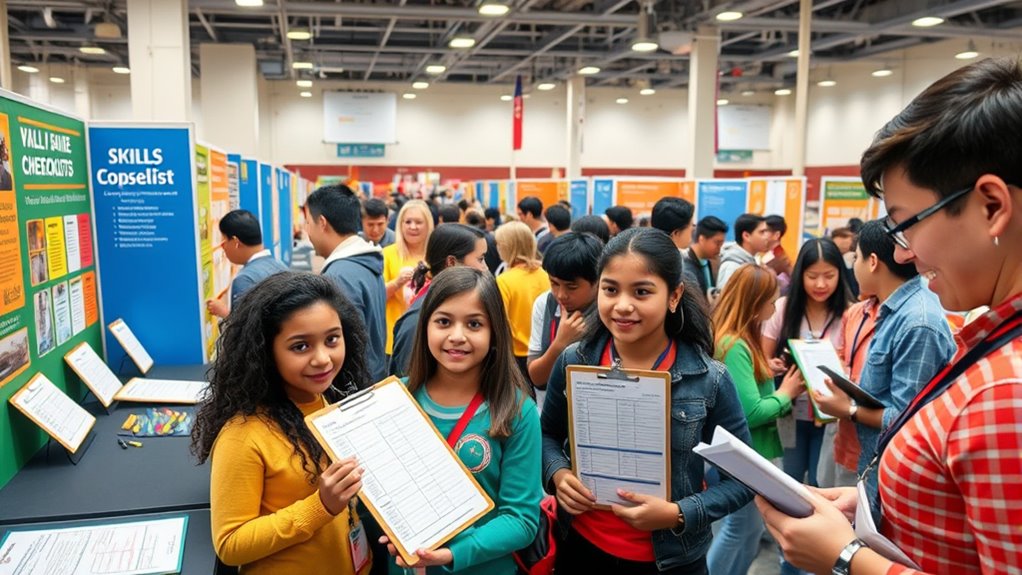

Competency checklists and skills fairs are valuable tools to assess your employees’ current skills and identify areas for improvement. Use competency checklists to evaluate specific abilities and pinpoint gaps early, guiding targeted training. Skills fairs then give your team practical opportunities to demonstrate their skills in real-world scenarios, boosting confidence and motivation. Combining these tools helps create a focused development plan—if you want to discover ways to implement them effectively, keep exploring.
Key Takeaways
- Competency checklists provide measurable evidence of employee skills, identifying gaps to inform targeted training efforts.
- Skills fairs offer practical, real-world opportunities for employees to demonstrate and refine their competencies.
- Combining assessment checklists with skills fairs enhances training relevancy and supports continuous competency development.
- Skills fairs serve as a platform for live skill demonstrations, boosting motivation and confidence through hands-on experience.
- Using competency checklists alongside skills fairs optimizes resource allocation and improves overall training program effectiveness.
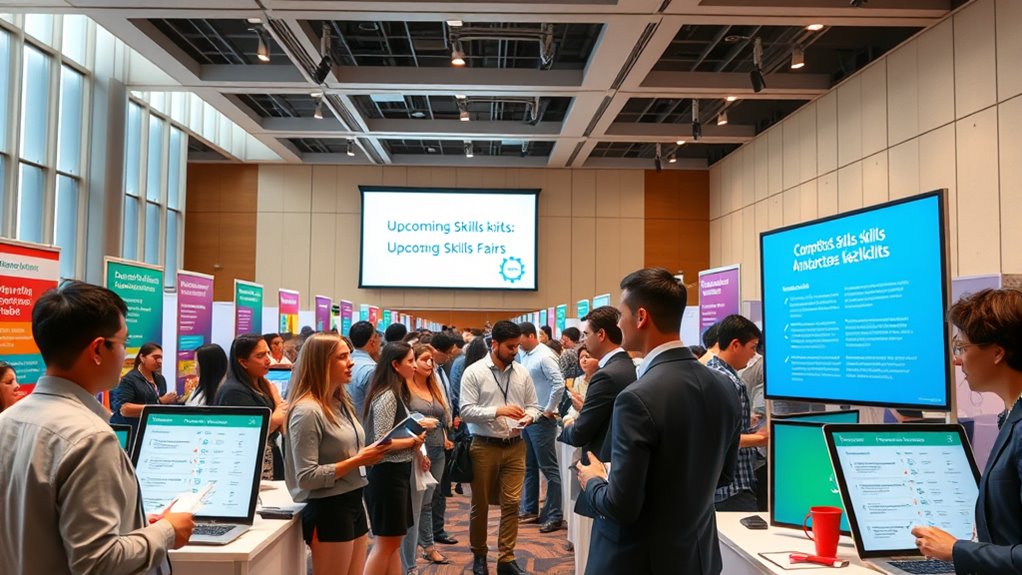
Have you ever wondered how organizations make certain their employees are truly prepared for their roles? One effective way is through the strategic use of assessment tools and training event planning. These methods help guarantee employees possess the necessary skills and knowledge to perform their duties confidently and competently. Assessment tools serve as a foundation, providing tangible evidence of an individual’s current capabilities. They can include tests, simulations, or competency checklists that evaluate specific skills and behaviors. By leveraging these tools, organizations can identify gaps in knowledge or performance early on, allowing targeted development efforts. When you incorporate assessment tools into your training strategies, you gain clarity about what employees need to succeed, making your training event planning more focused and efficient. Understanding the importance of projector technology can also enhance training environments, especially when visual aids are involved.
Training event planning becomes more impactful when it’s built around the insights gained from assessment tools. Instead of generic training sessions, you can tailor programs to address specific skill gaps identified during assessments. This targeted approach not only saves time and resources but also boosts employee engagement, as learners recognize the relevance of the training. As you plan these events, consider various formats—workshops, hands-on activities, or simulations—that align with the competencies you’re evaluating. The goal is to create an environment where employees can practice real-world skills in a controlled setting, reinforcing their learning and boosting confidence.
Skills fairs complement this process by offering a dynamic platform for employees to demonstrate their competencies in a practical setting. These events allow employees to showcase their skills, often in a competitive or collaborative environment, fostering a sense of accomplishment and motivation. During a skills fair, employees might participate in live demonstrations, problem-solving challenges, or role-playing scenarios. When you organize a skills fair, you provide a tangible opportunity for employees to apply what they’ve learned, while also giving managers a clear view of actual performance levels. The combination of assessment tools, targeted training events, and skills fairs creates a comprehensive framework for competency development.
Top picks for "competency checklist skill"
Open Amazon search results for this keyword.
As an affiliate, we earn on qualifying purchases.
Frequently Asked Questions
How Often Should Competency Checklists Be Updated?
You should update competency checklists at least annually to address performance gaps and make sure they stay relevant. Regular updates help you customize checklists to reflect current standards and practices, keeping your team’s skills aligned with organizational needs. By reviewing and revising them periodically, you prevent outdated criteria from affecting performance, promote continuous improvement, and ensure checklists accurately measure the competencies essential for success.
What Technology Tools Support Skills Fairs Effectively?
You can make skills fairs engaging by using virtual reality and gamification tools. Studies show that 75% of learners prefer immersive experiences, making VR a game-changer. Platforms like VR headsets and interactive apps create realistic scenarios, boosting hands-on skills. Gamification adds points, badges, and leaderboards, motivating participation. These technologies make skills fairs dynamic, memorable, and effective, helping you evaluate competencies in a fun, innovative way that resonates with today’s tech-savvy learners.
How Can Employee Engagement Be Boosted During Skills Fairs?
To boost employee engagement during skills fairs, you should implement gamification strategies that make participation fun and rewarding. Encourage peer recognition by highlighting achievements and facilitating positive feedback. You can also introduce team challenges or competitions to foster collaboration. By making activities interactive and acknowledging individual efforts, you create a motivating environment that keeps employees excited and involved throughout the event.
Are Competency Checklists Adaptable for Remote Teams?
Yes, competency checklists are adaptable for remote teams. In fact, 70% of organizations report increased remote collaboration when using tailored checklists. You can customize these checklists to suit your team’s specific skills and workflows, ensuring clear expectations. By integrating digital tools, you make it easy for remote employees to track progress and stay aligned. Flexibility in checklist design enhances engagement and skill development across dispersed teams.
What Metrics Measure Success in Skills Fairs?
You measure success in skills fairs through a mix of metrics like skills assessment scores and participant feedback. Skills assessment helps you gauge how well participants demonstrate their abilities, while feedback reveals their satisfaction and areas for improvement. Tracking these metrics enables you to refine future events, ensuring they effectively build skills and engage participants. Combining quantitative and qualitative data gives you a thorough view of the skills fair’s impact.
Conclusion
By embracing competency checklists and skills fairs, you open doors to growth, subtly guiding your journey toward excellence. These tools gently encourage continuous improvement and confidence, making your professional path smoother and more rewarding. With each step, you’ll find yourself more prepared and poised for success, even when the road ahead seems winding. Keep exploring these opportunities—they quietly shape you into the best version of yourself, ready to face whatever challenges come your way.