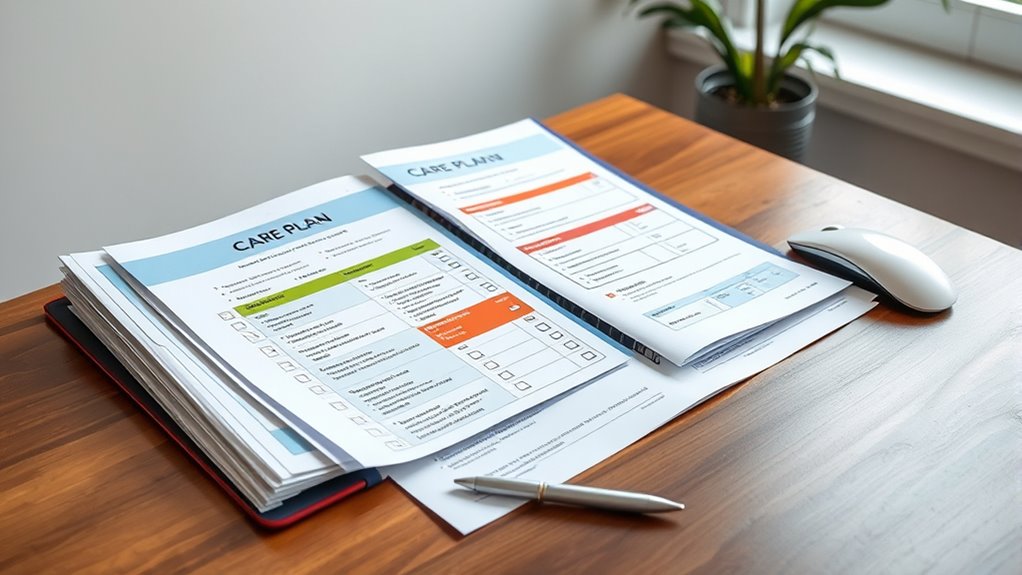

A good care plan template helps you systematically assess patient needs, set clear, measurable goals, and document personalized interventions. Look for sections that cover vital signs, medication, social factors, and patient preferences to guarantee thorough data collection. Standardized formats promote consistency, clear communication, and easy progress tracking over time. Using a well-structured template streamlines the planning process, supporting tailored, effective care—continue exploring to discover useful examples and best practices to enhance your approach.
Key Takeaways
- Standardized templates ensure comprehensive, consistent documentation of assessments, goals, and interventions for effective care planning.
- Templates typically include sections for medical history, current status, patient preferences, and measurable goals.
- Using sample care plan examples provides guidance on structuring goals and tracking progress over time.
- Well-designed templates facilitate interdisciplinary collaboration and communication among healthcare team members.
- Customizable care plan templates help tailor interventions to individual patient needs and evolving conditions.
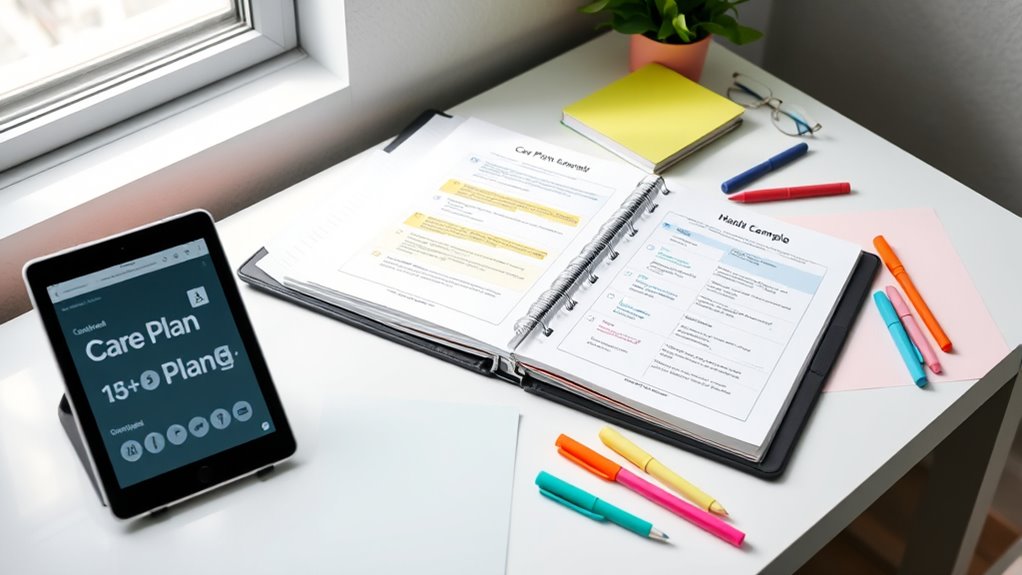
Are you looking for an efficient way to organize and deliver personalized care? Using a well-structured care plan template can make all the difference. At the heart of an effective care plan lies a thorough patient assessment. This step isn’t just about collecting data; it’s about understanding your patient’s unique needs, strengths, and challenges. When you conduct a comprehensive patient assessment, you gather critical information—medical history, current health status, psychosocial factors—that forms the foundation for tailored interventions. This detailed understanding enables you to set realistic and meaningful goals that align with the patient’s preferences and capabilities.
Goal setting is a crucial element of any care plan. Once you’ve assessed the patient thoroughly, you can identify specific, measurable objectives that guide the care process. Clear goals not only provide direction but also motivate both you and your patient to work collaboratively toward achievable outcomes. For example, if a patient’s assessment reveals mobility issues, a goal might be to improve walking strength within a designated timeframe. Setting such targeted goals ensures that care efforts are focused and purposeful, making it easier to evaluate progress over time.
A good care plan template streamlines this entire process by providing predefined sections for patient assessment and goal setting. When you fill out these sections systematically, you avoid overlooking vital details and ensure consistency across different cases. Templates often include prompts or checklists that help you capture all relevant information—such as vital signs, medication lists, social determinants, and patient preferences—making your assessments comprehensive and organized. This structure also simplifies communication among healthcare team members, who can quickly review the plan and understand the patient’s needs and goals.
Moreover, using a standardized template saves you time, allowing you to focus more on direct patient care rather than on formatting or remembering what to include. It also helps in tracking progress by providing a clear, written record of initial goals and subsequent achievements. As the patient’s condition evolves, the template guides you in updating goals accordingly, ensuring the care plan remains current and relevant. Additionally, understanding relationships and the potential impact of emotional bonds can influence how care plans are personalized, especially in cases involving emotional or psychological support.

Nursing Care Plans: Diagnoses, Interventions, and Outcomes
As an affiliate, we earn on qualifying purchases.
As an affiliate, we earn on qualifying purchases.
Frequently Asked Questions
How Often Should a Care Plan Be Reviewed and Updated?
You should review and update your care plan at least every six months, or more often if there are significant changes in the individual’s health or needs. Following a regular review schedule helps make certain the plan remains effective and relevant. Keep an eye on progress and any new challenges, adjusting the care plan frequency as needed to provide the best support and care.
Can Care Plan Templates Be Customized for Different Healthcare Settings?
Yes, you can customize care plan templates for different healthcare settings. By creating setting-specific templates, you guarantee personalized care tailored to each environment’s unique needs. This customization helps staff quickly access relevant information and deliver effective support. You should adapt these templates to reflect the specific goals, resources, and challenges of each setting, ensuring your care plans are practical, relevant, and promote the best outcomes for every patient.
What Are the Legal Requirements for Care Plan Documentation?
Think of your care plan as a legal map guiding your practice. You must guarantee legal compliance by accurately documenting patient needs, interventions, and outcomes. Adhere to documentation standards set by health authorities to avoid pitfalls. Failing to do so can lead to legal consequences. So, stay vigilant, keep records clear and thorough, and remember that proper documentation safeguards both your patients and your practice.
How Do I Ensure Patient Privacy in Care Plan Documentation?
To guarantee patient privacy in care plan documentation, follow confidentiality protocols diligently. Always restrict access to authorized personnel and avoid sharing information verbally or electronically with unapproved individuals. Use secure storage methods, such as password-protected files and locked cabinets, to safeguard physical and digital records. Regularly review your privacy practices and stay updated on legal standards to maintain compliance and protect your patients’ sensitive information effectively.
Are There Digital Tools Available for Creating and Managing Care Plans?
Think of digital tools as your trusty GPS for care plan management. They help you create, update, and organize plans efficiently. Yes, many digital platforms are available, offering features like secure storage, collaboration, and reminders. These tools streamline your workflow, reduce errors, and guarantee patient privacy. By integrating digital solutions, you stay on the right path, providing consistent, well-managed care that adapts to your patients’ evolving needs.

Nurse Head To Toe Assessment Sheets: Record Patient Details and full body Assessments | 120 Pages.
As an affiliate, we earn on qualifying purchases.
As an affiliate, we earn on qualifying purchases.
Conclusion
Using care plan templates might seem like a shortcut, but they’re really tools to help you stay organized and provide better care. You might worry they limit your creativity or personal touch, but with a good template, you can customize to suit each person’s needs. Think of it as a helpful starting point that frees you up to focus on what truly matters—making a difference in someone’s life. You’ve got this!

Care Plan Template Notebook For Nursing: A Blank Template To Assist Healthcare Professionals In Efficiently Organizing And Documenting Care Plans For Their Patients
As an affiliate, we earn on qualifying purchases.
As an affiliate, we earn on qualifying purchases.

Laplink PCmover Ultimate 11 – Migration of your Applications, Files and Settings from an Old PC to a New PC – Data Transfer Software – With Optional Ultra-High-Speed USB 3.0 Transfer Cable – 2 License
FAST AND EFFICIENT TRANSFER OPTIONS – Seamlessly migrate your PC with Laplink’s PCmover, now including 2 licenses of…
As an affiliate, we earn on qualifying purchases.
As an affiliate, we earn on qualifying purchases.