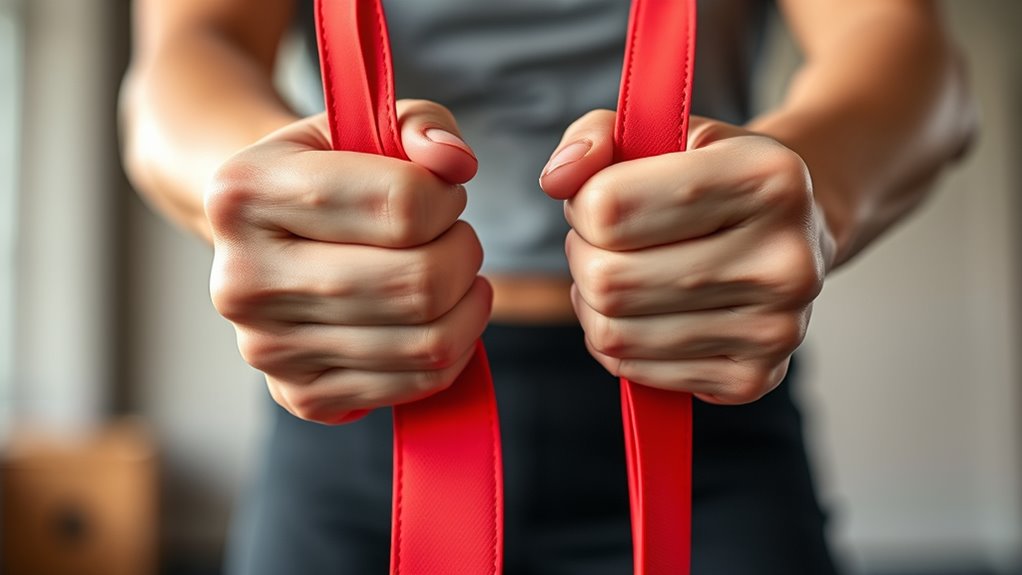

To use resistance bands safely, focus on maintaining proper technique with controlled, slow movements and keep your core engaged. Regularly inspect your bands for tears or overstretching and secure them properly to stable anchors or your body. Start with lighter resistance and gradually increase as you master the correct form. Always warm up beforehand, stretch afterward, and listen to your body to prevent injuries. Keep these tips in mind to enhance your workouts and reduce risk—more details can help you stay safe.
Key Takeaways
- Regularly inspect resistance bands for tears, wear, or overstretching before each use.
- Secure bands properly to stable anchors or your body to prevent slips or snaps.
- Use resistance levels appropriate for your fitness to avoid overstretching and injury.
- Warm up muscles beforehand and cool down with stretching after workouts for safety.
- Maintain proper technique with controlled movements to target muscles effectively and reduce injury risk.

Resistance bands have become a popular and versatile fitness tool because they offer an effective way to strengthen muscles, improve flexibility, and enhance overall workout routines. However, to get the most benefit and avoid injury, it’s essential to prioritize proper technique during every exercise. Using resistance bands incorrectly can lead to strains, pulls, or other injuries, which is why understanding how to perform movements correctly is crucial. Before you start, take the time to learn the proper form for each exercise, focusing on controlled movements rather than rushing through reps. Keep your core engaged, maintain good posture, and avoid jerky motions—these habits help ensure you’re targeting the right muscles and reduce the risk of injury.
Proper technique is especially important when using resistance bands because they provide tension that can amplify the intensity of your workouts. If you don’t maintain control, the band can snap back or pull your body into awkward positions, increasing the chance of injury. For example, when performing bicep curls, keep your elbows close to your sides and avoid swinging your arms. During leg exercises, ensure your knees are aligned with your toes and that you aren’t overextending your joints. Taking the time to master these movements helps you engage the correct muscle groups effectively and safely. Remember, slow and deliberate movements are often more beneficial than fast, uncontrolled ones.
Injury prevention with resistance bands hinges on inspecting your equipment regularly. Check for signs of wear, tears, or overstretching before each workout, as damaged bands can snap unexpectedly. Always secure the band properly to a stable anchor point or your body to prevent unexpected slips. Additionally, use appropriate resistance levels; starting with lighter bands allows you to focus on mastering proper technique before progressing to heavier resistance. Never force a movement or push through pain, as this can lead to strains or joint issues over time. Incorporating biodiversity principles, such as using eco-friendly and sustainable equipment, can also contribute to a healthier environment while supporting your fitness routines.
Warm up before every session to prepare your muscles and joints for exercise, and cool down afterward to promote recovery. Incorporate stretching to enhance flexibility and reduce muscle tightness. Remember, consistency and mindfulness are key to safe resistance band workouts. By paying attention to proper technique, regularly inspecting your equipment, and listening to your body, you greatly reduce the risk of injury and maximize the effectiveness of your training. Resistance bands are a fantastic tool, but only when used correctly, they can support your fitness journey safely and efficiently.

WHATAFIT Resistance Bands, Exercise Bands,Resistance Bands for Working Out, Work Out Bands with Handles for Men and Women Fitness, Strength Training Home Gym Equipment
DIFFERENT COLOR ADJUSTABLE RESISTANCE BANDS: The exercise bands come with 5 different resistance level 10lbs, 20lbs, 30lbs, 40lbs…
As an affiliate, we earn on qualifying purchases.
As an affiliate, we earn on qualifying purchases.
Frequently Asked Questions
Can Resistance Bands Replace Traditional Weightlifting?
Resistance bands can replace traditional weightlifting for many exercises because of their band versatility and ability to engage muscles effectively. They allow you to target specific muscle groups with controlled movements, making them a great alternative or supplement. While they might not fully replace heavy lifting for building maximum strength, they enhance muscle engagement and flexibility, making them a versatile tool suitable for various fitness levels and routines.
How Do I Know if My Resistance Band Is Safe to Use?
Think of your resistance band as a trusted partner—if it shows visible damage, it’s like a cracked foundation; danger lurks. To guarantee safety, check the band material for tears, fraying, or discoloration. If you notice any visible damage, discard the band immediately. Only use bands that are intact, flexible, and free of signs of wear to prevent accidents and keep your workouts safe and effective.
Are There Specific Resistance Bands for Different Fitness Levels?
Yes, there are resistance bands designed for different fitness levels, including beginner options. You should choose bands with appropriate progression levels to match your strength and experience. Starting with lighter resistance helps prevent injury and builds confidence. As you progress, you can switch to bands with higher resistance. Always listen to your body and gradually increase resistance to make sure safe, effective workouts suitable for your fitness journey.
What Are Common Mistakes to Avoid When Using Resistance Bands?
You should avoid common mistakes like band slippage and improper anchoring, which can lead to injuries. Always check that the band is securely anchored before starting your workout, and confirm it fits snugly without being too tight. Keep your movements controlled and avoid overstretching the band. These precautions help prevent accidents, maximize effectiveness, and keep your workout safe and productive.
How Should I Store Resistance Bands to Maintain Safety?
To maintain safety, you should store your resistance bands properly by keeping them in a cool, dry place away from direct sunlight. Avoid sharp objects that could puncture or damage the bands. Proper storage helps with band maintenance, preventing cracks and tears that could cause injury. Roll or hang your bands neatly to avoid unnecessary stretching or deformation, ensuring they stay effective and safe for future workouts.

Pull Up Assistance Bands, 5-Level Resistance Bands for Working Out, Pull Up Bands for Men & Women, Exercise Bands for Full-Body Training, Fitness, Physical Therapy, Stretch Workout Bands at Home, Gym
Elastic Rhythm, Quality Life: The resistance bands is made of selected high elasticity and non-slip TPE material, which…
As an affiliate, we earn on qualifying purchases.
As an affiliate, we earn on qualifying purchases.
Conclusion
Remember, resistance bands are like loyal allies on your fitness journey—powerful yet gentle. Use them with care, like tending a delicate garden, and they’ll reward you with strength and confidence. Keep your movements steady, your form mindful, and respect the tension they offer. When you treat them with respect, they’ll help you build a resilient body, a symphony of movement that flows smoothly. Embrace safety, and your progress will sing loud and clear.

Heavy Duty Door Anchor for Resistance Bands Exercise Fitness Bands Accessories Resistance Exercise Band and Resistance Tube Anchor Strap. (BLACK7)
Fitness Anytime, Anywhere – allows you to train anytime, anywhere. Use this secure resistance band strap to attach…
As an affiliate, we earn on qualifying purchases.
As an affiliate, we earn on qualifying purchases.
WHATAFIT Resistance Bands, Exercise Bands,Resistance Bands for Working Out, Work Out Bands with Handles for Men and Women Fitness, Strength Training Home Gym Equipment
DIFFERENT COLOR ADJUSTABLE RESISTANCE BANDS: The exercise bands come with 5 different resistance level 10lbs, 20lbs, 30lbs, 40lbs…
As an affiliate, we earn on qualifying purchases.
As an affiliate, we earn on qualifying purchases.