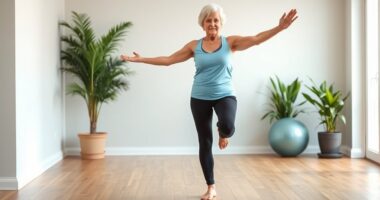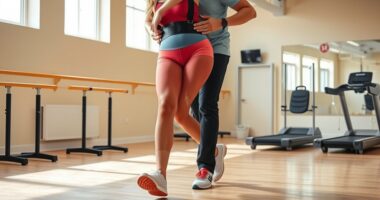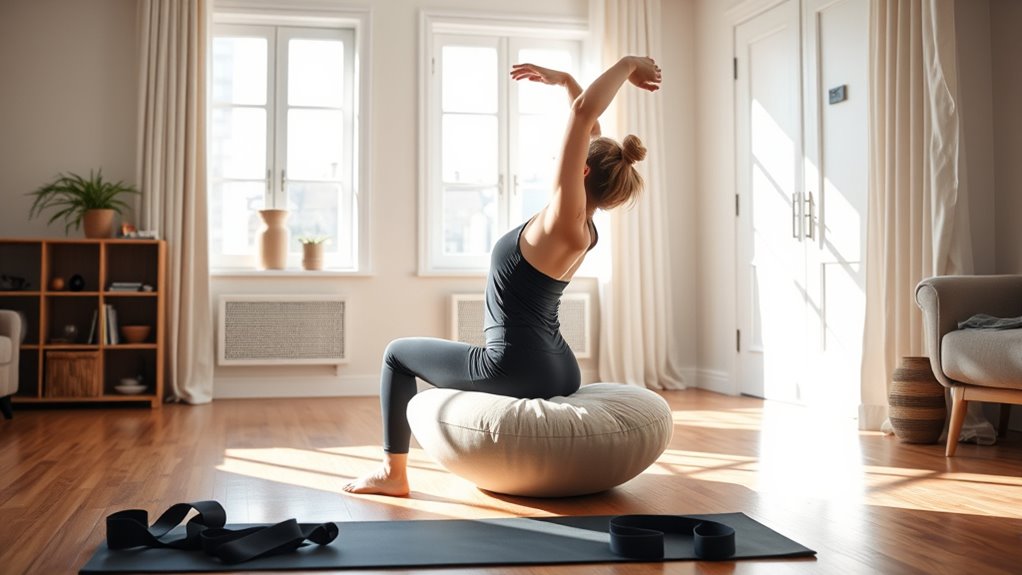

You can easily perform range of motion exercises at home to boost flexibility, prevent injuries, and improve joint health. Focus on gentle, controlled movements that target all major joints and muscles, like shoulders, hips, knees, and neck. Warming up beforehand and holding stretches for 15-30 seconds help maximize benefits. Staying consistent and listening to your body are key. Keep exploring for more tips to create a safe, effective routine you’ll enjoy.
Key Takeaways
- Incorporate gentle, controlled stretches for major joints like shoulders, hips, knees, and neck to improve flexibility and mobility.
- Always warm up with light activity, such as walking or marching in place, before stretching to prevent injury.
- Hold each stretch for 15-30 seconds, avoiding pain, and breathe steadily to enhance effectiveness.
- Maintain consistency with daily or regular stretching routines to achieve optimal benefits.
- Listen to your body, modify exercises as needed, and avoid overstretching or forcing movements.

If you’re looking to maintain or improve your mobility, range of motion exercises you can do at home are a simple and effective way to stay active. These exercises help keep your joints flexible, reduce stiffness, and can even prevent injuries. One of the main benefits of stretching, a key component of these exercises, is that it enhances blood flow to your muscles and joints, which promotes faster recovery and improves overall function. Regular stretching can also boost your posture, decrease muscle tension, and elevate your mood by releasing endorphins. Plus, it’s a low-cost activity that doesn’t require special equipment, making it accessible to everyone.
However, it’s important to be aware of common mistakes that can hinder your progress or lead to injury. One of the most frequent errors is pushing yourself too hard or stretching beyond your comfort zone. When you stretch too aggressively, you risk straining your muscles or damaging your ligaments, which can set back your mobility goals rather than support them. Instead, focus on gentle, controlled movements, and listen to your body. Another common mistake is holding a stretch for too long, especially if it causes pain. While holding stretches for about 15-30 seconds is generally effective, pushing into pain can cause muscle tears or joint issues. Always aim for a gentle tension, not pain, and ease out if you feel discomfort.
Another mistake to avoid is neglecting proper warm-up before stretching. Cold muscles are less pliable and more prone to injury, so take a few minutes to do light cardio, like walking or marching in place, before you begin your stretching routine. Additionally, many people fail to include a balanced approach, neglecting certain joints or muscle groups. To maximize your range of motion, make sure to target all major areas — shoulders, hips, knees, and neck — in your routine. Consistency is key, so aim to incorporate stretching exercises into your daily schedule rather than sporadically.

Trideer Stretching Strap Yoga Strap Physical Therapy for Home Workout, Exercise, Pilates and Gymnastics, 10 Loops Non-Elastic Stretch Bands with Aesthetic Packaging for Women & Men (Black)
Long Lasting Premium Quality: Made of sturdy polypropylene, this tough yoga strap stands out in a crowd by…
As an affiliate, we earn on qualifying purchases.
As an affiliate, we earn on qualifying purchases.
Frequently Asked Questions
Can Children Safely Perform Range of Motion Exercises at Home?
Yes, children can safely perform range of motion exercises at home if you prioritize child safety and supervise their activity. Always demonstrate proper techniques, guarantee they understand each movement, and watch closely to prevent injury. Keep exercises gentle and appropriate for their age and ability. By supervising closely and focusing on child safety, you help your child gain flexibility without risking harm.
How Do I Modify Exercises for Joint Pain or Arthritis?
You can modify exercises for joint pain or arthritis by focusing on joint-friendly modifications and arthritis-friendly exercises. Use gentle, low-impact movements that don’t cause pain, like stretching or water-based activities. Incorporate tools like resistance bands for support, and avoid high-impact or repetitive motions. Listen to your body, and rest if you feel discomfort. Always consult a healthcare professional for personalized advice and to make certain your modifications are safe.
Are There Specific Devices to Assist Home Range of Motion Exercises?
Yes, there are assistive devices and exercise aids designed to help you with home range of motion exercises. These tools, like stretch bands, hand grips, or foam rollers, make movements easier and safer, especially if you experience joint pain or arthritis. Using these devices can improve your flexibility and prevent strain. Always choose aids suitable for your specific needs and consult your healthcare provider for proper guidance.
How Often Should I Perform These Exercises for Optimal Benefits?
Think of your body as a garden that needs daily watering. For ideal routine, you should perform range of motion exercises at least 3-5 times a week. Consistency is key, so spread out your sessions evenly. This frequency helps keep your joints flexible and healthy. Remember, regular exercise acts like sunlight, nurturing your mobility and preventing stiffness. Stay committed, and your body will thank you with renewed ease and strength.
Can Seniors Do These Exercises Without Supervision or Guidance?
Yes, seniors can do range of motion exercises independently if they understand proper techniques and follow safety precautions. You should start slowly, avoid pushing through pain, and use sturdy support if needed. It is crucial to consult your healthcare provider beforehand and consider initial guidance from a physical therapist. By staying attentive to your body and adhering to safety measures, you can safely perform these exercises on your own.
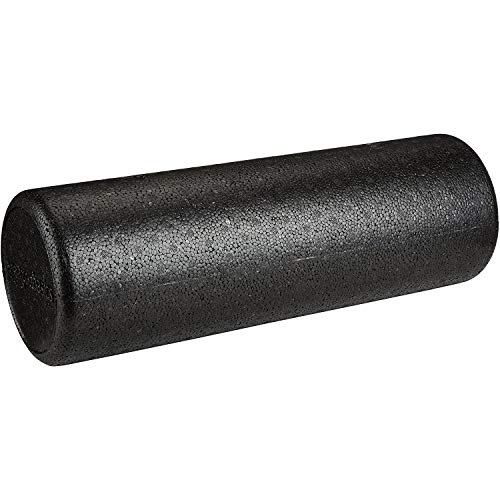
Amazon Basics High-Density Foam Roller for Exercise and Recovery, 18 Inches, Black
High-density foam roller in Black
As an affiliate, we earn on qualifying purchases.
As an affiliate, we earn on qualifying purchases.
Conclusion
Incorporating range of motion exercises at home can markedly improve your flexibility and reduce stiffness. Did you know that consistent movement can increase joint mobility by up to 30% in just a few weeks? By dedicating a few minutes daily, you’ll boost circulation, prevent injuries, and feel more energized. So, stay committed, listen to your body, and enjoy the benefits of staying active right from your living room!

Amazon Basics 1/2 Inch Extra Thick Exercise Yoga Mat with Carrying Strap for Home Workouts and Fitness, 74" x 24", Black
Extra thick, cushy floor mat in Black for yoga, gym, and everyday exercise
As an affiliate, we earn on qualifying purchases.
As an affiliate, we earn on qualifying purchases.

OPTP The Original Stretch Out Strap with Exercise Book, for Flexibility and Mobility Exercises. Stretch Out Straps for Physical Therapy, Yoga Stretching Strap and Knee Therapy Strap. Made in the USA
Top Choice Stretching Strap for Physical Therapy: The OPTP Stretch Out Strap was the first stretching strap on…
As an affiliate, we earn on qualifying purchases.
As an affiliate, we earn on qualifying purchases.