

To keep your wheelchairs and walkers in good condition, regularly inspect and clean all moving parts, wheels, and contact points to prevent dirt and corrosion. Check batteries and replace them before they fail, and guarantee all screws and bolts are tight. Keep the frame well-lubricated and aligned for safe maneuvering. Performing these routine checks helps extend your mobility aid’s lifespan and ensures safe, reliable use—continue exploring for more tips to maintain your independence.
Key Takeaways
- Regularly inspect and clean batteries, contacts, and connections to ensure optimal performance and longevity.
- Check wheel alignment and tire wear to enhance safety and maneuverability.
- Lubricate moving parts and tighten loose screws or bolts for smooth operation.
- Keep all components clean and free of dirt to prevent wear and damage.
- Perform routine safety checks, including brake function and component integrity, to prevent breakdowns.
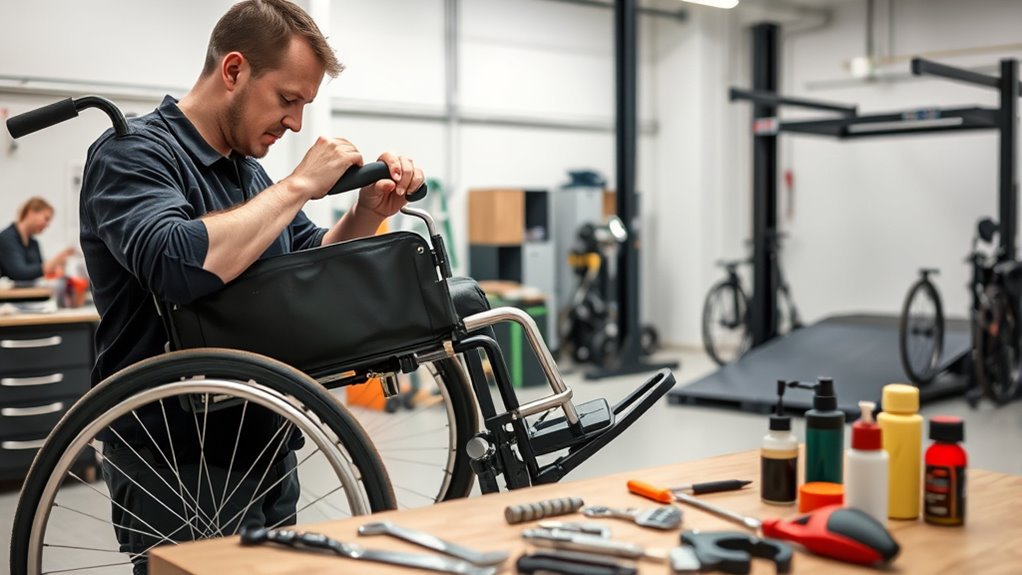
Maintaining mobility aids is indispensable for ensuring safety and prolonging their functionality. Whether you rely on a wheelchair or a walker, proper upkeep prevents unexpected breakdowns and keeps you moving comfortably. One of the most pivotal aspects of maintenance involves checking the batteries regularly, especially if you use an electric wheelchair. Over time, batteries lose their ability to hold a charge, which can limit your mobility or leave you stranded. To avoid this, schedule routine battery replacements before they fail completely. Look out for signs like reduced travel range or difficulty in charging, and don’t wait until the battery completely dies. Replacing the battery on time ensures your electric wheelchair operates smoothly and safely. It’s also important to keep the battery contacts clean and secure, as corrosion or loose connections can impair performance.
Alongside battery care, paying attention to wheel alignment is equally critical. Misaligned wheels can cause uneven wear, reduce your device’s stability, and make maneuvering more difficult. Regularly inspect the wheels for signs of uneven tread or wobbling. If you notice that your wheelchair or walker pulls to one side or you feel unusual vibrations while moving, it’s a sign that the wheels may need realignment. Proper wheel alignment not only extends the lifespan of your mobility aid’s tires but also improves safety by promoting better control. Many devices have adjustable wheels, so you might be able to perform minor adjustments yourself, but don’t hesitate to seek professional help for precise wheel alignment. Properly aligned wheels ensure smoother rides, less strain on your arms or legs, and fewer repairs down the line. Regular maintenance, including battery management, is key to staying safe and independent with your mobility aid.
In addition to batteries and wheel alignment, keep all moving parts well-lubricated and free of debris. Regularly check the frame for cracks or loose parts that could compromise safety. Cleaning your mobility aid after use prevents dirt and grime from accumulating, which could cause unnecessary wear. Tighten any loose screws or bolts promptly, as loose components can lead to instability. Also, inspect the brakes and ensure they engage properly—this is indispensable for safe stopping, especially on inclines or uneven surfaces. Performing these routine checks and keeping up with scheduled maintenance can save you money and frustration in the long run. Remember, your mobility aid is an extension of your independence, so taking good care of it ensures you stay safe and mobile for years to come.
electric wheelchair battery replacement
As an affiliate, we earn on qualifying purchases.
As an affiliate, we earn on qualifying purchases.
Frequently Asked Questions
How Often Should I Replace Worn-Out Wheelchair Parts?
You should replace worn-out wheelchair parts as needed, typically following a regular replacement schedule. Check your spare parts regularly for signs of wear and tear, such as cracks or looseness. If any component feels unstable or damaged, swap it out immediately to guarantee safety and comfort. Maintaining a proactive approach helps extend your wheelchair’s lifespan and keeps it functioning smoothly, so don’t wait until a breakdown occurs.
Can I Perform Maintenance on My Mobility Aids Myself?
Yes, you can perform maintenance on your mobility aids yourself, but proceed with proper precautions. DIY tips include checking for loose bolts, inspecting wheels for wear, and cleaning surfaces regularly. Always follow safety precautions, like disconnecting power or seeking professional help for complex repairs. Stay safe, be gentle, and keep your aids in top shape by maintaining routine inspections and addressing issues promptly.
What Signs Indicate My Walker Needs Professional Repair?
You should schedule professional repair if your walker shows signs like loose or wobbly parts during a walker inspection, difficulty folding or unfolding, or squeaking noises. If the wheels don’t spin smoothly or if the brakes don’t hold securely, these are clear repair indicators. Ignoring these signs can compromise your safety, so don’t hesitate to seek expert help promptly to guarantee your walker remains reliable and safe for use.
Are There Specific Cleaning Products Recommended for Mobility Aids?
You can use disinfectant wipes and mild soap to clean your mobility aids safely. Some worry about damaging their equipment, but gentle products won’t harm most materials. Disinfectant wipes are convenient for quick cleaning, while mild soap and water work well for regular maintenance. Just avoid harsh chemicals or abrasive scrubbers. This keeps your walker or wheelchair hygienic and in good condition without risking damage.
How Do I Safely Store Mobility Aids When Not in Use?
You should store your mobility aids in a dry, clean area away from moisture and extreme temperatures. Make certain of secure placement by placing wheelchairs and walkers on level surfaces to prevent tipping. Use storage options like wall mounts or sturdy racks for added safety. Keep them away from high traffic zones to avoid accidents. Regularly check storage conditions to maintain storage safety, guaranteeing your aids stay in good condition and ready for use whenever needed.
walker wheel alignment kit
As an affiliate, we earn on qualifying purchases.
As an affiliate, we earn on qualifying purchases.
Conclusion
Just like a well-tuned engine keeps a car running smoothly, regular maintenance keeps your mobility aids reliable and safe. By checking for wear and tear, cleaning, and addressing repairs promptly, you guarantee your wheelchair or walker remains a trusted companion on your daily journey. Don’t let neglect become rust on your independence—maintain your mobility aids regularly, and they’ll keep supporting your freedom to move forward, no matter where life takes you.
mobility aid maintenance tools
As an affiliate, we earn on qualifying purchases.
As an affiliate, we earn on qualifying purchases.
wheelchair brake repair parts
As an affiliate, we earn on qualifying purchases.
As an affiliate, we earn on qualifying purchases.