Choose and fit comfortable orthopedic slippers for an older adult by checking foot shape, support, fastening, sole grip, and fit at home. This guide is for seniors, family members, and caregivers who want practical indoor footwear for everyday use. No specialist shoe-fitting experience is needed. Allow 30-60 minutes to measure the feet, compare suitable styles, and try a pair indoors; allow extra time if a clinician or shoe fitter needs to assess foot concerns.

Turn quiet afternoons into listening time
- Thousands of audiobooks, podcasts and originals
- Listen on your phone, tablet or Echo — also offline
- Cancel anytime

Orthopedic Canvas Mule Slippers for Women with Arch Support
- ✔ Upper: Weathered canvas
- ✔ Sole: TPR rubber, anti-skid
- ✔ Closure: Pull-on mule
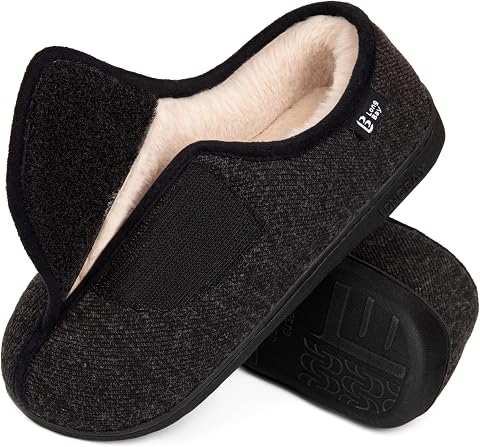
LongBay Women’s Adjustable Memory Foam Slippers with Non-Slip Rubber Sole
- ✔ Upper: Wool-like knit textile
- ✔ Sole: Rubber, non-slip
- ✔ Closure: Hook-and-loop strap, adjustable up to 5 cm

COFACE Women’s Slippers with Arch Support – Open Toe Fuzzy House Shoes for Plantar Fasciitis
- ✔ Upper: Rabbit hair faux fur
- ✔ Sole: Synthetic rubber, textured anti-slip
- ✔ Closure: Slip-on
Difficulty: Beginner | Time: 30-60 minutes to measure, compare, and try on
What You’ll Need
Tools & Materials:
- A sheet of paper, pen, and ruler or tape measure
- The socks the wearer expects to use with the slippers
- A stable chair and a clear, well-lit area for trying the slippers
- A notebook or phone for recording foot measurements and product details
Knowledge:
- Basic shoe sizing and the wearer’s usual indoor routine
- Awareness of any foot pain, swelling, balance concerns, or clinician advice
Measure both feet near the end of the day, when feet may be slightly larger. If the wearer has diabetes, reduced sensation, a wound, significant swelling, or a prescribed shoe or orthotic, ask a podiatrist or clinician for fitting advice before buying. Slippers do not replace prescribed footwear or treatment.
Orthopedic Canvas Mule Slippers for Women with Arch Support
For seniors who want more than a soft cushion beneath the foot, this mule has the most complete support package in the group. Its orthotic arch support and deep heel cup are designed to cradle the foot, while metatarsal padding adds support under the forefoot. That combination makes it our best overall choice for someone whose discomfort is concentrated around the arch, heel, or ball of the foot. The wide toe box also gives bunions, hammertoes, and wider feet more room than the closed, snug-fitting feel reported for COFACE.The pull-on mule shape is simple to step into, but it cannot be tightened to match a foot that changes size during the day. That is where LongBay’s adjustable hook-and-loop strap has an advantage, especially for swelling. The canvas upper and velvet lining give this pair a softer, more casual feel than a highly structured outdoor shoe, and the TPR sole is intended for indoor wear and light trips outside. However, the description calls outdoor use moderate, so we would not choose it for extended walks or wet conditions. Canvas may also wear less durably than a sturdier leather upper.Compared with COFACE, the mule covers the toes and offers more room across the front, but it lacks COFACE’s open construction for airflow. We rank it first because it balances multiple support features with a roomy fit; buyers who need an adjustable opening should look to LongBay instead.
Pros:
- Deep heel cup and arch support provide a more structured feel.
- Metatarsal padding addresses support under the forefoot.
- Wide toe box accommodates wider feet and toe concerns.
- Anti-skid TPR sole suits indoor use and light outdoor trips.
Cons:
- Canvas may be less durable than leather-style uppers.
- Only moderately suited to outdoor use.
- Pull-on fit cannot be adjusted for swelling.
Best for: Seniors seeking structured arch and heel support with extra room for bunions, hammertoes, or a wider forefoot.
Not ideal for: People who need a strap-adjustable fit, maximum airflow, or a slipper for regular extended outdoor walking.
Bottom line: We recommend this mule for its unusually complete support and roomy toe area, provided a fixed pull-on fit works for your feet.
“We recommend this mule for its unusually complete support and roomy toe area, provided a fixed pull-on fit works for your feet.”
LongBay Women’s Adjustable Memory Foam Slippers with Non-Slip Rubber Sole
When a comfortable fit changes with swelling, bandaging, or time of day, a fixed opening can turn a supportive slipper into a frustrating one. LongBay addresses that problem with a hook-and-loop strap adjustable up to five centimeters. This makes it the most adaptable option in the lineup and our best choice for seniors who need to loosen or secure the upper as needed. Its high-density memory foam adds a cushioned step, while the supportive insole is described as intended to help with plantar fasciitis, edema, and neuropathy.That flexibility matters more here than the plush materials. The wool-like knit upper and faux fur lining create a cozy feel, and the rubber sole is suitable for indoor wear and light outdoor use. The slipper is also machine washable, a practical advantage over the other two entries whose supplied details do not specify machine washing. But the tradeoffs are clear: sizing runs large, so people with slim feet may need to size down, and the warm lining can be uncomfortable in hot rooms or climates.Compared with the Canvas Mule, LongBay gives up the mule’s specific deep heel cup and metatarsal padding in favor of adjustability. Compared with COFACE, it covers the toes and provides a warmer interior, but offers less airflow. We place it second because the adjustable fit solves a specific and important problem, though the sizing caveat means it is not the easiest choice to select blindly.
Pros:
- Hook-and-loop strap allows a customized opening.
- Memory foam cushions each step.
- Rubber sole supports indoor wear and light outdoor use.
- Machine washable for easier care.
Cons:
- Sizing runs large; slim feet may need one size smaller.
- Faux fur lining may feel too warm in hot conditions.
- Does not specify the deep heel cup and metatarsal padding of the Canvas Mule.
Best for: Seniors whose feet swell or whose preferred slipper fit needs to be adjusted during the day.
Not ideal for: People with slim feet who cannot check sizing carefully, or anyone who prefers a cool, lightly lined slipper.
Bottom line: We favor LongBay when adjustability is the deciding factor, as long as the large-running fit and warm lining suit the wearer.
“We favor LongBay when adjustability is the deciding factor, as long as the large-running fit and warm lining suit the wearer.”
COFACE Women’s Slippers with Arch Support – Open Toe Fuzzy House Shoes for Plantar Fasciitis
COFACE takes a different route from the two closed-toe picks: it leaves the front open and pairs that airflow with TPE memory foam cushioning and arch support. For seniors who find warm or enclosed slippers uncomfortable, this design may feel easier to wear around the house, especially when temperatures rise. The textured synthetic rubber sole is described as anti-slip and quiet, and the product is listed as water resistant for light outdoor use.Its open toe is also the key limitation. It provides less protection from bumps and cold floors than the Canvas Mule or LongBay, so we would not make it the default choice for someone who wants full coverage. Fit deserves attention too: the description says the slipper may feel snug at first and need a break-in period to stretch. That makes it less accommodating from the outset than LongBay’s adjustable strap, particularly if foot size fluctuates. A snug initial fit can be uncomfortable for sensitive feet, so buyers should not assume the foam alone will solve fit issues.Compared with the Canvas Mule, COFACE offers more airflow but not its specified deep heel cup, metatarsal padding, or wide toe box. Compared with LongBay, it is cooler and open at the toes, but less adjustable and less warm. We rank it third overall because it suits a narrower preference—cushioned support with toe exposure—rather than the broader mix of support and fit needs covered by the other options.
Pros:
- TPE memory foam cushioning with arch support.
- Open-toe design allows airflow.
- Textured rubber sole is designed for grip and quiet indoor steps.
- Available in sizes 5–11, including half-size 8.5.
Cons:
- May feel snug initially and require break-in.
- Open toe leaves the front of the foot less protected.
- Less adjustable than LongBay for changing foot volume.
Best for: Seniors who prefer open-toe slippers, want more airflow, and are comfortable with a break-in period.
Not ideal for: People who need toe protection, an adjustable opening for swelling, or a reliably roomy fit from the first wear.
Bottom line: We recommend COFACE for airflow and cushioned arch support when open toes and an initial snug fit are acceptable.
“We recommend COFACE for airflow and cushioned arch support when open toes and an initial snug fit are acceptable.”
As an Amazon Associate we earn from qualifying purchases.
Before You Start
Plan for the wearer to try the slippers while seated, then stand and walk a short distance with someone nearby if balance is uncertain. Do not ask a person at risk of falling to walk alone in unfamiliar footwear. Check the retailer’s size chart and return terms before ordering; sizing and width labels vary between brands. Choose a pair that fits now rather than one expected to stretch into comfort.
Step-by-Step Instructions
Step 1: List the wearer’s needs
Ask the wearer what feels uncomfortable in their current indoor shoes and when it happens. Note pressure at the toes, heel slipping, difficulty bending to fasten shoes, cold feet, or discomfort from seams. Record whether the slippers will be worn briefly or for much of the day, and whether the wearer uses orthotics or special socks.
Describe the home surfaces too. Smooth floors, rugs, stairs, and bathroom trips call for attention to sole grip, secure fit, and ease of putting the slippers on. A supportive slipper is a useful indoor shoe, but it cannot correct every cause of pain or poor balance.
Tip: Ask the wearer to lead the choice where possible. Comfort and ease of use are personal, and a shoe that looks suitable may still feel wrong.
Check: You have a short list of needs to compare with product details and the wearer’s own feedback.
Step 2: Measure both feet
Put on the socks the wearer will usually use. Place a sheet of paper on a hard floor against a wall, then have the wearer sit and place one foot on it with the heel lightly touching the wall. Mark the end of the longest toe. Measure from the wall edge to the mark, then repeat for the other foot.
Measure the widest part of each foot as well, or have a shoe fitter check width. Write down both lengths and widths. Use the larger foot when consulting the manufacturer’s size chart, and compare measurements with that brand’s chart rather than relying only on a familiar shoe size.
Tip: Keep the foot flat and the toes relaxed. Do not press the toes together or measure over a thick rug.
Check: You have the length and width of each foot and know which foot is larger.
Step 3: Choose a supportive, adjustable style
Compare slippers with a firm, nonslip sole, a stable heel area, and a cushioned footbed that does not collapse under light pressure. Look for a roomy toe box and a broad opening. Adjustable hook-and-loop straps, elastic panels, or a suitable secure closure can make fitting easier when foot size changes during the day or bending is difficult.
Check that the lining feels smooth and that seams or labels will not rub. If the wearer uses prescribed orthotics, check that the footbed is removable and that the orthotic fits without crowding the toes. Select a sole intended for indoor walking and avoid loose backs, floppy slides, and soles that feel slick or unstable.
Tip: Softness alone does not indicate support. A very flexible slipper may feel pleasant while seated but provide little stability during walking.
Check: The chosen style has adequate room, a secure way to stay on, and sole and footbed features suited to the wearer’s needs.
Step 4: Try the slippers on safely
Have the wearer sit in a stable chair, open the slippers fully, and slide each foot in without forcing it. Fasten the closures snugly but comfortably. Check that toes can move, the heel sits in place, and no part of the upper presses across the top or sides of the foot.
Ask the wearer to stand while holding a stable support or with a caregiver nearby. If standing feels steady, take a few steps on a clear, dry indoor surface. Watch for shuffling, heel lift, pinching, slipping, or a need to grip with the toes. Stop the trial if the wearer feels pain, dizziness, or unsteadiness.
Tip: Try slippers on both feet. Feet can differ in size, and a comfortable fit on one side does not confirm a good fit on the other.
Check: The wearer can stand and take a few supported steps without pinching, heel movement, slipping, or a change in balance.
Step 5: Check the fit after a short wear
After the wearer has used the slippers indoors for 10-15 minutes, ask about pressure, heat, rubbing, or discomfort. Look at the skin on the toes, heels, and sides of the feet for red marks or irritation. Check again after the slippers come off; persistent redness, blisters, or pain means the fit needs attention.
Follow the retailer’s indoor-trial and return rules while deciding. Keep the packaging and receipt until the wearer is satisfied. If the feet swell, repeat the fit check at the time of day when swelling is usually greatest, while following any clinician’s advice.
Tip: A brief trial cannot predict every issue. Recheck comfort during the first several days, especially if the wearer has reduced sensation and may not notice rubbing.
Check: The wearer reports comfort, the slippers remain secure during ordinary indoor movement, and there are no pressure marks or skin changes.
Common Mistakes to Avoid
- Buying the wearer’s usual size without checking the brand’s chart. — Measure both feet, compare the larger foot with the specific size chart, and check width as well as length.
- Choosing a loose back or open slide because it is easy to step into. — Look for a secure heel or adjustable closure so the slipper stays on without the wearer curling their toes to hold it.
- Assuming a soft footbed or thick padding means the slipper is supportive. — Check that the sole feels stable and the footbed does not collapse easily; try the slippers while standing and walking with support nearby.
- Keeping slippers that cause rubbing because they may soften later. — Return or exchange a pair that pinches, slips, or leaves persistent marks. Do not expect painful footwear to become safe through wear.
Troubleshooting
Problem: The wearer feels pressure at the toes even though the length seems right.
Solution: Try a wider fit or a style with a roomier toe box. Recheck that socks are not bunching and that the toes can move freely. Seek a shoe fitter’s or clinician’s advice if pressure continues.
Problem: The heel lifts or the slipper shifts during walking.
Solution: Check the size and fastening adjustment, then try a style with a more secure heel and closure. Do not compensate by tightening a strap until it presses or rubs the foot.
Problem: The slippers feel comfortable in the morning but tight later in the day.
Solution: Repeat the fit check when the feet are usually largest. Consider an adjustable style with adequate width, and ask a clinician about new or worsening swelling.
Problem: The wearer still feels unsteady in the slippers.
Solution: Stop using them for walking and check whether the sole grips the floor and the fit stays secure. Try suitable indoor footwear recommended by a clinician or shoe fitter, and discuss ongoing balance problems with a healthcare professional.
What Success Looks Like
The completed choice fits both feet without crowding the toes, rubbing the skin, or allowing the heel to slip. The wearer can fasten and remove it safely, stand and walk a few supported steps comfortably, and feels stable on the home’s usual indoor surfaces. No pain, persistent red marks, or skin irritation appears during the trial. If these checks fail, the slippers are not a suitable fit.
Next Steps
Keep the receipt and check the slippers’ fit during the first several days of use. Inspect the feet regularly for rubbing, particularly if the wearer has reduced sensation, and check that the sole remains clean and grippy. Replace slippers when the tread wears smooth, the footbed collapses, or the fit changes. Ask a podiatrist or clinician for help if pain, wounds, swelling, numbness, or balance concerns persist.
Frequently Asked Questions
Should orthopedic slippers feel tight to support the foot?
No. They should feel secure without squeezing or pinching. Toes need room to move, and straps should not leave pressure marks. A tight slipper can cause rubbing and skin problems.
Are open-back slippers suitable for seniors?
They may suit some people for brief use, but a loose back can shift during walking. For regular indoor walking, consider a secure heel and adjustable fastening, particularly if the wearer has balance concerns.
Can regular slippers accommodate prescribed orthotics?
Some can, if the footbed removes and the orthotic fits without reducing toe room or changing the heel fit. Check the orthotic in the slipper before buying, and ask the prescribing clinician or shoe fitter if it feels crowded.
When should a senior stop wearing a new pair?
Stop using them if they cause pain, persistent redness, blisters, slipping, or unsteadiness. Exchange the pair or seek fitting advice. If there is a wound, significant swelling, or reduced sensation, contact a healthcare professional.