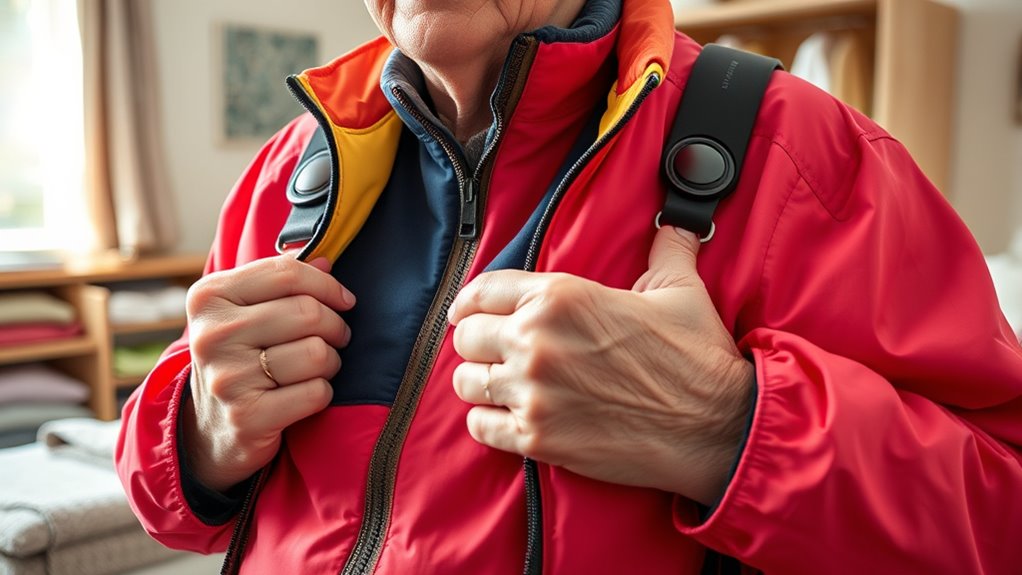

Adaptive clothing and dressing aids are designed to make dressing easier, more comfortable, and stylish for people with mobility or sensory challenges. They feature innovative fabrics that stretch, resist stains, and regulate temperature, helping you stay active and confident. Modern styles blend seamlessly with current fashion trends, reducing stigma and promoting independence. Keep exploring to discover how these solutions can suit your needs and enhance your daily routine effortlessly.
Key Takeaways
- Adaptive clothing features hidden closures like magnetic buttons and elastic waistbands for easier, fuss-free dressing.
- Dressing aids such as zipper pulls and button hooks assist individuals with limited dexterity.
- Modern fabrics provide stretch, durability, and sensory comfort, enhancing overall dressing ease.
- Fashion-forward adaptive designs promote confidence while maintaining current style trends.
- Integrated technology in fabrics offers waterproof, stain-resistant, and antimicrobial properties for practical use.

Adaptive clothing and dressing aids are designed to make dressing easier and more comfortable for individuals with mobility challenges, sensory sensitivities, or other physical limitations. As someone exploring these options, you’ll find that the clothing industry has increasingly embraced innovative solutions that blend functionality with current fashion trends. This means you don’t have to compromise style for comfort. Today’s adaptive clothing lines incorporate the latest fabric technology, guaranteeing garments are not only easy to put on and take off but also breathable, flexible, and durable. Modern fabrics often feature moisture-wicking properties, stretch components, and seamless designs that cater to sensitive skin, making dressing a smoother experience.
Fashion trends influence adaptive clothing in meaningful ways, helping you feel confident and stylish. Designers are paying more attention to aesthetics, offering collections that resemble mainstream fashion but with adaptive features hidden within. For instance, you might find jeans with elastic waistbands that look like traditional styles or button-up shirts with magnetic closures that mimic classic fastenings. These trends make it easier to find clothes that match your personal style without drawing unwanted attention to their adaptive features. By keeping pace with current fashion, adaptive clothing makes you feel less singled out and more integrated into contemporary style movements.
Adaptive fashion seamlessly blends style with function, helping you feel confident and connected to current trends.
Fabric technology plays a vital role in enhancing the comfort and practicality of adaptive garments. High-performance textiles are engineered to stretch and recover, allowing for greater ease of movement, especially if you have limited dexterity or joint issues. Some fabrics are infused with antimicrobial properties, reducing odors and maintaining freshness throughout the day. Others incorporate adaptive features like waterproofing or stain resistance, making garments suitable for various environments and reducing maintenance efforts. These technological advancements mean you can enjoy clothing that adapts to your lifestyle, providing comfort without sacrificing fashion. Additionally, the use of specialized fabrics can help address specific sensory or physical needs, further improving the dressing experience.
Furthermore, the integration of fabric technology into adaptive clothing emphasizes durability, so your garments last longer and maintain their shape over time. This attention to quality supports your independence by reducing the need for frequent replacements. Coupled with current fashion trends, these innovations ensure you don’t have to settle for utilitarian or clinical-looking clothing. Instead, you can enjoy stylish, functional pieces that align with your personal preferences and support your daily routines.
Frequently Asked Questions
How Do I Choose the Right Adaptive Clothing for Specific Disabilities?
You should consider your specific disability and needs when choosing adaptive clothing. Focus on fabric materials that offer comfort, breathability, and easy maintenance. Select clothing styles that accommodate mobility, such as elastic waistbands or magnetic closures. Think about how each piece will help you dress more easily and comfortably. Trying different options and consulting with healthcare providers or specialists can guide you to the best adaptive clothing for your situation.
Are Adaptive Clothing Options Available for Children and Teenagers?
Yes, adaptive clothing options for children and teenagers are everywhere, transforming juvenile fashion and teen style into empowering, accessible choices! You can find vibrant, trendy pieces designed specifically for young ones with disabilities, making dressing fun and stress-free. These clothes blend functionality with style, so your kids can express themselves confidently while staying comfortable. No more boring or limiting outfits – adaptive fashion now celebrates the energy and creativity of youth!
What Is the Cost Difference Between Adaptive and Regular Clothing?
You’ll find that adaptive clothing generally costs more than regular options, mainly due to specialized designs and materials. The cost comparison varies depending on the brand, features, and where you shop, but affordability factors like insurance coverage or bulk purchasing can help reduce expenses. While it might seem pricier upfront, many find the added convenience and comfort worth the investment, making adaptive clothing a practical choice for easier dressing.
How Can I Ensure a Proper Fit With Adaptive Dressing Aids?
Think of finding the perfect fit as tuning a beautiful instrument—you want every string to sing in harmony. To guarantee a proper fit with adaptive dressing aids, follow precise sizing guidelines and make necessary fit adjustments. Measure carefully, consider adjustable features, and consult sizing charts. This approach helps you achieve comfort and confidence, turning dressing into a smooth, effortless melody rather than a struggle.
Where Can I Find Sustainable and Eco-Friendly Adaptive Clothing Options?
You can find sustainable and eco-friendly adaptive clothing options by exploring brands that focus on sustainable fabrics like organic cotton, hemp, and bamboo. Check out eco-friendly brands such as Patagonia, Organic Basics, or TomboyX, which prioritize eco-conscious materials and ethical manufacturing. Online marketplaces like Etsy and specialized stores often feature small brands committed to sustainability. Always read product descriptions to guarantee the clothing supports your needs while protecting the environment.
Conclusion
With adaptive clothing and dressing aids, you can navigate dressing like a skilled sailor steering through calm waters. These tools turn a potentially challenging task into a smooth, manageable journey, empowering you to maintain independence and confidence. Embrace these innovations as your trusted compass, guiding you effortlessly through daily routines. Remember, with the right support, dressing becomes less of a storm to weather and more like a gentle sail across tranquil seas.