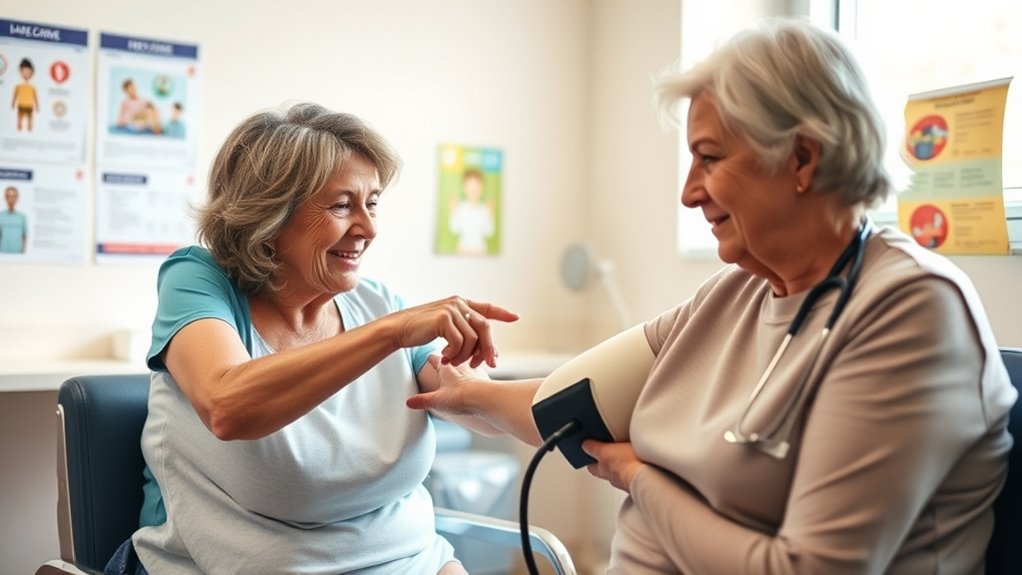

As a caregiver, knowing common health screenings for seniors helps you stay proactive. These include checks for chronic conditions like diabetes and heart disease, bone density scans for osteoporosis, as well as vision, hearing, and mental health assessments. Regular screenings can catch issues early, making treatment easier and improving quality of life. Staying informed about what to expect and why it’s important is key to providing the best care possible. Keep exploring to learn more about keeping your loved one healthy.
Key Takeaways
- Regular screenings include checks for chronic diseases, bone density, vision, hearing, and mental health to detect issues early.
- Blood tests can reveal nutritional deficiencies and monitor blood sugar levels, guiding dietary adjustments.
- Bone density scans help assess osteoporosis risk and prevent fractures in seniors.
- Mental health screenings identify depression, anxiety, and cognitive decline for timely intervention.
- Caregivers should support healthy lifestyles, encourage screenings, and stay informed about health advancements.

As you age, staying proactive about your health becomes increasingly important. Regular health screenings help catch potential issues early, making it easier to manage or prevent serious conditions. For seniors, these screenings often include checks for chronic diseases, bone density, vision, hearing, and mental health. But understanding what to expect and why it matters can help you stay ahead of any health concerns.
Dietary changes are a common focus for seniors, and routine screenings can reveal nutritional deficiencies or issues related to digestion and absorption. As you age, your body’s ability to absorb nutrients may decline, leading to deficiencies in essential vitamins and minerals like calcium, vitamin D, and B12. Blood tests can identify these issues, guiding dietary adjustments or supplements. Additionally, screenings for blood sugar levels can detect early signs of diabetes, which has become increasingly prevalent among older adults. Proper nutrition supports overall health, boosts energy, and can even improve mental health by reducing feelings of depression or anxiety. Caregivers should encourage seniors to maintain balanced diets rich in fruits, vegetables, lean proteins, and whole grains, and to discuss any dietary concerns with healthcare providers. Staying informed about the latest advancements in AI security can also help caregivers utilize new tools to monitor health and safety more effectively.
Mental health is another critical area often overlooked in routine screenings. Aging can bring about feelings of loneliness, depression, or anxiety, which can dramatically affect quality of life. Mental health screenings help identify issues early so that appropriate support or treatment can be provided. These screenings usually involve simple questionnaires or conversations with healthcare providers to assess mood, cognitive function, and emotional well-being. Recognizing signs of depression or cognitive decline early allows for interventions that can improve mental clarity and emotional health. Caregivers should be attentive to changes in behavior or mood, and encourage seniors to seek help if they notice symptoms of mental health concerns. Maintaining social connections, engaging in mental exercises, and ensuring proper sleep are also essential strategies for supporting mental health.
Frequently Asked Questions
How Often Should Seniors Get Routine Health Screenings?
You should follow recommended screening schedules, which typically suggest annual visits for preventive measures like blood pressure, cholesterol, and diabetes checks. Some screenings, such as cancer screenings or bone density tests, may be needed less often or more frequently based on your health history. Staying on top of routine health screenings helps catch issues early, so you can take action promptly. Regular checkups are essential to maintaining your overall well-being.
Are There Specific Screenings for Cognitive Health?
Yes, there are specific screenings for cognitive health. You should schedule regular memory assessments to monitor for signs of cognitive decline. These assessments help identify early issues like memory loss or difficulty planning, enabling timely intervention. As a caregiver, staying proactive with these screenings guarantees you catch potential problems early, allowing you to address them effectively and support your loved one’s independence and quality of life.
What Are the Costs Associated With Senior Health Screenings?
Screening costs vary depending on the test and location, but generally, they can range from $50 to several hundred dollars. Insurance coverage often helps reduce these expenses, especially if screenings are recommended by your doctor. You should check with your insurance provider to understand what’s covered. Some community clinics and health programs also offer free or low-cost screenings, so explore those options to help manage costs effectively.
How Can Caregivers Advocate for Necessary Screenings?
Stand firm and fight for your loved one’s health by advocating actively. You can ask about essential screenings, emphasize medication management, and seek emotional support from healthcare providers. By staying informed, asking questions, and attending appointments, you guarantee your senior gets the screenings they need. Your proactive presence promotes proper prevention, peace of mind, and personalized care, making a meaningful difference in their health journey.
Are There Screenings Tailored for Seniors With Chronic Conditions?
Yes, there are screenings tailored for seniors with chronic conditions. You should focus on chronic disease management by ensuring they undergo tailored screening protocols, which address their specific health risks. These screenings help detect complications early and adjust treatments accordingly. As a caregiver, stay proactive by discussing personalized screening plans with healthcare providers, so your loved one receives targeted care that effectively manages their chronic illnesses and maintains their quality of life.
Conclusion
Think of health screenings as your trusted lighthouse guiding you safely through the fog of aging. Just as a lighthouse warns ships of hidden dangers, regular checkups reveal unseen health issues before they become storms. By staying vigilant and proactive, you steer clear of potential hazards and keep your journey smooth. Remember, with each screening, you’re steering toward a brighter, healthier future—your ship sailing confidently toward well-being.