To guarantee stair safety, make sure your handrails are sturdy, securely mounted, and at a comfortable height between 34 and 38 inches. Add anti-slip treads or covers to prevent slips, especially on wooden stairs. Good lighting, such as LED strips or overhead lights, improves visibility of each step. Regular maintenance, like tightening loose parts and cleaning dirt, keeps safety features effective. Keep exploring to discover more ways to make your stairs safer and prevent accidents.
Key Takeaways
- Properly installed and secured handrails at 34-38 inches height provide essential support and guidance on stairs.
- Anti-slip tread covers and strips reduce slipping hazards on stair surfaces, enhancing safety.
- Adequate lighting, including LED strips and overhead lights, improves step visibility and prevents accidents.
- Regular maintenance and inspections ensure handrails and treads remain secure and effective.
- Combining edge protection with visual cues from handrails and safety features minimizes fall risks in low-light conditions.
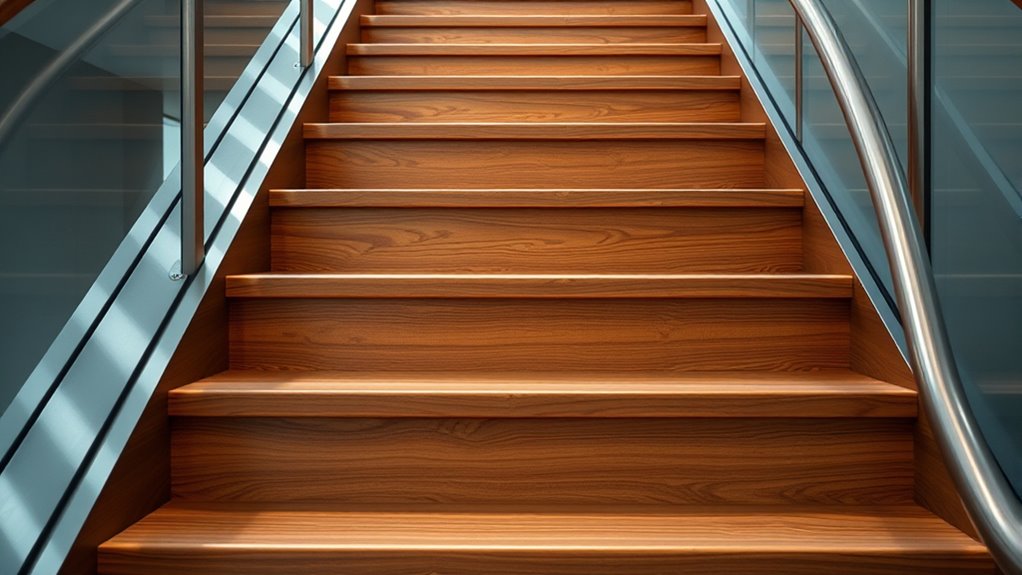
Have you ever wondered how safe your stairs really are? Ensuring your staircase is secure isn’t just about aesthetics; it’s about preventing accidents and injuries. One of the most essential aspects of stair safety is proper edge protection. Without it, the edges of stairs can become hazardous, especially in low-light conditions or for those with limited mobility. Edge protection involves installing sturdy handrails along the sides of your stairs, providing a reliable grip for anyone ascending or descending. These handrails should be well-secured and positioned at a height that’s comfortable for most users, typically between 34 and 38 inches from the tread surface. Not only do handrails offer support, but they also serve as visual cues, helping people identify the edge of each step clearly. Incorporating anti-slip tread covers can further reduce the risk of slipping accidents. Lighting solutions play a pivotal role in enhancing stair safety. Well-designed lighting ensures that every step is visible, reducing the risk of missteps or falls. Consider installing LED strip lights along the underside of handrails or beneath the nosing of each step. These subtle lighting options illuminate the treads without causing glare, making it easier to see where to place your foot. Additionally, overhead lighting should be bright enough to eliminate shadows that might obscure the edge of each step. Motion-activated lights are an excellent choice—they turn on automatically when someone approaches, offering safety without the need to fumble for switches in the dark. Combining good lighting with edge protection makes your stairs safer and more inviting, especially for children, seniors, or anyone with impaired vision. Beyond installing handrails and lighting solutions, regular maintenance is key. Check that your edge protection remains secure and that there are no loose handrails or damaged treads. Clean your stairs frequently to prevent dirt or debris from creating slippery surfaces. If your stairs are wooden, consider applying anti-slip strips or tread covers to increase traction. These small upgrades can make a significant difference in preventing slips and falls. Remember, safety isn’t a one-time effort but an ongoing process. Keep a routine that assesses the condition of your stair safety features and update them as needed.
Frequently Asked Questions
How Often Should Handrails Be Inspected for Safety?
You should inspect your handrails at least once every six months as part of your regular handrail maintenance and inspection schedule. Regular checks help identify loose fittings, rust, or damage that could compromise safety. If you notice any issues, address them immediately to prevent accidents. Remember, consistent inspections guarantee your handrails remain secure and reliable, providing essential support and safety for everyone using the stairs.
Are There Specific Materials Recommended for Outdoor Stair Treads?
You should choose outdoor stair treads made from slip-resistant materials like textured rubber, treated wood, or concrete with a rough finish. These materials are known for their outdoor durability, resisting weather and wear over time. Investigate how these options prevent slips and falls, ensuring safety. Using slip-resistant materials not only enhances durability but also provides reliable traction in various weather conditions, keeping you safe on outdoor stairs.
What Is the Ideal Height for Stair Handrails?
You should install your stair handrails at a height of 34 to 38 inches, following stair safety regulations. This range ensures comfortable and secure grip, reducing fall risks. Check your local building codes, as they may specify exact measurements. Proper handrail height is vital for safe navigation, especially for children and seniors. Always verify compliance with safety standards to promote ideal stair safety and accessibility.
Can Decorative Stairs Compromise Safety Standards?
Decorative stairs can be a double-edged sword, risking safety if they compromise structural integrity. While they add beauty, overly intricate decorative designs might weaken treads or handrails, making falls more likely. You need to prioritize safety standards, ensuring that aesthetics don’t overshadow strength. Carefully select designs that enhance your space without sacrificing the stair’s stability, because beauty should never come at the cost of safety.
How Do I Choose the Right Tread Depth for Elderly Users?
To select the right tread depth for elderly users, follow tread depth guidelines of at least 11 inches to ensure stability. Consider elderly safety considerations by choosing wider, non-slip treads that provide ample space for foot placement. You should also evaluate the overall staircase design, making sure treads are consistent and well-maintained. This minimizes trip hazards, giving elderly users confidence and safety when maneuvering stairs.
Conclusion
Remember, as the Greeks knew with Icarus, overlooking safety can lead to a fall. By ensuring your handrails are secure and treads are slip-resistant, you safeguard yourself and others from unnecessary harm. Don’t let your staircase become a tragedy waiting to happen—treat it with the respect it deserves. With simple precautions, you can keep your home or workplace as safe as a fortress, allowing everyone to ascend and descend with confidence and peace of mind.