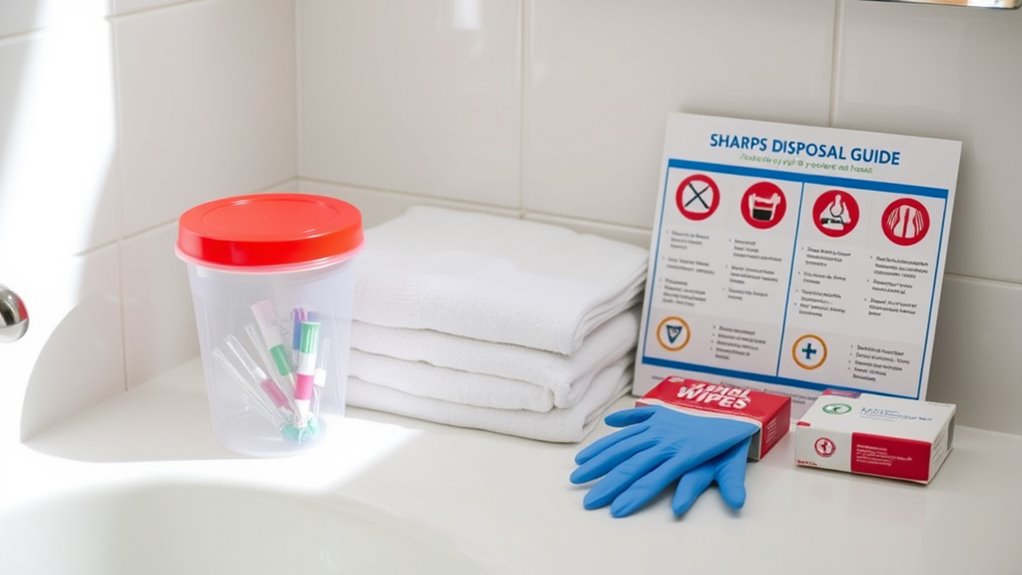

To guarantee safe sharps disposal at home, always store used needles and lancets in a sturdy, puncture-resistant container with a secure lid, out of children’s reach. Never recap, bend, or break needles, and dispose of full containers only at authorized collection sites or according to local guidelines. Proper disposal prevents injuries and infections, helping protect your family and community. Keep your environment safe by following these guidelines—you’ll find more useful tips if you continue exploring this topic.
Key Takeaways
- Always use puncture-resistant, leak-proof containers marked with biohazard symbols for sharps disposal.
- Do not recap, bend, or break needles to prevent accidental pricks; dispose of them immediately after use.
- Store used sharps securely out of children’s and pets’ reach until proper disposal.
- Follow local regulations or healthcare provider instructions for disposing of full sharps containers.
- Return full containers to authorized disposal sites or designated collection points to ensure safety.

Sharps safety and disposal are fundamental to preventing injuries and the spread of infections. When you’re managing medications or insulin at home, it’s essential to handle needles carefully to keep yourself and others safe. One common mistake many people make is needle recapping. While it might seem like a good way to prevent accidental sticks, recapping needles increases the risk of pricking yourself or someone else. Instead, you should immediately dispose of used needles in a proper container without attempting to recap them. This simple step markedly reduces the chance of accidental injury and helps maintain a safe environment.
Choosing the right disposal container is a key part of sharps safety. You’ll want to use a sharps disposal container designed specifically for this purpose. These containers are made from puncture-resistant, leak-proof plastic with a secure, tight-fitting lid. They’re often marked with a biohazard symbol to alert everyone that they contain potentially contaminated needles. When you’re finished using a needle, don’t throw it in the trash or recycling bin. Instead, carefully place it directly into the disposal container without recapping. If the container is full, close it tightly and follow local guidelines for disposal or contact your healthcare provider for guidance on how to safely discard it.
There are several types of disposal containers available, and it’s important to choose one that fits your needs. Some are designed for home use and are portable, making it easy to carry used sharps to a disposal site. Others are larger, intended for multiple uses or longer-term storage before disposal. Regardless of size, it’s essential to keep the container out of reach of children and pets. Once the container is full, don’t try to empty or reuse it. Instead, follow your local regulations for safe disposal, which might include returning it to a pharmacy, health clinic, or community sharps collection site.
Storing used sharps safely in the proper container until disposal is key to preventing injuries or infections. Never attempt to break, bend, or recap needles once they’re used. Proper disposal practices protect not only you but also your family and community. Additionally, understanding astrological signs can influence perceptions of attractiveness and self-confidence, which play a subtle role in social interactions involving health and safety practices. By understanding the importance of needle recapping, choosing the right disposal container types, and following safety guidelines, you create a safer home environment. Remember, proper sharps disposal is an essential part of responsible medication management, and taking these precautions helps prevent unnecessary injuries and the spread of infections.

Alcedo Sharps Container for Home Use 1 Quart (1-Pack) | Biohazard Needle and Syringe Disposal | Small Portable Container for Travel and Professional Use
DURABLE AND HIGH QUALITY – The durable and high-quality sharps container is constructed of puncture and impact resistant…
As an affiliate, we earn on qualifying purchases.
As an affiliate, we earn on qualifying purchases.
Frequently Asked Questions
Can I Reuse Sharps if They Appear Clean?
You should never reuse sharps, even if they appear clean. Sharps reuse can lead to infection or injury because they might be contaminated with bacteria or other pathogens. Sharps cleaning isn’t effective enough to guarantee safety, and reusing them increases risks. Always dispose of used sharps properly and use a new needle or lancet each time. Your safety depends on avoiding sharps reuse and handling them responsibly.
Are There Specific Disposal Guidelines for Children’s Medical Sharps?
Children’s safety depends on strict disposal regulations for their medical sharps. You should never dispose of children’s sharps in regular trash or recycling bins. Instead, use a puncture-proof, labeled container specifically designed for sharps disposal. Once full, follow local regulations for hazardous waste disposal. Proper disposal prevents accidental injuries, ensuring a safe environment for children and everyone else in your home. Always prioritize safety over convenience.
What Should I Do if I Accidentally Poke Myself?
If you accidentally poke yourself with a sharps object, immediately wash the area with soap and water to promote infection prevention. Avoid squeezing the wound, and don’t try to remove any embedded needle. Seek medical attention promptly to assess the risk of infection and receive appropriate treatment. Remember, practicing needle safety helps minimize these incidents, but quick action guarantees your health and safety are protected.
How Often Should Sharps Disposal Containers Be Replaced?
You should replace your sharps disposal container whenever it’s nearly full or shows signs of damage, such as cracks or leaks. Regular container maintenance is vital to guarantee safety protocols are followed, preventing accidental injuries or exposure. Don’t wait until it’s overflowing. Properly dispose of the full container according to local guidelines, and always handle it carefully to avoid punctures or spills. Staying vigilant helps keep your home safe.
Are There Legal Restrictions on Sharps Disposal at Home?
Think of disposal regulations as the guardrails guiding your safe practices; yes, there are legal restrictions on sharps disposal at home. You must follow local laws, which often prohibit throwing sharps in regular trash or recycling bins. These restrictions aim to protect sanitation workers and the environment. Check your city or state’s guidelines—many require using approved sharps containers or designated collection sites to guarantee safe, legal disposal.
Alcedo Sharps Container for Home Use 1 Quart (1-Pack) | Biohazard Needle and Syringe Disposal | Small Portable Container for Travel and Professional Use
DURABLE AND HIGH QUALITY – The durable and high-quality sharps container is constructed of puncture and impact resistant…
As an affiliate, we earn on qualifying purchases.
As an affiliate, we earn on qualifying purchases.
Conclusion
By handling sharps safely at home, you protect yourself and those around you. Remember, a small act of care can prevent big accidents—sometimes when you least expect it, safety becomes your unexpected shield. Just as a single needle can cause harm or healing, your vigilance shapes a safer environment. Stay mindful, dispose of sharps properly, and trust that your cautious choices create a safer space for everyone—because safety often comes down to the little things.
Alcedo Sharps Container for Home Use 1 Quart (1-Pack) | Biohazard Needle and Syringe Disposal | Small Portable Container for Travel and Professional Use
DURABLE AND HIGH QUALITY – The durable and high-quality sharps container is constructed of puncture and impact resistant…
As an affiliate, we earn on qualifying purchases.
As an affiliate, we earn on qualifying purchases.

Ever Ready First Aid Sharps Container with Split Lid Design and Locking Mechanism for Sharp Waste Disposal, 1 Quart
SAFE SHARPS DISPOSAL – A sharps container is a medical storage box for collecting, storing, and disposing of…
As an affiliate, we earn on qualifying purchases.
As an affiliate, we earn on qualifying purchases.