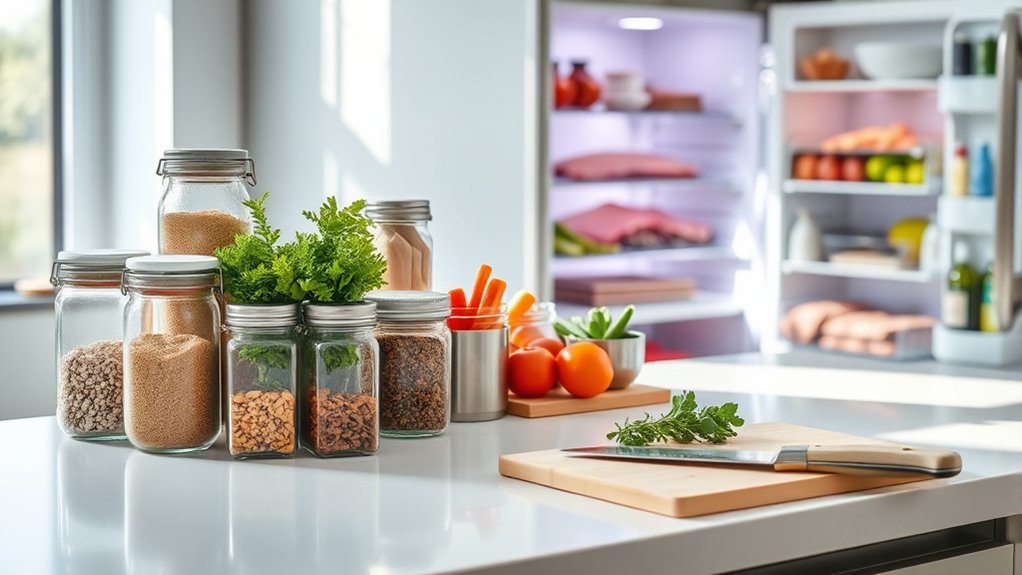

To handle and store food safely, keep raw meats separate from ready-to-eat foods using different cutting boards and utensils, and wash your hands thoroughly after handling raw ingredients. Store perishable foods in the refrigerator at 40°F or below and cook meats to their safe internal temperatures. Always refrigerate leftovers within two hours, use airtight containers, and label them with dates. Maintaining proper hygiene and temperatures helps prevent contamination—continue exploring tips to keep your food safe and fresh.
Key Takeaways
- Use separate cutting boards and utensils for raw and cooked foods to prevent cross contamination.
- Maintain refrigerator temperatures at 40°F (4°C) or below and store raw meats on the bottom shelf.
- Cook foods to safe internal temperatures, such as 165°F (74°C) for poultry, using a food thermometer.
- Refrigerate leftovers within two hours and consume them within three to four days.
- Thaw frozen foods safely in the refrigerator, under cold water, or in the microwave to prevent bacterial growth.
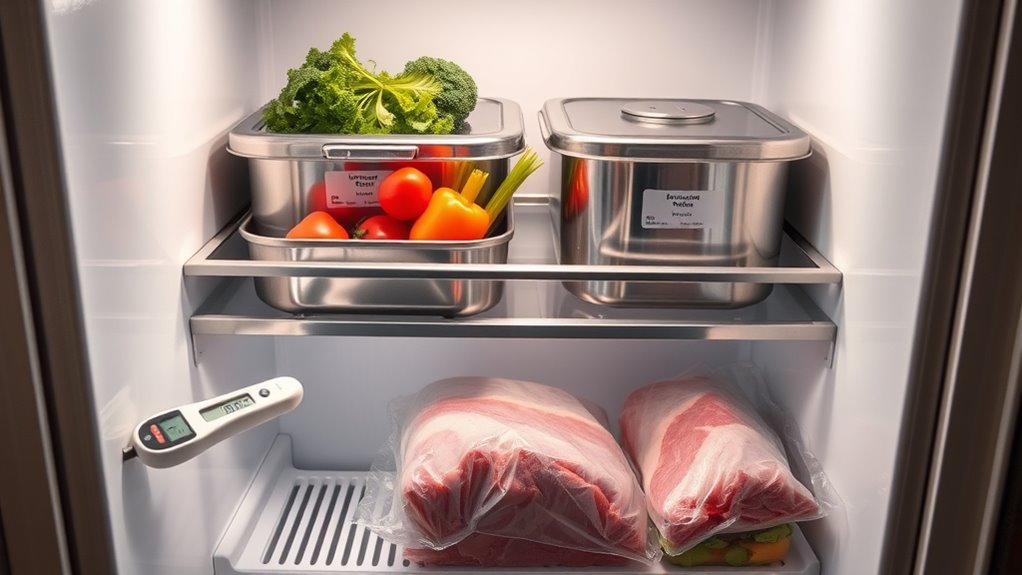
Proper food handling and storage are fundamental to prevent foodborne illnesses and keep your meals safe. One of the most important steps is practicing cross contamination prevention. You want to avoid transferring harmful bacteria from raw meats, seafood, or eggs to ready-to-eat foods like vegetables, fruits, or cooked dishes. To do this, always use separate cutting boards and utensils for raw and cooked foods. Wash your hands thoroughly after handling raw ingredients, and clean all surfaces and tools immediately. Keep raw meats on the bottom shelf of your refrigerator to prevent juices from dripping onto other foods. This simple practice markedly reduces the risk of cross contamination, which can lead to serious health issues if not controlled. Using modern toilets with features like dual-flush systems can help conserve water and promote overall hygiene in your household.
Proper temperature control is equally crucial for food safety. Bacteria grow rapidly in the “danger zone,” which is between 40°F (4°C) and 140°F (60°C). To prevent this, always refrigerate perishable foods promptly—ideally within two hours of purchase or preparing. Ensure your refrigerator is set to 40°F (4°C) or below, and your freezer remains at 0°F (-18°C). When cooking, use a food thermometer to confirm that meats reach safe internal temperatures: for example, poultry should be cooked to at least 165°F (74°C), ground meats to 160°F (71°C), and leftovers reheated to 165°F (74°C). Proper temperature control not only kills bacteria but also inhibits their growth, keeping your food safe to eat.
In addition to controlling temperatures, pay attention to how long foods stay at unsafe temperatures. Never leave cooked food out for more than two hours, and reduce that to one hour if the environment is warm or humid. Store leftovers in airtight containers and label them with the date to ensure you consume them within a safe timeframe—usually three to four days in the refrigerator. When shopping, prioritize fresh, unblemished products and check expiration dates to avoid purchasing spoiled items. Always thaw frozen foods safely, either in the refrigerator, under cold running water, or in the microwave, never at room temperature. These steps, combined with vigilant cross contamination prevention and proper temperature control, form the foundation of safe food handling and storage practices.

AMADA HOMEFURNISHING 8x10 Washable Area Rug, Low-Profile with Non-Slip Backing & Durable Edge Binding, Vintage Large Rugs for Living Room, Bedroom, Dining Room, Blue
Machine Washable: The short pile design of this washable rug is easy to maintain using an upright vacuum...
As an affiliate, we earn on qualifying purchases.
Frequently Asked Questions
How Can I Tell if Frozen Food Has Been Thawed Improperly?
You can tell if frozen food has been thawed improperly by checking for temperature abuse and texture changes. If the food feels warmer than 40°F or shows signs of uneven thawing, like ice crystals melting or a slimy texture, it’s a red flag. Improper thawing can lead to bacteria growth, so always monitor the temperature and look for texture changes to guarantee your food stays safe.
What Are the Best Ways to Prevent Cross-Contamination?
You can prevent cross-contamination by consistently cleaning surfaces and practicing proper hand hygiene. It might seem time-consuming, but these steps are essential for safety. Always wash your hands thoroughly before handling food and after touching raw ingredients. Clean and sanitize cutting boards, utensils, and countertops regularly, especially between different foods. These simple habits protect you and others from harmful bacteria, making your food safer and enjoyable every time.
How Long Can Cooked Leftovers Safely Stay in the Fridge?
Cooked leftovers are safe in the fridge for up to four days, ensuring proper refrigerator safety. To maximize leftover longevity, store them in airtight containers and keep your fridge at 40°F (4°C) or below. Always reheat leftovers thoroughly before eating, and when in doubt, trust your senses—discard any leftovers that develop an off smell, color, or texture. Proper storage helps prevent foodborne illnesses and keeps your food fresh longer.
What Are the Signs of Food Spoilage to Watch For?
Like a knight spotting a dragon, you should look for signs of spoilage. Check for mold growth, which appears as fuzzy, colorful patches, and smell for a foul odor that signals bacteria. If food looks slimy or has a strange texture, it’s time to toss it. Always trust your senses—these signs help prevent foodborne illness and keep you safe. When in doubt, throw it out!
How Should I Store Raw Meats to Avoid Contamination?
You should store raw meats in proper storage containers that are airtight and leak-proof to prevent cross-contamination. Keep them on the lowest shelf in your refrigerator to avoid drips onto other foods. Maintain temperature control by keeping the fridge at 40°F (4°C) or below. If freezing, use airtight containers or heavy-duty freezer bags. Proper storage prevents bacteria growth and keeps your food safe to eat.

RELEANY Area Rugs 8'x10' Washable Non-Slip, Floral Vintage Distress Print Pattern Medallion Carpet for Living Room Bedroom Dining Room, Brick Red Rust Neutral Brown Burnt Orange Green
Machine Washable Rugs Easy to Clean: the surface is water-repellent which allows for easy cleanup when beverages are...
As an affiliate, we earn on qualifying purchases.
Conclusion
By following safe food handling and storage practices, you’re the captain steering your kitchen ship through calm waters. Keep germs at bay like a vigilant lighthouse, and store your food properly like treasures in a secure vault. When you handle food with care, you’re planting seeds for healthy, happy meals that nourish your loved ones. Remember, a little attention now keeps food safety storms at bay—making your kitchen a safe haven where delicious memories are made.

8x10 Area Rugs for Living Room: Floral Washable Rug Vintage Large Soft Boho Non-Slip Carpet Indoor Floor Stain Resistant Carpets for Bedroom Dining Room Farmhouse Nursery Home Office Dark Green
Elegant Floral Rug: This 8x10 area rugs vintage-inspired botanical rug blends rich dark greens, vibrant and delicate floral...
As an affiliate, we earn on qualifying purchases.

Novilla 10 Inch King Mattress, Memory Foam Mattress King with Breathable Comfort Layer & High-Density Base Foam for Pressure Relief & Support, CertiPUR-US Certified for a Cool & Refreshed Sleep
【Stress-Relieving System】 The king memory foam mattress combines a 2-layer foam system for balanced comfort: natural fiber infused...
As an affiliate, we earn on qualifying purchases.