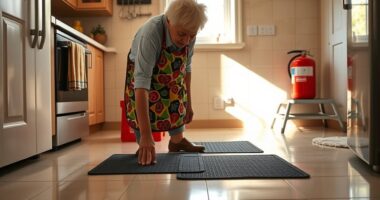
To guarantee kitchen safety for someone with cognitive impairment, you should keep appliances like stoves turned off when not in use and install safety covers with automatic shut-off features. Keep utensils organized and out of reach, supervise complex tasks, and create a simple environment free of clutter. Establish routines to reinforce safety rules, always stay within sight of cooking activities, and double-check that all appliances are off before leaving. Learn more about effective strategies to maintain safety while promoting independence.
Key Takeaways
- Install stove safety covers with automatic shut-off features to prevent stove fires.
- Keep frequently used utensils and items within easy reach to minimize hazardous movements.
- Supervise or assist with tasks involving sharp or hot objects to prevent accidents.
- Remove clutter and organize utensils to reduce confusion and potential injuries.
- Always double-check that appliances are turned off before leaving the kitchen unattended.

Caring for someone with cognitive impairment in the kitchen requires extra vigilance to prevent accidents and guarantee safety. One of the most critical concerns is managing fire hazards. Individuals with cognitive challenges may forget about a stove burner left on or accidentally leave pots unattended, increasing the risk of fires. To reduce this danger, always turn off appliances when not in use, and consider installing stove safety covers that automatically shut off heat after a certain period. Keep a fire extinguisher nearby and ensure it’s easy to access, and teach your loved one how to use it in case of emergency. Never leave cooking unattended, and stay within sight when something is on the stove or in the oven. Creating a habit of double-checking that all appliances are turned off before leaving the kitchen can substantially lower fire risks.
Another essential aspect of kitchen safety involves utensil management. It’s important to keep utensils organized and accessible, especially if your loved one struggles with fine motor skills or memory issues. Use utensil holders or drawer organizers to keep knives, spatulas, and other tools in designated spots. Avoid leaving sharp or dangerous utensils within easy reach if they’re not actively being used, and store knives and sharp objects in secure, out-of-sight places when not in use. Simplify the environment by removing clutter and unnecessary utensils that could cause confusion or accidents. You might also consider labeling drawers or containers to help your loved one identify and locate utensils easily. When preparing food, encourage the use of utensils that are appropriate for their skill level, such as plastic or silicone tools that are less likely to cause injury. Always supervise or assist with complex tasks like chopping or using sharp knives to prevent cuts or injuries.
Maintaining a safe kitchen environment for someone with cognitive impairment means establishing routines that promote safety and independence. Keep frequently used items within easy reach to minimize unnecessary movements that could lead to accidents. Reinforce safety rules consistently, like turning pot handles inward to prevent accidental knocks, and remind your loved one to be cautious around heat and sharp objects. Additionally, being aware of store hours can help plan shopping trips to ensure all necessary safety supplies are stocked and available. By staying proactive with fire hazard prevention and proper utensil management, you create a safer space where your loved one can participate in cooking activities with less risk. Your attentiveness and thoughtful setup go a long way in reducing hazards, giving both of you peace of mind while maintaining a sense of independence in the kitchen.
Frequently Asked Questions
How Can I Customize Safety Measures for Different Levels of Impairment?
To customize safety measures, start with an impairment level assessment to understand specific needs. Use personalized safety strategies tailored to their cognitive abilities, like simple step-by-step instructions or visual cues. Adjust safety devices, such as stove knob covers or locked cabinets, based on their impairment level. Regularly review and update these strategies as their condition changes, ensuring they remain safe and supported in the kitchen environment.
Are There Specific Kitchen Tools Designed for Individuals With Cognitive Challenges?
Yes, there are specific kitchen tools designed for individuals with cognitive challenges. You can use adaptive utensils, which have features like easy-grip handles and non-slip designs, making cooking safer and easier. Smart technology also plays a role, with devices that offer reminders, step-by-step guidance, or safety alerts. These tools help you maintain independence while reducing risks, ensuring a safer and more manageable cooking experience.
How Do I Involve Family Members in Maintaining Kitchen Safety?
You involve family members by encouraging open safety communication and assigning specific roles. Share safety tips and observe your loved one together, making them feel supported. Regularly discuss potential hazards and safety updates to keep everyone informed. Invite family to participate in safety drills or routines, fostering a team approach. Your active involvement guarantees consistent safety practices, creating a secure environment and empowering your loved one to maintain independence safely.
What Are Emergency Procedures if an Accident Occurs?
If an accident occurs, you should immediately activate the emergency response by calling 911 and providing clear details. Stay calm and assist the person involved without causing further injury. Prevent future accidents by evaluating the environment for hazards and removing or securing them. Keep a first aid kit nearby and know basic first aid procedures. Regularly review safety protocols with family members to ensure quick, effective responses during emergencies.
How Often Should Safety Assessments Be Reviewed and Updated?
You should review and update safety assessments at least every six months, as frequent reviews help identify new hazards and guarantee safety measures stay effective. Studies show that regular safety review schedules markedly reduce accidents, especially for those with cognitive impairments. By maintaining a consistent assessment frequency, you stay proactive, adapt to changing needs, and create a safer environment in the kitchen, minimizing risks and promoting independence.
Conclusion
Now that you know the key safety tips, imagine the unexpected moment when a small oversight could lead to a big problem. Will you be equipped to prevent accidents before they happen? Staying vigilant and proactive can make all the difference. Keep these safety strategies in mind, and stay one step ahead—because in the kitchen, a moment’s distraction could change everything. Are you ready to ensure a safer space for everyone?