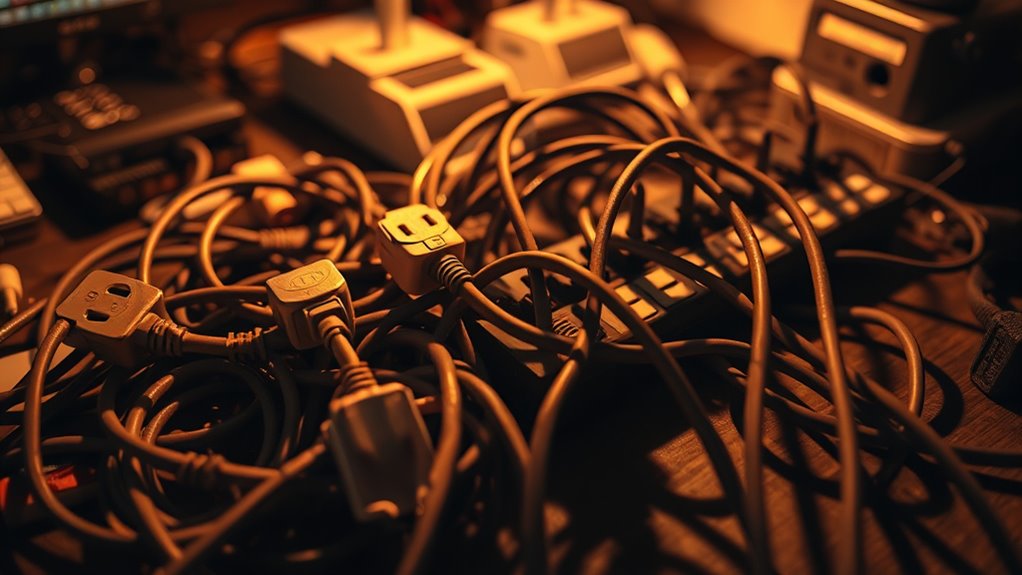

To stay safe with cords and overloads, make sure your extension cords are rated for the devices you connect and avoid daisy-chaining multiple cords. Don’t overload outlets or cords with high-power appliances like space heaters. Regularly check cords for damage and never run them under rugs or furniture. If you experience flickering lights or burning smells, it’s a sign to act. Keep these tips in mind, and you’ll learn more about preventing electrical hazards.
Key Takeaways
- Match extension cord ratings to device wattage and avoid daisy-chaining multiple cords.
- Never plug high-power appliances directly into extension cords; use wall outlets instead.
- Regularly inspect cords for damage, wear, or exposure, and replace damaged cords immediately.
- Distribute electrical loads across multiple outlets and circuits to prevent overloads.
- Keep cords away from rugs and furniture to prevent heat buildup and potential fire hazards.

Have you ever wondered how to stay safe when dealing with electricity? It’s an essential question, especially when it comes to handling extension cords and preventing circuit overloads. These are common tools for powering devices around your home, but they require careful use to avoid dangerous situations. Extension cords are convenient, letting you reach outlets that are far away, but they’re not designed for continuous use or heavy loads. Using them improperly can lead to overheating, sparks, or even fires. The key is to choose the right extension cord for your needs—one that matches the power requirements of your devices. Avoid daisy-chaining multiple cords together, as this increases the risk of circuit overloads, which happen when too many devices draw power from a single outlet or circuit. Overloading can cause the circuit breaker to trip, but if it doesn’t, it can lead to wiring damage or electrical fires, especially if the cords are not rated for the load.
To stay safe, always check the wattage or amperage ratings on your extension cords and the devices you’re plugging in. Make sure the cord’s capacity exceeds the total load you plan to connect. Don’t plug high-power appliances—like space heaters, air conditioners, or large kitchen equipment—into extension cords, as they are often designed for lighter loads. Instead, plug these directly into wall outlets to prevent overheating and reduce the chance of circuit overloads. When you’re using extension cords, keep them in good condition: avoid frayed wires, cracks, or exposed conductors, which can cause shocks or fires. Also, avoid running cords under rugs or furniture, as this can cause heat buildup and damage the insulation.
Be mindful of the total number of devices plugged into a single outlet or circuit. If you notice your circuit breaker tripping frequently, it’s a sign you’re overloading it. To prevent this, distribute your devices more evenly across different outlets and circuits. Installing additional outlets or upgrading your electrical system might be necessary if you regularly rely on extension cords and experience overloads. Remember, safety comes first, so never ignore warning signs like flickering lights or burning smells. By understanding the limitations of extension cords and being cautious about circuit overloads, you protect yourself and your home from potential electrical hazards. Staying informed about electrical safety and understanding how to properly manage your electrical devices can help prevent accidents and ensure a safer environment for everyone. Stay aware, use appropriate cords, and always prioritize safe practices when working with electricity.
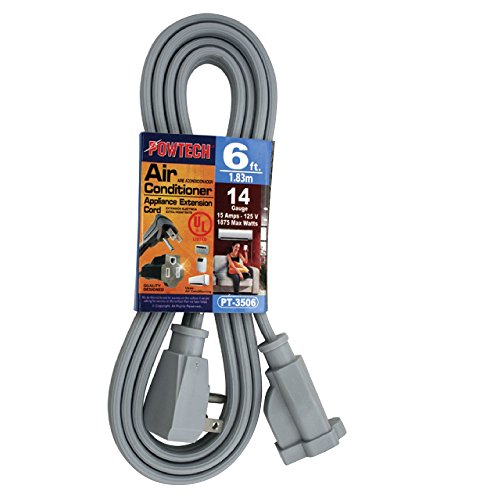
POWTECH Heavy duty 6 FT Air Conditioner and Major Appliance Extension Cord UL Listed 14 Gauge, 125V, 15 Amps, 1875 Watts GROUNDED 3-PRONGED CORD
Air Conditioner and Major Appliance Extension Cord UL Listed. Sturdy cord Ideal for plugging in large appliances such…
As an affiliate, we earn on qualifying purchases.
As an affiliate, we earn on qualifying purchases.
Frequently Asked Questions
How Can I Identify Overloaded Circuits Safely?
You can identify overloaded circuits safely by watching for signs like frequent tripping circuit breakers or flickering lights. To stay safe, always unplug devices when not in use and avoid plugging too many appliances into one outlet. Follow safety precautions by not overloading sockets and using power strips properly. If you suspect a circuit overload, turn off the power at the breaker and consult a qualified electrician to inspect and fix the issue.
Are Extension Cords Suitable for Permanent Use?
Extension cords aren’t suitable for permanent use because they can compromise cord management and outlet safety. They’re designed for temporary solutions, and continuous use increases the risk of overheating and electrical fires. Instead, you should install additional outlets or have an electrician properly wire your space. Always verify cords are in good condition, avoid overloading outlets, and keep cords away from high-traffic areas to maintain a safe environment.
What Are the Signs of a Damaged Power Cord?
You should watch for signs of a damaged power cord, as over 50% of electrical fires start with faulty cords. If you notice damaged cord insulation, frayed wires, or scorch marks, it’s a clear warning. These issues can expose live wires and increase the risk of electric shock or fire. Always replace damaged cords immediately and avoid using them until properly repaired or replaced for your safety.
How Often Should Electrical Cords Be Inspected?
You should inspect your electrical cords regularly, ideally every three to six months, following your cord inspection schedule. Use a safety inspection checklist during each inspection to look for signs of damage like fraying, cracks, or exposed wires. Regular inspections help guarantee safety by catching issues early, preventing electrical fires or shocks. Staying vigilant with your safety inspection checklist keeps your environment secure and your cords in good condition.
Can Using Multiple Adapters Increase Fire Risk?
Sure, using multiple adapters can dangerously increase fire risk. When you overload outlets, it strains your circuits and sparks sparks. Prioritize adapter safety by avoiding daisy-chaining and practicing proper cord management. Keep cords untangled and in good condition to prevent overheating. Remember, smart socket use and safe, sensible setups help prevent potential fires, protecting your home and loved ones from preventable electrical emergencies.
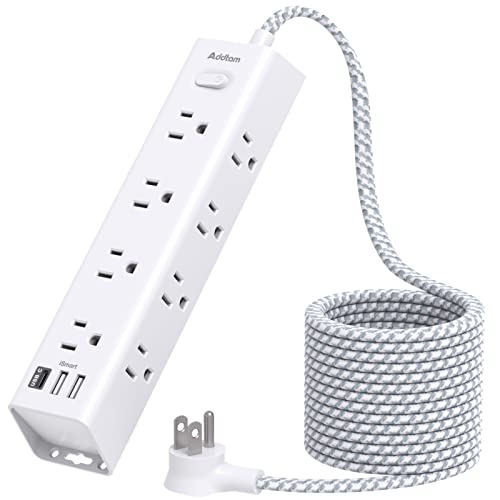
Surge Protector Power Strip – 10 FT Extension Cord, Power Strip with 12 Widely AC Outlet 3 USB, Flat Plug, Wall Mount Overload Protection, 1050J, Desk Charging Station for Home Office, ETL Listed
【15 IN 1 Power Strip】- 12 widely AC outlets power strips(1875W/15A Max)with 3 USB charing ports, the flat…
As an affiliate, we earn on qualifying purchases.
As an affiliate, we earn on qualifying purchases.
Conclusion
Remember, safety starts with you. Always check cords for damage, avoid overloading outlets, and unplug unused devices. Following these simple steps can prevent accidents and keep everyone safe. As the saying goes, “A stitch in time saves nine.” Stay vigilant and prioritize electrical safety—it’s better to be cautious than to regret. Your actions today protect your home and loved ones tomorrow. Stay safe, and never underestimate the power of prevention.

Surge Protector Outlet Extender – with Rotating Plug, 6 AC Multi Plug Outlet with 4 USB Ports (2 USB C), 1800J Wall Charger, 3-Sided Power Strip with Spaced Outlet Splitter for Home, Office, Travel
【10 IN 1 USB Wall Outlet Extender】- 6 AC outlet adapter (3 side, 15A/125V/1875W) with built-in 1800 Joules…
As an affiliate, we earn on qualifying purchases.
As an affiliate, we earn on qualifying purchases.

mxuteuk 5Pcs 3,5,10,15,20Amp Circuit Breakers Push Button Manual Reset 125/250V AC 32V DC,Overload Protector Switch Thermal Circuit Breakers with Quick Connect Terminals and Waterproof Button Caps
Product Name: Compact, Single Pole, Push-to-Reset Thermal Circuit Breakers
As an affiliate, we earn on qualifying purchases.
As an affiliate, we earn on qualifying purchases.