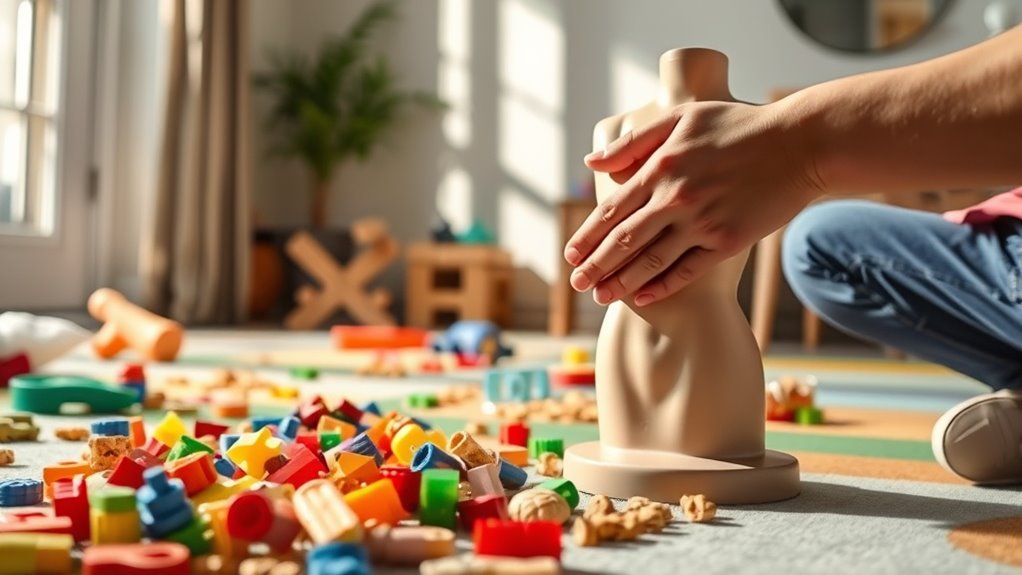

To prevent choking hazards, keep small objects like toys, jewelry, and food out of children’s reach, and always supervise their play and meals. Choose age-appropriate toys that don’t have small, detachable parts, and cut food into manageable pieces. If a choking incident occurs, act quickly—encourage coughing if the child can breathe, or perform first aid like back blows or abdominal thrusts if needed. Knowing these essentials can help protect your child; discover more safety tips as you continue exploring.

Get comfort and care essentials delivered free — and shop member deals
- Fast, free delivery on millions of items
- Access to Prime Big Deal Days deals on October 6–7
- Prime Video, Amazon Music and more included
Key Takeaways
- Choose age-appropriate toys without small, detachable parts and regularly inspect for damage to prevent choking hazards.
- Keep small objects and hazardous foods out of children’s reach; cut food into manageable pieces during meals.
- Supervise children during play and eating; never leave them unattended near small objects or food items.
- Learn and practice age-appropriate first aid techniques like back blows and abdominal thrusts for choking emergencies.
- Maintain vigilance by educating caregivers on choking signs, emergency response procedures, and ensuring quick access to first aid resources.

Have you ever wondered how small objects can pose serious risks to children? It’s a common concern, especially since little ones are naturally curious and tend to explore their environment with their mouths. To keep them safe, it’s essential to focus on safe toy choices and implement kitchen safety tips. Small toys with tiny parts, marbles, coins, or even certain food items can become choking hazards if children accidentally swallow or inhale them. Choosing age-appropriate toys that don’t have small detachable parts is one of the most effective ways to prevent choking incidents. Always check labels and recommendations to guarantee toys are suitable for your child’s age. Regularly inspecting toys for damage and removing loose parts also helps reduce risks. When shopping for toys, prioritize those with larger pieces that can’t be swallowed or lodged in a child’s airway. Proper toy safety is a crucial part of preventing choking hazards, especially for young children.
In the kitchen, safety tips are equally critical. Keep small objects like bottle caps, jewelry, and utensils out of reach. Be vigilant about foods that could turn into choking hazards, such as grapes, nuts, popcorn, and hot dogs. Cutting foods into smaller, manageable pieces can considerably reduce the risk, especially for younger children who are still developing their chewing skills. Never leave children unattended while they’re eating or playing with small objects. A key kitchen safety tip is to designate specific storage areas for small items and ensure they’re securely stored away from curious children. When preparing snacks or meals, be mindful of potential hazards and supervise children closely. Keeping a first aid kit nearby, especially one with supplies for choking emergencies, can make a big difference if an accident occurs.
Learning how to respond quickly is just as important as prevention. If a child begins choking, stay calm and act immediately. Encourage them to cough if they can, as this may help dislodge the object. If they are unable to cough or breathe, perform age-appropriate first aid, such as back blows or abdominal thrusts, depending on their age. Calling emergency services right away is essential if the situation worsens. Practice these techniques regularly so you’re ready to act confidently in an emergency. Remember, preventing choking starts with vigilance and proactive safety measures—making smart toy choices, keeping hazardous items out of reach, and knowing how to respond can save a child’s life.
age-appropriate toddler toys with large parts
As an affiliate, we earn on qualifying purchases.
As an affiliate, we earn on qualifying purchases.
Frequently Asked Questions
What Are the Most Common Household Choking Hazards?
You should be aware that common household choking hazards include small toys, coins, and food like nuts or grapes. Child safety depends on hazard awareness, so always keep small objects out of reach of kids. Regularly inspect your home for potential dangers, especially in areas children frequent. Being vigilant and proactive helps prevent choking incidents, ensuring a safer environment for your children and peace of mind for you.
How Can I Identify a Choking Emergency Quickly?
Like spotting a vintage alarm clock, recognizing a choking emergency is urgent. Watch for emergency signs like inability to speak, grasping the throat, or blue lips. If you see these, respond quickly by calling 911, encouraging coughing if possible, and performing Heimlich maneuver steps. Acting immediately guarantees you can help save a life, turning chaos into calm with swift, confident response steps.
Are There Specific Age Groups More at Risk?
You should know that infants and young children are more at risk because their size and developmentally appropriate behaviors make them more prone to choking. For example, toddlers often put objects in their mouths, so you must follow age-specific precautions like supervising play and avoiding small items. As children grow, their risk decreases, but it’s still essential to stay vigilant, especially with younger age groups, to prevent choking emergencies.
What Are Effective Choking Prevention Strategies at Restaurants?
Think of restaurant safety as a well-oiled machine—every part matters. To prevent choking, guarantee staff training emphasizes proper food serving techniques, like cutting food into manageable sizes. Regularly remind staff to stay alert for signs of choking and to respond quickly. Implement clear protocols and keep emergency equipment accessible. These strategies create a safer environment, preventing accidents and ensuring guests feel cared for and protected.
How Often Should First Aid Training Be Refreshed?
You should refresh your first aid training annually to stay current with CPR techniques and other life-saving skills. Regular first aid refresh courses ensure you’re prepared to respond effectively during emergencies, like choking incidents. Updating your training helps reinforce proper techniques and new protocols, so you can act confidently and quickly when needed. Make it a routine to stay sharp and ready to help in critical moments.
Conclusion
Remember, choking hazards are like silent shadows lurking around your loved ones. By staying vigilant and knowing how to prevent and respond, you hold the power to save a life. Don’t let a moment of complacency turn into a tragedy. Think of safety as your shield—strong and unwavering. Keep these tips close, and always be prepared, because in the fight against choking, awareness is your greatest weapon. Stay alert, stay safe.
Fall Picks
fall essentials
As an affiliate, we earn on qualifying purchases.