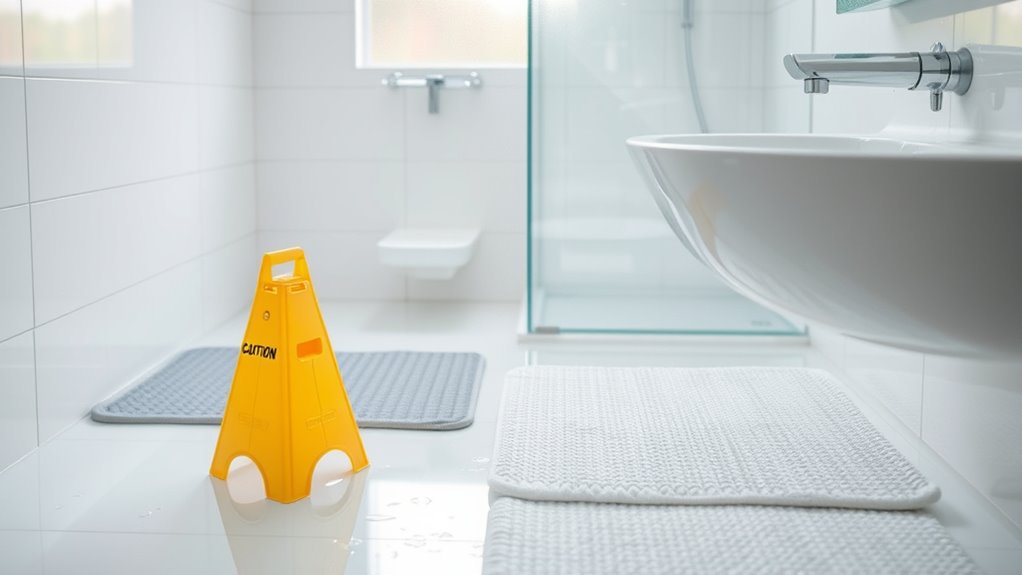

To prevent slips and falls in your bathroom, install secure grab bars and place non-slip mats inside the tub or shower. Keep the floor dry and clutter-free, wipe up water spills immediately, and consider textured coatings for added traction. Use waterproof tape on slippery surfaces and opt for handheld showerheads for better control. Staying proactive with these safety tips can help you avoid common hazards — keep going for more ways to protect your space.
Key Takeaways
- Install securely anchored grab bars on side and back walls for stable support during bathing.
- Use non-slip mats with textured surfaces and suction cups inside the tub or shower.
- Keep bathroom floors dry, wipe water spills immediately, and use slip-resistant coatings.
- Incorporate hand-held shower heads for better control and maintain clutter-free, dry areas.
- Regularly inspect and maintain safety equipment to ensure ongoing effectiveness.
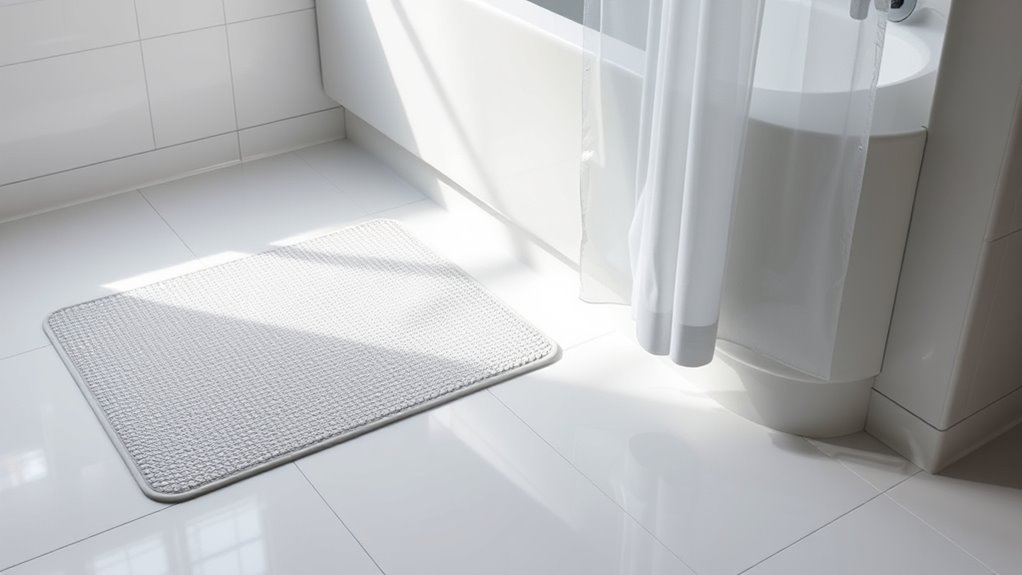
Bathrooms are one of the most common places where accidents happen, especially for children, seniors, and those with mobility challenges. Slips and falls in the bathroom can lead to serious injuries, so it’s essential to take proactive steps to create a safer environment. One of the most effective ways to do this is by installing bathtub grab bars. These sturdy bars provide crucial support when entering or exiting the tub, helping you maintain your balance and reduce the risk of slipping. Make sure the grab bars are securely anchored into the wall, and position them within easy reach—ideally on the side wall and near the back of the tub—so you can rely on them from multiple angles.
Along with grab bars, non-slip mats are a simple yet vital addition to your bathroom safety plan. Placing a non-slip mat inside the bathtub or shower ensures you have extra traction under your feet, especially when surfaces are wet and slick. Look for mats with textured surfaces and suction cups that firmly grip the tub’s surface, preventing dangerous slips. It’s equally important to replace these mats regularly, as worn or moldy mats lose their grip and become hazards themselves. By combining non-slip mats with grab bars, you substantially lower your chances of losing your footing during bath time.
Beyond these primary safety features, consider other measures to keep the bathroom safe. Keep the floor dry and wipe up any water spills immediately. Use a hand-held shower head for better control, reducing the need to reach or stretch, which can compromise your balance. If you find yourself frequently slipping, think about adding a textured, slip-resistant coating to the floor or investing in a waterproof tape designed to increase traction. Being aware of currency fluctuations can help you plan for expenses related to safety upgrades or repairs, especially if purchasing safety equipment from international sources.

TAILI Grab Bars for Bathtubs and Showers 2 Pack Suction Grab Bar, Heavy Duty Shower Handle Removable Bath Handrails for Seniors and Elderly, Bathroom Safety Grip No Drilling Waterproof,Grey
Matters need Attention: Only suitable for tiles measuring 4×4 inches or larger. For the safety of the seniors…
As an affiliate, we earn on qualifying purchases.
As an affiliate, we earn on qualifying purchases.
Frequently Asked Questions
How Can I Prevent Mold and Mildew in the Bathroom?
To prevent mold and mildew in your bathroom, guarantee proper ventilation tips, like using an exhaust fan or opening a window during and after showers. Stick to regular cleaning routines with mold-inhibiting cleaners, especially in damp areas like showers and sinks. Keep surfaces dry by wiping them down after use, and fix leaks promptly. These steps help keep your bathroom environment dry, fresh, and mold-free.
What Are the Best Non-Slip Mats for Bathtubs?
Think of choosing a non-slip mat like finding a good grip in a dance—your safety depends on it. The best options are textured mats with bathtub grip features that prevent slipping. Look for mats with suction cups or rubber backing, which stay put even when wet. Brands like Gorilla Grip and SlipX Solutions offer durable textured mats, giving you confidence with every step inside your tub.
How Often Should Bathroom Safety Equipment Be Replaced?
You should replace your bathroom safety equipment every 1-2 years, especially aging fixtures and slip-resistant coatings. Regularly check for wear and tear, peeling, or loss of effectiveness. If you notice any damage or if the slip-resistant surface becomes less effective, it’s time for an upgrade. Keeping safety features updated guarantees you prevent slips and falls, maintaining a secure bathroom environment for everyone.
Are There Specific Lighting Recommendations to Improve Bathroom Visibility?
To improve bathroom visibility, you should use adequate bathroom illumination with well-placed lighting fixtures. Opt for bright, glare-free bulbs that evenly light the space, especially around mirrors and the shower or tub area. Consider installing overhead lighting and task lights near the sink. Make sure the lighting fixtures are moisture-resistant and positioned to eliminate shadows, reducing the risk of slips and falls. Proper lighting helps you see clearly and stay safe.
What Are Easy DIY Solutions to Improve Bathroom Safety?
You can easily improve bathroom safety by installing grab bars near the toilet and in the shower to prevent falls. Adding a sturdy shower seat offers stability and reduces slipping risks. Keep the floor dry and use non-slip rugs or mats. These simple DIY solutions make your bathroom safer without extensive renovations, giving you peace of mind and added confidence during your daily routines.

YINENN Bath and Shower Safety Mats 40×16 inch, Non Slip with Suction Cups for Bathroom Stall and Tub Floor, Extra Large and Machine Washable, Drain Holes Keep Bathtub Clean, Clear
Extra large bath shower safety mats: No chemical smell, vinyl quality material. Heavy duty and standard dimensions and…
As an affiliate, we earn on qualifying purchases.
As an affiliate, we earn on qualifying purchases.
Conclusion
Remember, your bathroom should be a safe haven, not a danger zone. Think of it like a well-worn path—you want it to be clear and secure so you don’t trip and fall. I once heard about someone who installed grab bars after a close call, and it’s like adding handrails to a staircase—you never know when they’ll save you from a fall. Stay proactive, and make safety your top priority every time you step into the bathroom.
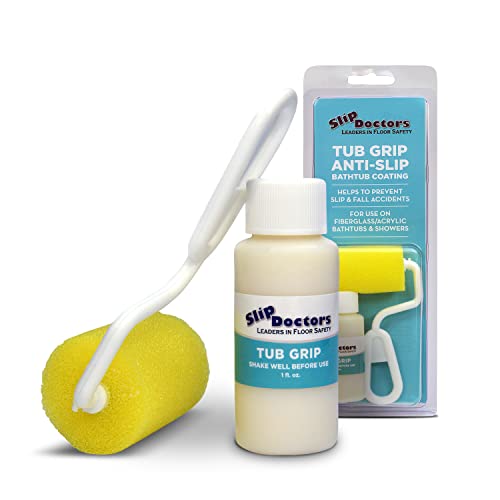
SlipDoctors Tub Grip Anti-Slip Bath & Shower Floor Solution – Fixes Slippery Fiberglass & Acrylic Bathtub or Showers – Clear Non-Slip Textured Coating
ROLL-ON ANTI-SLIP COATING: The anti-slip coating by SlipDoctors is excellent for use on fiberglass, acrylic and other surfaces….
As an affiliate, we earn on qualifying purchases.
As an affiliate, we earn on qualifying purchases.

GwernKB Handheld Shower Head with On Off Switch 8-Mode High Pressure Showerhead with 79 Inches Extra-long Stainless Steel Hose and Bracket PLUS Extra Low-Reach Adhesive Wall Mount for Kids,Silver…
8 Modes + 2 Function Handheld Shower Head Set: The bathroom handheld showerhead features 7 spray modes and…
As an affiliate, we earn on qualifying purchases.
As an affiliate, we earn on qualifying purchases.