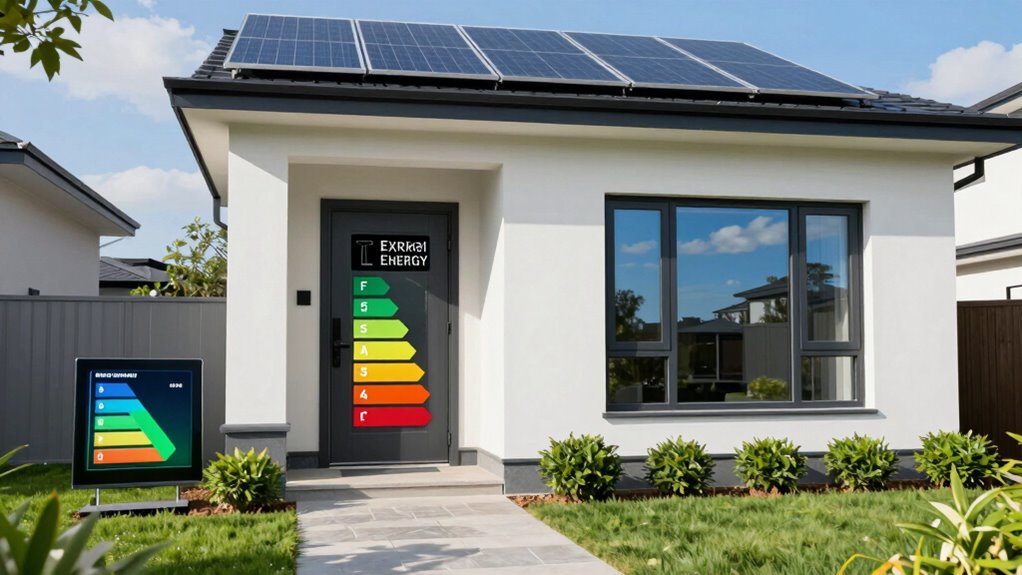

To understand home efficiency ratings, start by looking at the score or letter label, like A through G, which shows how energy-efficient your home is. Recognize that different systems may use varying methods, so compare ratings carefully. Focus on factors like insulation, windows, and heating systems that influence the score. Knowing what impacts your rating can help you identify areas for improvement. Keep exploring to discover how to make your home more efficient.

Turn quiet afternoons into listening time
- Thousands of audiobooks, podcasts and originals
- Listen on your phone, tablet or Echo — also offline
- Cancel anytime
Key Takeaways
- Home efficiency ratings provide a quick overview of a home’s energy conservation level.
- They are based on factors like insulation, windows, HVAC systems, and overall home design.
- Ratings may use different systems, such as letter labels (A-G) or numerical scores, which vary in meaning.
- Understanding the calculation method helps compare ratings accurately across different systems.
- Improving ratings involves sealing leaks, upgrading appliances, adding insulation, and installing programmable thermostats.

Have you ever wondered what those energy efficiency ratings on houses really mean? If so, you’re not alone. These ratings are designed to give you a quick snapshot of how well a home conserves energy, but understanding what they signify can feel overwhelming at first. To truly grasp their importance, you need to know how they’re calculated and what factors influence them. That’s where rating calculation methods come into play. They typically consider various elements, like insulation quality, window efficiency, heating and cooling systems, and overall home design. By understanding these methods, you can better interpret what a high or low rating indicates about a property’s energy performance.
Understanding energy ratings helps you interpret home efficiency and make smarter upgrades.
Once you understand how ratings are calculated, you can use that knowledge to find ways to improve your own home’s efficiency. This is where energy saving tips become invaluable. For instance, sealing leaks around doors and windows can significantly boost your rating, as it reduces drafts and heat loss. Upgrading to energy-efficient appliances, such as LED lighting or ENERGY STAR-rated HVAC systems, can also make a noticeable difference. Simple steps like adding insulation or installing programmable thermostats can help you optimize your home’s energy use, leading to lower utility bills and a smaller carbon footprint.
It’s also helpful to know that different rating systems might use distinct calculation methods, which can affect how you interpret the scores. Some systems give a numerical score, while others use labels like “A” to “G,” with “A” being the most efficient. Knowing the rating calculation methods behind these scores helps you compare homes more accurately. For example, a home rated “B” in one system might be equivalent to a “C” in another, depending on how the ratings are derived. Additionally, understanding home efficiency ratings can help you identify areas where your home might be underperforming, so you can focus your improvement efforts effectively. Recognizing the factors affecting energy performance allows homeowners to prioritize upgrades that will have the most significant impact. Being aware of rating calculation methods enables better comparison between different homes and rating systems, making your efforts more targeted and effective.
Ultimately, understanding home efficiency ratings isn’t just about reading a number; it’s about grasping what actions can boost your home’s performance. The key is to look beyond the rating itself and focus on the factors that influence it. By applying energy saving tips aligned with your home’s specific needs, you can improve your rating over time. Whether you’re aiming to reduce energy bills, increase comfort, or lower your environmental impact, knowing how ratings are calculated and what they mean empowers you to take meaningful steps toward a more efficient and sustainable home.
Products Worth Considering

Oral-B iO Series 3 Rechargeable Electric Toothbrush for Adults, Black, with 2 Brush Heads and Travel Case

OMRON VIVA 360+ Body Composition Monitor and Smart Scale
Withings Sleep Under-Mattress Sleep Tracking Pad
As an affiliate, we earn on qualifying purchases.
Frequently Asked Questions
What Factors Influence a Home’s Efficiency Rating the Most?
Your home’s efficiency rating is mainly influenced by insulation quality and appliance performance. Good insulation keeps heat in during winter and out during summer, reducing energy use. Efficient appliances use less energy to operate, lowering your bills and emissions. If your insulation is poor or appliances are outdated, your home’s efficiency drops. Regularly upgrading insulation and appliances, along with sealing leaks, can considerably improve your home’s efficiency rating.
How Often Should I Review My Home’s Efficiency Rating?
You should review your home’s efficiency rating at least once every couple of years or after major updates. Regularly updating your energy saving tips and following maintenance checklists keeps your home running smoothly. This proactive approach helps catch small issues before they grow, ensuring your efficiency remains high. Staying vigilant allows you to optimize savings and comfort, making sure your home stays as energy-efficient as possible over time.
Are Higher Ratings Always More Cost-Effective Long-Term?
Higher ratings often lead to lower energy bills, but they aren’t always more cost-effective long-term without proper cost saving strategies. You should consider rating accuracy and upfront costs versus long-term savings. Sometimes, a slightly lower rating might still save you money if the initial investment is smaller and the efficiency improvements are well-implemented. Always evaluate your home’s specific needs and consult professionals to maximize your energy savings effectively.
Can Efficiency Ratings Vary Between Different Rating Systems?
Yes, efficiency ratings can vary between different rating systems because they often use distinct methods to assess appliance efficiency and insulation standards. When comparing ratings, you might see differences based on how each system measures energy use or insulation quality. This means that a home or appliance might score higher in one system but lower in another, so it’s important to understand the specific criteria each system uses for accurate comparison.
Do Efficiency Ratings Include Renewable Energy Sources?
Think of efficiency ratings as your home’s report card—yes, they often include renewable energy sources like solar panels and wind turbines. These ratings now reflect renewable integration, showcasing how well your home uses various energy sources. By considering renewable energy, the ratings give a more complete picture of your home’s overall efficiency, highlighting the benefits of clean energy. This helps you see how sustainable energy sources contribute to lower energy consumption and costs.
Conclusion
Understanding your home’s efficiency ratings can seem overwhelming at first, but it’s worth the effort. Don’t let fear of change hold you back—improving your home’s efficiency can save you money and create a more comfortable living space. Remember, every small upgrade makes a difference. You have the power to make smart choices that benefit both your wallet and the environment. Take that first step today—your future self will thank you.