To compare roofing material lifespans, look at how long each option typically lasts—metal roofs can last 40-70 years, while asphalt shingles generally last 15-30 years. Consider the initial costs versus long-term durability, as longer-lasting materials might save you money over time. Also, think about environmental impact, such as recyclability or energy use in manufacturing. Want to understand more about how these factors influence your choice? Keep exploring for detailed insights.

Turn quiet afternoons into listening time
- Thousands of audiobooks, podcasts and originals
- Listen on your phone, tablet or Echo — also offline
- Cancel anytime
Key Takeaways
- Assess the average lifespan ranges provided for each roofing material (e.g., asphalt, metal, tile, wood).
- Consider the impact of climate and weather conditions on material durability.
- Evaluate the manufacturer’s warranty and expected maintenance requirements.
- Compare the long-term cost-effectiveness based on durability and replacement frequency.
- Factor in environmental sustainability and recyclability alongside lifespan for a comprehensive comparison.
Your roof is a vital part of your home, and understanding how long different roofing materials last can help you plan for repairs or replacements. When comparing roofing material lifespans, it’s important to evaluate not just durability but also factors like installation costs and environmental impact. These elements influence your long-term investment and how eco-friendly your choice is. For instance, some materials might have a higher initial cost but last longer, reducing the frequency of replacements and overall expenses. Others may be cheaper upfront but need frequent repairs, which can add up over time.
Understanding roofing material lifespans helps you make cost-effective, eco-friendly choices for your home’s long-term protection.
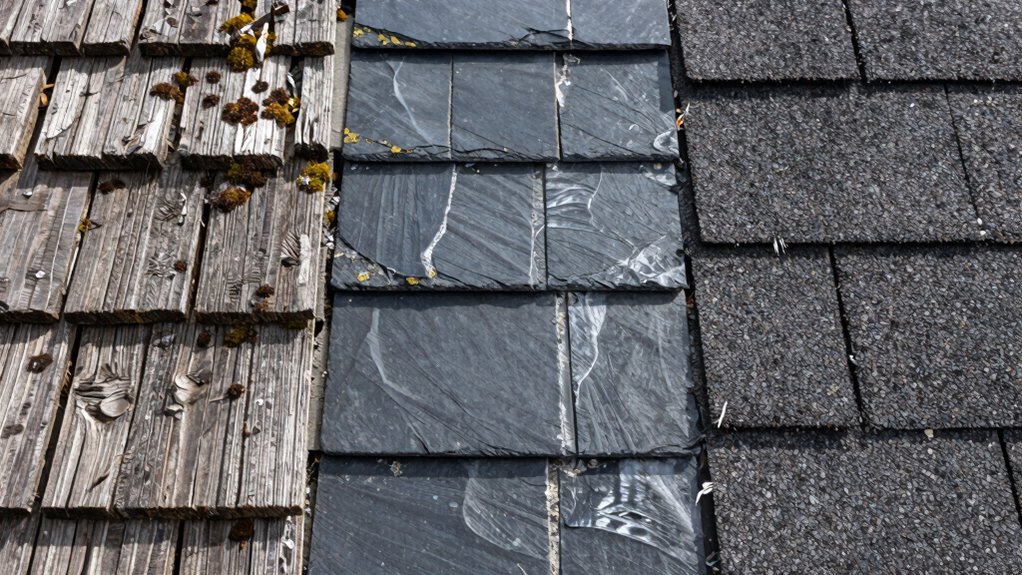
As you evaluate options, pay attention to the typical lifespan of each roofing material. Asphalt shingles generally last about 15 to 30 years, making them a popular choice for many homeowners due to their affordability and straightforward installation. However, they tend to have a higher environmental impact because they are made from petroleum products and are not easily recyclable. Metal roofs, on the other hand, can last 40 to 70 years, offering superior durability and a lower environmental footprint since many metals are recyclable. Although installation costs for metal can be higher, their longevity and eco-friendliness can make them a smart long-term investment.
Tile roofing, such as clay or concrete, typically lasts 50 years or more and provides a distinctive aesthetic. These materials are durable but can be heavy, which might increase installation costs due to the need for reinforced support structures. Their environmental impact varies; clay and concrete tiles are made from natural materials and are often recyclable, but their manufacturing process can be energy-intensive. Conversely, wood shingles have a lifespan of about 20 to 40 years and tend to have a moderate environmental impact, especially if sourced sustainably. They also tend to be less costly to install but may require more maintenance over their lifespan. Additionally, considering the environmental impact of each material can guide you toward choices that align with your sustainability goals.
When comparing these options, think about how each material’s lifespan aligns with your goals for sustainability and cost efficiency. Longer-lasting materials might have a higher upfront cost but could save you money and inconvenience in the long run. It’s also useful to consider the recyclability of the materials, as this can significantly influence their environmental friendliness. Moreover, understanding the manufacturing process of each roofing material can help you assess their overall environmental footprint. Additionally, consider how environmentally friendly each material is—if reducing your home’s carbon footprint is a priority, this might influence your choice. For example, some materials like metal are highly recyclable, contributing to sustainable building practices. Ultimately, your decision should balance durability, installation costs, and environmental impact, ensuring you select a roofing material that fits both your budget and your values while providing reliable protection for your home over the years.
metal roofing panels 40 year warranty
As an affiliate, we earn on qualifying purchases.
As an affiliate, we earn on qualifying purchases.
Frequently Asked Questions
How Do Climate Conditions Affect Roofing Material Longevity?
Climate conditions markedly impact your roofing material’s longevity. If you live in an area with harsh weather, you need roofing with strong weather resistance and climate adaptability. For example, in snowy regions, materials that resist freeze-thaw cycles last longer, while in hot, sunny areas, UV-resistant options are better. Choosing the right roofing based on your climate helps guarantee it withstands weather challenges and lasts as long as possible.
Can Maintenance Extend the Lifespan of Roofing Materials?
Maintenance can definitely extend your roofing material’s lifespan. Regular inspections and repairs help prevent minor issues from becoming major problems, saving you money in the long run. By doing a maintenance cost analysis, you’ll see that investing in upkeep can be more affordable than premature replacements. Additionally, checking roof material warranties guarantees you’re aware of coverage and maintenance requirements, which can further protect your roof’s longevity.
Are There Eco-Friendly Roofing Options With Long Lifespans?
Yes, there are eco-friendly options with long-lasting materials. You might consider metal roofs, which are highly durable, recyclable, and can last 50 years or more. Clay or concrete tiles also offer sustainability and longevity, often exceeding 50 years. These options reduce environmental impact while providing dependable protection. By choosing eco-friendly materials like these, you guarantee your roof lasts longer and minimizes your ecological footprint.
How Do Installation Methods Impact Roofing Durability?
Did you know poor installation causes up to 70% of roofing failures? Your roofing installation directly impacts its durability, especially when considering material compatibility. If the wrong method is used, it can lead to leaks, cracks, or premature replacement. Proper installation guarantees the materials work together seamlessly, extending your roof’s lifespan. Always choose experienced professionals who understand the specific requirements of your roofing material for the best long-term performance.
What Are the Signs of Roof Material Deterioration?
You’ll notice signs of roof material deterioration through roof cracking and granule loss. Cracks in shingles indicate aging or damage, while granule loss appears as bald spots on your roof or in your gutters. These signs weaken your roof’s protection against weather. If you spot extensive cracking or granule loss, it’s a good idea to have a professional inspect your roof promptly, preventing further damage and costly repairs.
Conclusion
When choosing roofing materials, it’s essential to think about their lifespans to make an informed decision. While some options may seem more affordable upfront, investing in higher-quality materials can save you money and effort in the long run. Don’t let initial costs deter you—think of it as an investment in durability and peace of mind. Ultimately, understanding these differences guarantees you select a roof that stands the test of time, saving you hassle and replacement costs later on.
Halloween Picks
halloween
As an affiliate, we earn on qualifying purchases.