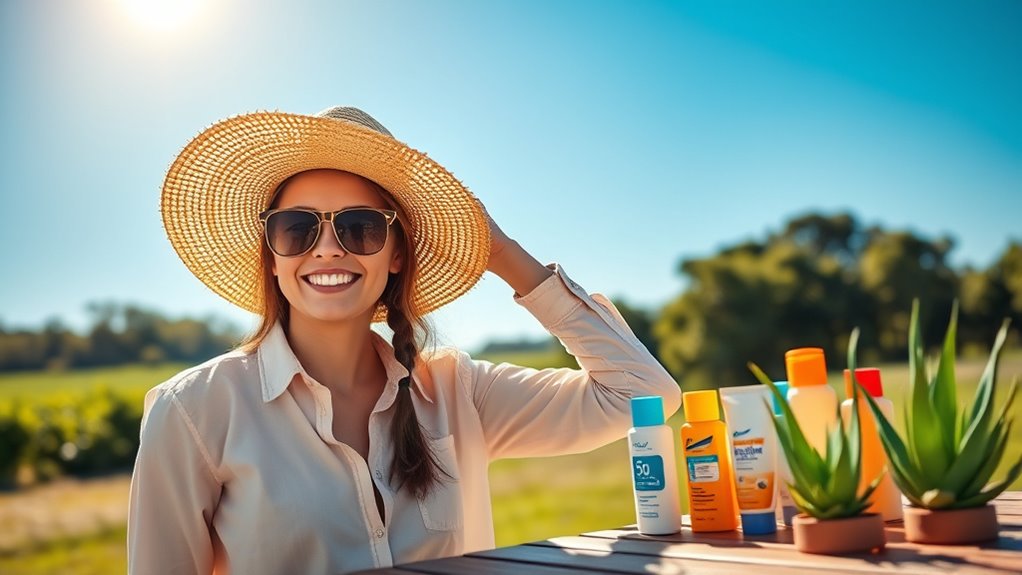

To protect your skin from the sun’s harmful rays, apply a broad-spectrum sunscreen with at least SPF 30 daily, reapplying every two hours or after swimming or sweating. Wear protective clothing, hats, and sunglasses, especially during peak hours from 10 a.m. to 4 p.m. Remember that UV rays can reflect off surfaces like water and sand, increasing exposure. Staying vigilant about these tips helps preserve your skin’s health—find out more to keep your skin safe.
Key Takeaways
- Apply broad-spectrum sunscreen generously and reapply every two hours, especially during outdoor activities and water exposure.
- Wear protective clothing, wide-brimmed hats, and sunglasses to physically block harmful UV rays.
- Limit sun exposure during peak hours, typically between 10 a.m. and 4 p.m., to reduce UV radiation risk.
- Be aware of surface reflections from water, sand, and concrete that can increase UV exposure.
- Incorporate additional sun safety measures like seeking shade and using UV-protective accessories for comprehensive skin protection.

As the sun shines brighter and days grow longer, protecting your skin from harmful UV rays becomes more vital than ever. UV protection isn’t just about avoiding sunburn; it’s about safeguarding your skin from long-term damage that can lead to premature aging and skin cancer. One of the most effective ways to do this is by applying sunscreen daily, but not all sunscreens are created equal. Understanding sunscreen ingredients helps you choose the right product for your skin type and activity level. Look for broad-spectrum sunscreens, which protect against both UVA and UVB rays. Ingredients like zinc oxide and titanium dioxide are mineral-based options that provide physical barriers, reflecting UV rays away from your skin. Chemical ingredients such as avobenzone, oxybenzone, and octocrylene absorb UV radiation and convert it into heat, which is then dissipated. Combining these ingredients can offer extensive protection, but it’s essential to pick formulations that suit your skin’s needs. For sensitive skin, mineral-based sunscreens with zinc oxide or titanium dioxide tend to cause fewer irritations. If you’re active or sweat a lot, opt for water-resistant formulations to guarantee continuous protection even during exercise or swimming. Remember, applying enough sunscreen is vital; most adults need about one ounce (a shot glass full) to cover all exposed areas adequately. Reapply every two hours, or more often if you’re sweating or swimming. Wearing protective clothing, wide-brimmed hats, and sunglasses adds a physical barrier against UV rays, reducing your reliance solely on sunscreen. Seeking shade during peak sunlight hours, usually between 10 a.m. and 4 p.m., further minimizes exposure. It’s easy to forget that UV rays can reflect off surfaces like water, sand, and concrete, increasing your risk even when you’re in the shade. So, staying vigilant and proactive about sun protection is key. Keep in mind that some skincare products contain ingredients that can increase photosensitivity, making your skin more prone to damage. Check labels and avoid combining certain medications or skincare products with high-SPF sunscreens during intense sun exposure. Additionally, understanding resources and tools available can help you make informed decisions about your sun safety routines. Ultimately, building a routine that incorporates effective UV protection measures helps preserve your skin’s health and appearance. By understanding sunscreen ingredients and how to use them properly, you take control of your sun safety. Remember, protecting your skin isn’t just about avoiding discomfort today; it’s about investing in your skin’s future, ensuring you look and feel your best for years to come.
Frequently Asked Questions
How Often Should I Reapply Sunscreen During the Day?
You should reapply sunscreen every two hours to maintain effective protection. If you’re swimming or sweating heavily, reapply more often, ideally immediately after water exposure or intense activity. Keep in mind the sunscreen lifespan; most formulas lose their effectiveness after a couple of hours. Don’t forget to reapply even on cloudy days or if you’re outdoors for extended periods, ensuring continuous protection against harmful rays.
Are There Natural Remedies for Sunburn Relief?
Think of herbal remedies as your skin’s own healing heroes. Aloe vera is a top natural remedy for sunburn relief—its cooling, soothing properties calm redness and reduce inflammation. You can also try chamomile or calendula extracts for added comfort. Apply fresh aloe gel directly to your skin or use creams with these ingredients. These natural options work quickly, helping you recover faster while keeping your skin healthy and protected.
Can Wearing Makeup Affect Sun Protection Effectiveness?
Yes, wearing makeup can affect sun protection effectiveness. If your makeup contains SPF, like a cosmetic sunblock, it helps add an extra layer of defense. However, if you don’t apply enough or skip reapplication, your protection may be compromised. Always use a broad-spectrum SPF under your makeup or opt for a dedicated sunscreen first, then apply makeup with SPF for peak coverage.
What Clothing Offers the Best Sun Protection?
Think of yourself as a knight shielding against the sun’s rays. You’ll want UV resistant fabrics that block harmful UV rays, much like armor, and wide brim hats that serve as a personal shield for your face and neck. Long-sleeved shirts and sunglasses further enhance your defense. By choosing these clothing options, you actively protect your skin and enjoy outdoor adventures safely, just like a modern-day guardian.
How Does UV Exposure Vary With Cloud Cover?
Cloud cover can considerably reduce UV intensity, but it doesn’t eliminate UV exposure entirely. When the sky is overcast, clouds block some UV rays, so you might feel less sun, but UV rays can still reach your skin and cause damage. Thin or wispy clouds may only slightly decrease UV, while thick clouds can cut exposure by up to 90%. Always take precautions, even on cloudy days, to protect your skin.
Conclusion
Protecting your skin from the sun is like shielding a precious treasure; it’s worth every effort. By wearing sunscreen, seeking shade, and covering up, you’re building a shield that keeps harmful rays at bay. Remember, the sun’s rays are relentless, but your vigilance is stronger. Keep these habits in mind, and you’ll keep your skin safe and healthy—because a little prevention now is a lifetime of beauty later. Stay sun smart and enjoy the sunshine safely!