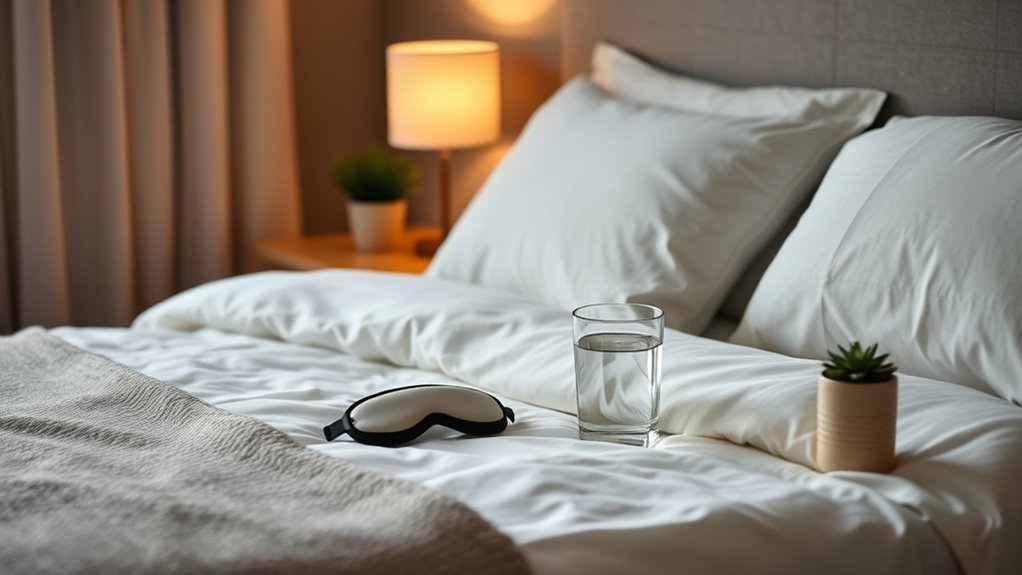

To get better rest, focus on creating a relaxing sleep environment by keeping your room dark, quiet, and cool, and removing clutter and electronic devices. Stick to a consistent sleep schedule, going to bed and waking up at the same time each day, even on weekends. Establish a calming pre-sleep routine, like reading or deep breathing, and avoid stimulating activities or heavy meals before bed. Continued efforts can help you enjoy more restful nights and brighter days.
Key Takeaways
- Create a dark, quiet, and cool sleep environment to promote relaxation and signal readiness for rest.
- Maintain a consistent sleep schedule, going to bed and waking up at the same time daily.
- Establish a calming pre-sleep routine with relaxing activities like reading or deep breathing.
- Remove electronic devices and clutter from the bedroom to reduce distractions and blue light exposure.
- Avoid caffeine, heavy meals, and stimulating activities before bedtime to improve sleep quality.

Getting a good night’s sleep is essential for your overall health and well-being, yet many people struggle to achieve restful, uninterrupted rest. The key to improving your sleep starts with optimizing your sleep environment and establishing effective bedtime routines. Your sleep environment plays a pivotal role in how easily you fall asleep and stay asleep throughout the night. A dark, quiet, and cool room signals to your body that it’s time to rest, making it easier to drift off and maintain deep sleep. Consider blackout curtains or an eye mask to block out light, and use earplugs or a white noise machine to drown out disruptive sounds. Keep your room at a comfortable temperature—around 60 to 67 degrees Fahrenheit—so your body doesn’t have to work hard to regulate its temperature, which can interfere with sleep quality.
Creating a dark, quiet, and cool sleep environment enhances restful, uninterrupted sleep.
Creating a calming sleep environment isn’t just about physical factors. Your bedding should be comfortable and supportive, encouraging relaxation as you prepare for bed. Remove clutter and electronic devices from your sleeping space, as they can be distracting or emit blue light that suppresses melatonin production. Instead, set a peaceful tone with gentle lighting and soothing decor, helping your mind associate your bedroom with rest and tranquility. Maintaining a consistent sleep schedule and sleep-wake cycle reinforces your body’s natural rhythm, making it easier to fall asleep and wake up refreshed.
Establishing consistent bedtime routines can markedly enhance your sleep hygiene. Going to bed and waking up at the same time each day helps regulate your body’s internal clock, making it easier to fall asleep naturally. Before bed, engage in relaxing activities that signal to your brain it’s time to wind down. This could include reading a book, practicing deep breathing, or gentle stretching—anything that reduces stress and calms your mind. Avoid stimulating activities, caffeine, and heavy meals close to bedtime, as these can interfere with your ability to fall asleep quickly.
Consistency is vital; even on weekends, stick to your routine to reinforce your body’s sleep-wake cycle. A predictable pre-sleep routine creates a mental cue that it’s time to relax, making it easier to transition into sleep. Over time, these habits become ingrained, leading to better sleep quality and feeling more rested upon waking.
Frequently Asked Questions
Can Sleep Hygiene Practices Help With Insomnia?
Yes, sleep hygiene practices can help with insomnia. By establishing consistent sleep rituals and bedtime routines, you signal your body that it’s time to wind down, making it easier to fall asleep. Avoid screens and caffeine before bed, and create a relaxing environment. These habits improve sleep quality over time, reducing insomnia symptoms and helping you wake up refreshed. Consistency is key to seeing lasting benefits.
How Does Diet Affect Sleep Quality?
Like a delicate dance, your diet influences your sleep quality. You should focus on digestion, eating light foods before bed, and avoid caffeine, which is a stimulant that disrupts sleep. Heavy, greasy meals can cause discomfort and wakefulness. Caffeine, found in coffee and tea, blocks sleep-inducing chemicals, making it harder to rest. Prioritize balanced meals and limit stimulants to help your body wind down naturally at night.
Is Napping Beneficial or Disruptive to Nighttime Sleep?
Power napping can be beneficial if you take short naps, around 20 minutes, boosting your alertness without causing sleep disruption. However, longer or late-afternoon naps might interfere with your nighttime sleep, leading to sleep disruption. If you notice trouble falling asleep or staying asleep, consider adjusting your nap duration or timing. Generally, strategic power napping can enhance your daytime energy without negatively impacting your overall sleep quality.
What Are Signs of Poor Sleep Hygiene?
You might notice signs of poor sleep hygiene if your sleep routines are irregular or your bedroom environment isn’t conducive to rest. Struggling to fall asleep, waking up frequently, or feeling tired during the day indicate trouble. Poor sleep routines, like inconsistent bedtimes, and an uncomfortable bedroom environment, such as noise or light, can disrupt your sleep. Addressing these issues helps improve your overall sleep quality and daily functioning.
Can Sleep Hygiene Improve Overall Mental Health?
Like a lighthouse guiding ships, good sleep hygiene can profoundly boost your mental health. By establishing consistent sleep routines and prioritizing stress reduction, you create a stable foundation for emotional resilience. Better sleep helps regulate mood, reduce anxiety, and improve cognitive function. When you take these steps, you empower your mind to stay balanced, making it easier to handle life’s challenges and enjoy a healthier, happier mental state.
Conclusion
By practicing good sleep hygiene, you can transform your nights from restless chaos into peaceful, rejuvenating slumber. Stick to a consistent schedule, create a calming environment, and avoid screens before bed—these small changes can make a huge difference. When you prioritize your sleep, you’re giving your body the gift of energy, focus, and happiness that’s more powerful than any superpower. So start today, and watch your sleep improve faster than you ever thought possible.