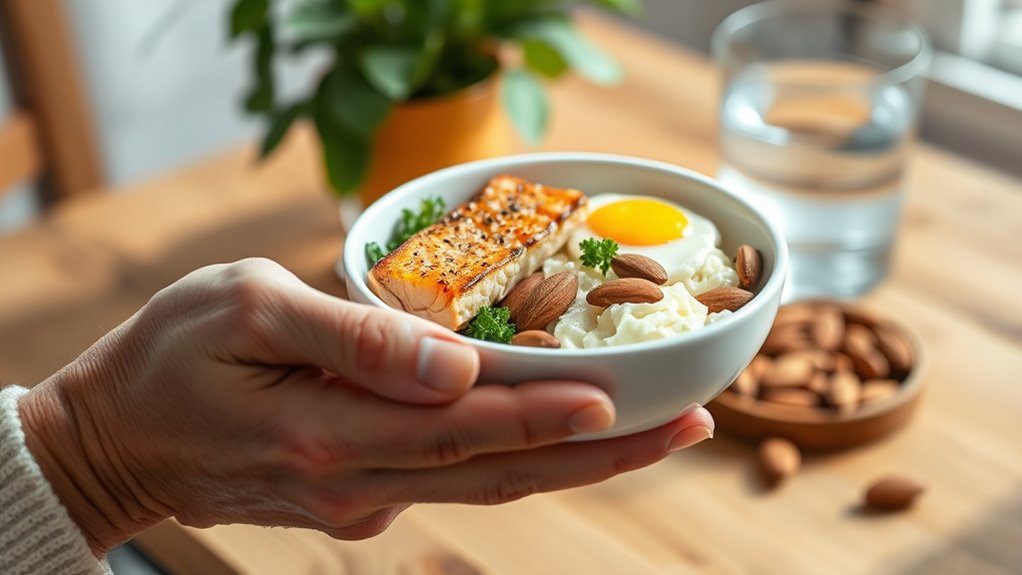

As you age, your protein needs increase to help maintain muscle mass, strength, and mobility. Experts suggest consuming about 1.0 to 1.2 grams of protein per kilogram of body weight daily, with even distribution across meals. Prioritizing high-quality sources like lean meats, dairy, eggs, beans, and tofu supports muscle repair and overall health. To optimize your intake and stay active longer, explore the key strategies that can make a difference in your nutrition plan.

Get comfort and care essentials delivered free — and shop member deals
- Fast, free delivery on millions of items
- Access to Prime Big Deal Days deals on October 6–7
- Prime Video, Amazon Music and more included
Key Takeaways
- Older adults generally need 1.0 to 1.2 grams of protein per kilogram of body weight daily.
- Age-related muscle loss (sarcopenia) can be mitigated with adequate protein intake.
- Distributing protein evenly across meals enhances muscle protein synthesis.
- High-quality protein sources include lean meats, fish, dairy, beans, and plant-based options.
- Personalized protein recommendations should be discussed with healthcare providers for optimal health.
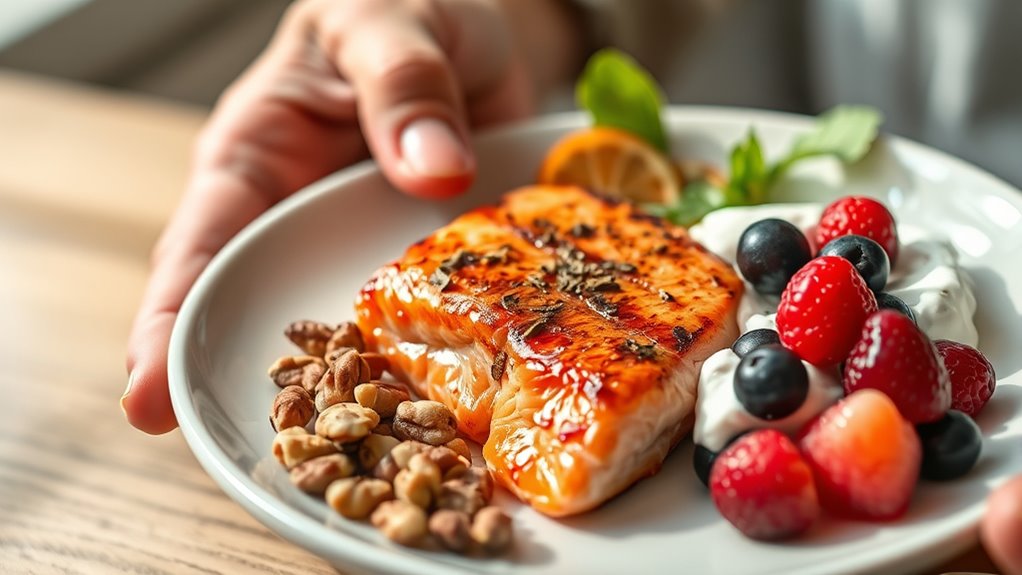
As you age, your protein needs become increasingly vital for maintaining muscle mass, strength, and overall health. Falling short on protein can lead to muscle loss, weakness, and a higher risk of falls or fractures. To support muscle maintenance, it’s essential to understand how much protein your body requires and where to get it from. Your dietary choices play a pivotal role here, as they determine whether you meet your daily needs and preserve your muscle health.
Older adults often need more protein than younger individuals because aging naturally slows down muscle protein synthesis. This means that even if you’re eating the same amount of protein as you did when you were younger, your body might not utilize it as efficiently. To counteract this, increasing your intake slightly can make a significant difference. Aim for around 1.0 to 1.2 grams of protein per kilogram of body weight daily, though your healthcare provider can give personalized recommendations based on your health status. Making sure you meet your protein goals helps to prevent sarcopenia, the age-related loss of muscle mass, which can impair mobility and independence.
Dietary sources of protein are plentiful, and choosing a variety of them can help you meet your needs effectively. High-quality proteins contain all the essential amino acids your body can’t produce on its own. These include animal-based sources like lean meats such as chicken, turkey, and beef, as well as fish, eggs, and dairy products like yogurt and cheese. If you prefer plant-based options, beans, lentils, chickpeas, tofu, tempeh, and quinoa are excellent choices, especially when combined thoughtfully to ensure you get all essential amino acids. Incorporating a mix of these sources into your meals throughout the day guarantees a steady supply of amino acids necessary for muscle repair and growth. Additionally, understanding protein quality helps you choose the best sources to meet your needs efficiently.
It’s also wise to distribute your protein intake evenly across your meals. Consuming moderate amounts of protein at each sitting maximizes muscle synthesis and helps prevent muscle breakdown. For example, including a serving of eggs or Greek yogurt at breakfast, lean chicken or fish at lunch and dinner, and plant-based options like beans or tofu in between can optimize muscle maintenance. Remember, staying hydrated and maintaining a balanced diet rich in fruits, vegetables, and whole grains supports overall health and complements your protein intake.
high protein supplements for seniors
As an affiliate, we earn on qualifying purchases.
As an affiliate, we earn on qualifying purchases.
Frequently Asked Questions
How Does Protein Intake Affect Muscle Maintenance in Seniors?
You need adequate protein intake to support muscle preservation as you age. Consuming enough protein helps maintain muscle mass and strength, reducing the risk of frailty. Your body’s ability to absorb protein may decline with age, so eating sufficient amounts becomes essential. Prioritize high-quality sources and spread intake throughout the day, ensuring ideal protein absorption. This approach helps keep your muscles strong and functional longer.
Are Plant-Based Proteins Sufficient for Older Adults’ Nutritional Needs?
You might think plant-based sources are enough for your nutritional needs, but ironically, their protein bioavailability can be lower than animal products. While they do provide essential amino acids, you’ll need to be mindful of variety and quantity to meet your older adult protein requirements. So, yes, they can be sufficient, but only if you strategically include diverse plant proteins and possibly supplement to guarantee the best muscle maintenance and overall health.
What Are the Risks of Excessive Protein Consumption in Aging Populations?
Excessive protein intake can strain your kidneys, potentially leading to kidney problems over time. It may also contribute to bone loss, increasing your risk of fractures. While your body needs protein to stay healthy, overdoing it can cause these health issues. To stay safe, you should balance your protein consumption and consult with a healthcare professional to determine the right amount for your age and health status.
How Can Taste Changes Impact Protein Intake in the Elderly?
Imagine your taste buds as tiny artists, painting your meals with vibrant flavors. As you age, these artists may lose their touch, dulling taste perception. This can make protein-rich foods seem bland or unappealing, leading you to skip essential nutrients. To counter this, flavor enhancement becomes your palette’s best friend, helping you savor your meals fully and ensuring you meet your protein needs despite taste changes.
Are Protein Supplements Necessary for All Seniors?
You might not need protein supplements if you can get enough through your diet, but it’s important to consider protein absorption and supplement safety. If you have difficulty eating enough or absorbing nutrients properly, supplements could help meet your needs. Always consult your healthcare provider before starting any supplement, as they can advise whether it’s appropriate for you and ensure it won’t interfere with your medications or health conditions.
Conclusion
As you age, meeting your protein needs becomes essential to maintain strength and vigor. Do you really want to let muscle loss and weakness take over? By choosing nutrient-rich foods and staying active, you can support your health and enjoy staying independent longer. Remember, prioritizing your protein intake isn’t just about aging gracefully—it’s about aging strong. So, why not make small changes today that can lead to a healthier, more vibrant tomorrow?
Halloween Picks
halloween
As an affiliate, we earn on qualifying purchases.