TL;DR
A study published in the Journal of the National Cancer Institute found that about 6 in 10 highly frail older breast cancer survivors had no Medicare home health care in a given year. The research measured care use, not eligibility, and excluded Medicare Advantage; traditional Medicare generally ties home health coverage to skilled care needs and being homebound.
A study published in the Journal of the National Cancer Institute found that about 6 in 10 highly frail breast cancer survivors aged 66 or older had no Medicare home health care in a given year. The findings raise questions about whether existing coverage reaches survivors who need help at home years after cancer treatment, although the study measured care use rather than who qualified for services.

Turn quiet afternoons into listening time
- Thousands of audiobooks, podcasts and originals
- Listen on your phone, tablet or Echo — also offline
- Cancel anytime
Researchers examined 347,953 survivor-years involving 134,410 women with invasive breast cancer who were at least 66 and between two and 10 years past diagnosis. The data covered 2017 through 2020 and combined cancer registry records with Medicare enrollment and claims, as well as assessments completed when home health care began. Medicare Advantage enrollees were not included.
The study classified about 7% of survivors as highly frail in a given year. About 40% of that group used Medicare home health care, compared with 11% of survivors overall. Frailty was estimated using a claims-based score calibrated against in-home assessment data; it included health problems and functional limitations such as difficulty bathing or dressing, trouble walking, falls, memory problems, incontinence and exhaustion.
The authors applied their frailty measure to survivors whether or not they had received a home health assessment. The analysis therefore describes the relationship between estimated frailty and use of covered home health services; it does not establish that every person without services was eligible, applied for care or had an unmet need that Medicare would cover.
Coverage Rules and Frail Survivors
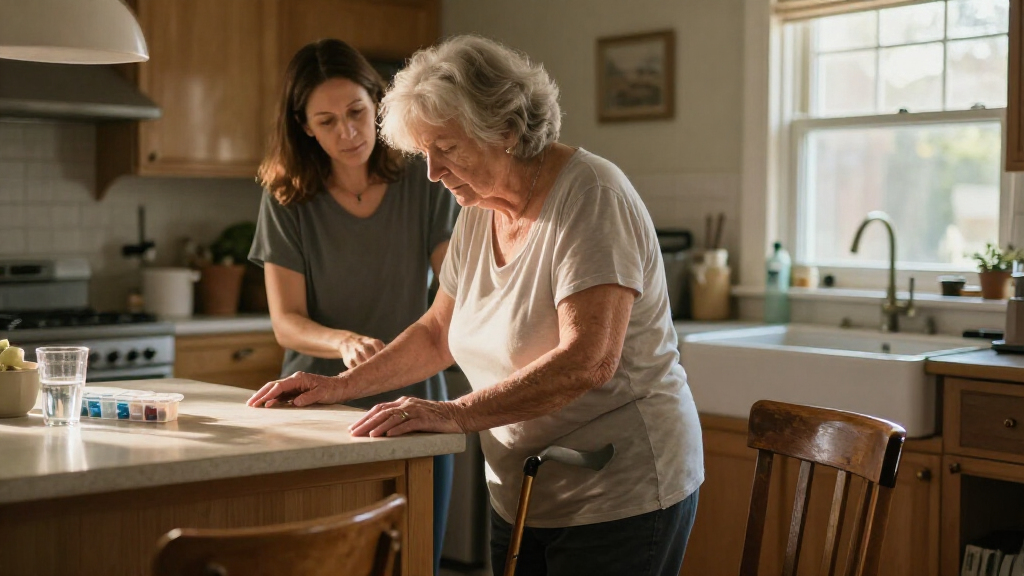
The findings point to a potential mismatch between the support some survivors need and the type of home care traditional Medicare covers. According to the report, Medicare home health care is generally tied to a skilled care need and a person being homebound. Survivors who mainly need help with personal care, such as bathing or dressing, or who do not meet the homebound requirement may not receive that help through this benefit.
Lead author Dr. Xuanzi Shirley Qin, an assistant professor at the University of Maryland School of Public Health, said that people with primarily personal-care needs may fall through a coverage gap. Qin said a lack of support at home can heighten the risk of falls or hospital stays. Those risks are the researchers’ stated concern; this study, as described in the report, did not measure whether lack of home health care caused falls or hospitalizations.
The issue may affect a growing population. The report says the United States has about 4 million breast cancer survivors, and longer survival means more people are living with cancer histories alongside age-related health and functional limitations. The study suggests that survivorship care and benefit design may need to account for those needs, but it does not test a specific policy change.
Products Worth Considering

Fitbit Edge Activity Tracker – Silver/Fog – Small & Large Bands

Bowflex SelectTech 840 Adjustable Kettlebell

BowFlex Results Series 552 SelectTech Adjustable Dumbbells (Pair)
As an affiliate, we earn on qualifying purchases.
How the Study Measured Frailty
The research, by Qin and colleagues including Dr. Jie Chen of the University of Maryland School of Public Health, focused on older women living beyond the immediate period after treatment. Researchers used linked cancer registry and Medicare records, alongside the Outcome and Assessment Information Set, a set of assessments completed by nurses and therapists when home health care starts.
Because those assessments are not available for every survivor, the team built a frailty score from Medicare claims, including diagnoses and medical equipment, and calibrated it to the in-home assessment index. They then applied that score to all survivors in the analysis. The report says survivors six to 10 years from diagnosis were as frail as those two to five years out, which Qin said suggests their needs may reflect aging more than the effects of cancer treatment.
The study was published in 2026 as “Claims-based frailty, dual eligibility, and potential unmet home-health needs in older breast cancer survivors.” Its data end in 2020, so the results do not describe current-year service use or policy changes after that period.
“In a given year, about 6 in 10 highly frail survivors had none.”
— Dr. Xuanzi Shirley Qin, lead author and assistant professor at the University of Maryland School of Public Health
What the Data Cannot Establish
The study measured whether participants used Medicare home health care, not whether they qualified or whether a service was denied. It also does not show how many women sought care, what services they needed, or whether other forms of paid or unpaid support met their needs. The finding that most highly frail survivors had no Medicare home health use should not be read as proof that all of them lacked assistance.
The analysis excluded Medicare Advantage and used data from 2017 to 2020. The report does not establish whether the same rates apply to people enrolled in those plans, to survivors under 66, to men with breast cancer, or to people with other cancer types. It also does not establish that frailty in survivors six to 10 years after diagnosis was caused by aging rather than treatment, only that the researchers found similar frailty levels across the two time-since-diagnosis groups.
Screening and Coverage Questions
Qin called for routine frailty screening during survivorship care and for Medicare to cover personal care at home that frail survivors need. The report says some clinics have begun screening, but survivorship guidelines do not yet require it. No policy change or implementation timetable was announced in the source material.
For now, the study adds evidence for policymakers and care providers to weigh when considering home support for older cancer survivors. Further research could clarify who has unmet personal-care needs, how coverage differs across Medicare arrangements and whether expanded support affects outcomes such as falls or hospital stays. Those questions remain open; the published analysis does not evaluate a proposed benefit or show what a future coverage decision will be.
Key Questions
What did the study find?
About 6 in 10 highly frail survivors in the study had no Medicare home health care in a given year. About 40% of the highly frail group used it.
Who was included in the research?
The study covered 134,410 women aged 66 or older with invasive breast cancer, from two to 10 years after diagnosis. The data spanned 2017 to 2020.
Does no recorded home health care mean someone was denied coverage?
No. The researchers measured service use, not eligibility or denials. The analysis does not show whether a person applied, qualified, or received help from another source.
Why might some frail survivors not receive Medicare home health care?
The report says traditional Medicare generally ties home health coverage to a skilled care need and being homebound. People who mainly need personal care, or are not homebound, may fall outside those conditions.
Lead author Xuanzi Shirley Qin called for frailty screening in survivorship care and said Medicare should cover personal care at home for frail survivors. The report describes these as recommendations, not adopted policy changes.
Source: rss