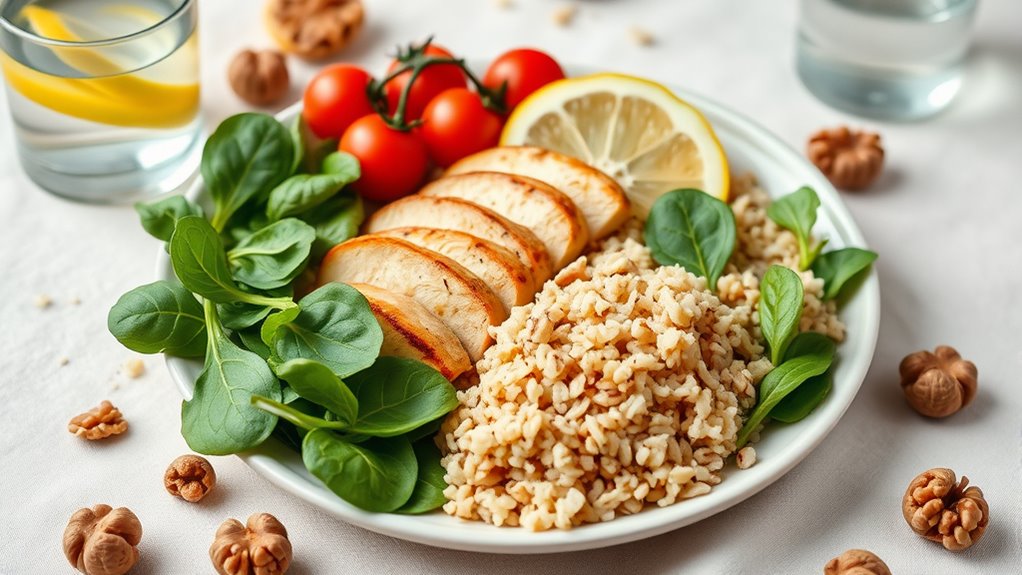
A healthy plate for older adults includes filling half with colorful vegetables and fruits rich in vitamins and fiber, which boost immunity and digestion. Include lean proteins like fish, poultry, beans, and dairy to support muscle health, and choose whole grains such as oats and brown rice for steady energy. Add healthy fats from nuts, seeds, and olive oil, and keep portions manageable with smaller plates. Staying hydrated is key; keep exploring for more tips to support your well-being.
Key Takeaways
- Fill half the plate with colorful vegetables and fruits to boost nutrients and support immune and digestive health.
- Include lean protein sources like fish, poultry, beans, and low-fat dairy for muscle maintenance.
- Incorporate whole grains and healthy fats to provide sustained energy and reduce inflammation.
- Practice portion control with smaller plates and stay well-hydrated to meet nutrient needs despite decreased appetite.
- Plan balanced meals that meet evolving nutritional requirements to promote overall health and quality of life.
As you age, maintaining a balanced diet becomes crucial for supporting overall health and well-being. Your nutrient needs change over time, requiring you to pay closer attention to what you eat. Proper meal planning helps guarantee you’re getting the right vitamins, minerals, and other nutrients your body needs to function at its best. Focus on creating meals that combine a variety of food groups to meet these evolving requirements.
Start by filling your plate with colorful vegetables and fruits. These foods are packed with antioxidants, fiber, and essential vitamins that support your immune system and digestive health. Since older adults often need more fiber to prevent constipation and promote gut health, aim for half of your plate to be vegetables or fruits at each meal. Incorporate leafy greens, berries, and cruciferous vegetables like broccoli and cauliflower to maximize nutrient intake.
Fill half your plate with colorful vegetables and fruits to boost immunity and digestive health.
Next, include lean protein sources such as poultry, fish, beans, or low-fat dairy. Protein is crucial for muscle maintenance, especially as muscle mass tends to decline with age. When planning your meals, think about how to balance your protein intake throughout the day. For example, adding eggs in the morning, fish at lunch, or beans at dinner can help you meet your daily requirements. Remember, older adults may need slightly more protein to prevent muscle loss, so choose quality sources and consider portion sizes carefully.
Whole grains should also play a key role in your meals. Foods like brown rice, oats, and whole wheat bread provide complex carbohydrates that supply steady energy and help regulate blood sugar levels. When planning your meals, opt for whole grains over refined options, and aim to include them in at least two meals a day.
Healthy fats are another critical component of a nutritious plate. Incorporate sources such as nuts, seeds, avocados, and olive oil. These fats support brain health and can help reduce inflammation. When meal planning, consider adding a handful of nuts as a snack or drizzling olive oil over your salads and vegetables.
Finally, stay mindful of portion sizes and hydration. As you age, your appetite may decrease, but your body still needs the right amount of nutrients. Using smaller plates can help control portion sizes, and drinking plenty of water throughout the day keeps you well-hydrated. Making thoughtful choices in your meal planning guarantees your plate remains balanced, satisfying, and aligned with your changing nutrient needs. Additionally, being aware of symptoms of breast cancer can lead to early detection and better health outcomes, so staying informed about health changes is important. This approach not only supports your physical health but also keeps mealtimes enjoyable and nourishing.

Dexas Watermelon Cutting/Serving Board, Watermelon Shape
- Size: 17.5 x 12 inches
- Dishwasher Safe: Yes
- Reversible Design: Use both sides
As an affiliate, we earn on qualifying purchases.
As an affiliate, we earn on qualifying purchases.
Frequently Asked Questions
How Can I Customize a Healthy Plate for Different Health Conditions?
To customize a healthy plate for different health conditions, you need to focus on your unique nutritional needs. Adjust portion sizes and food choices based on your medical advice, such as reducing sodium for hypertension or increasing calcium for osteoporosis. Incorporate a variety of nutrient-dense foods to support your health goals. You’re in control of your healthy diet, so tailor your plate to help manage or improve your specific health condition effectively.
What Are Quick and Easy Healthy Meal Options for Seniors?
You can prepare quick, healthy meals for seniors by focusing on simple meal prep strategies like assembling salads, wraps, or grain bowls with fresh vegetables, lean proteins, and healthy fats. Keep snack ideas handy, such as nuts, fruit, yogurt, or veggie sticks with hummus, to guarantee they’re nourished between meals. Opt for easy-to-make recipes that require minimal cooking, helping seniors maintain a balanced diet effortlessly.
How Does Hydration Fit Into a Healthy Plate for Older Adults?
Did you know that about 20% of older adults are dehydrated? Hydration importance is crucial for your health, helping digestion and maintaining energy. You should aim for fluid intake guidelines of about 8-10 cups daily, including water, tea, and foods like fruits and vegetables. Incorporating hydration into your healthy plate ensures you stay well-nourished and energized, supporting overall well-being as you age.
Are There Specific Portion Sizes Recommended for Seniors?
You should follow specific portion guidance and serving recommendations tailored for seniors. Typically, aim for smaller portions, such as half a cup of cooked vegetables, a palm-sized portion of lean protein, and a fist-sized serving of grains. Adjust these sizes based on your activity level and health needs. Listening to your body’s hunger cues helps make certain you get the right amount of nutrients without overeating.
How Can Caregivers Encourage Healthy Eating Habits in Older Adults?
You can encourage healthy eating habits by involving family in meal planning, making it a collaborative effort that appeals to your older adult’s preferences. Offer balanced, colorful meals with the right portion sizes, and create a pleasant dining environment. Support their independence by offering choices, and regularly discuss the benefits of nutritious foods. Your active involvement and encouragement foster positive habits, ensuring they enjoy and stick to healthy eating routines.
Conclusion
Remember, eating a balanced plate supports your energy and well-being as you age. Some might think it’s too complicated or restrictive, but it’s simply about making smart choices. By including a variety of colorful foods, you give your body the nutrients it needs to stay strong and healthy. So don’t worry—small, consistent changes can make a big difference. Embrace your healthy plate and enjoy the journey toward a more vibrant, active life.