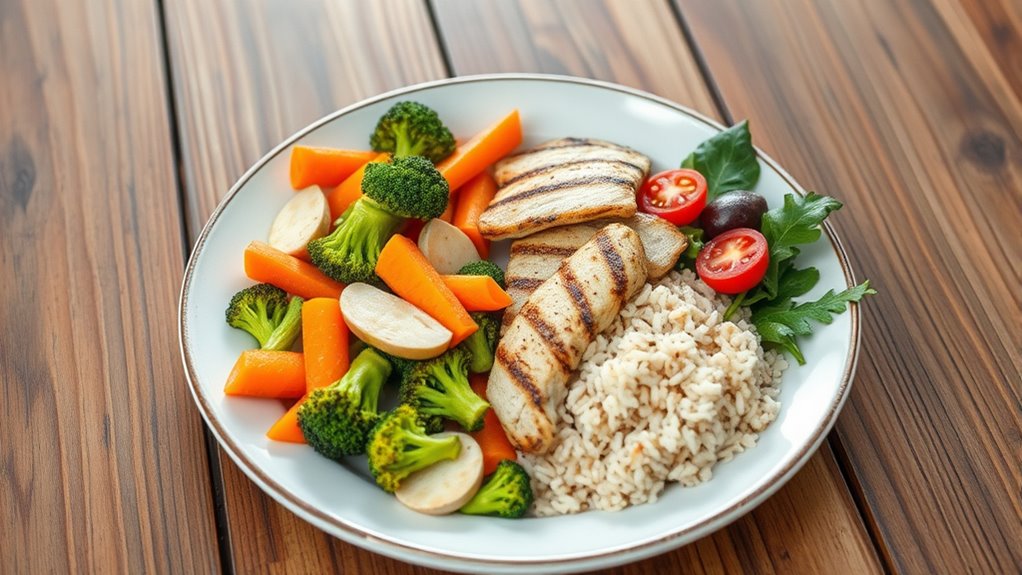

To create a healthy plate for older adults, focus on nutrient-rich foods like colorful vegetables, fruits, lean proteins, and whole grains to support bone and muscle health. Stay well-hydrated by drinking water regularly and eating hydrating foods like watermelon and cucumbers. Opt for smaller, frequent meals that are easy to digest, and combine foods strategically to maximize nutrient absorption. Keep these tips in mind to promote overall well-being and learn even more ways to stay healthy.
Key Takeaways
- Incorporate colorful vegetables, fruits, lean proteins, and whole grains for nutrient-dense meals supporting bone and muscle health.
- Plan smaller, frequent meals to enhance digestion and nutrient absorption as aging affects the digestive system.
- Maintain consistent hydration through water and hydrating foods like watermelon and cucumbers, avoiding sugary drinks and excess alcohol.
- Combine vitamin C-rich foods with iron-rich plant sources to improve iron absorption and prevent anemia.
- Manage medications properly and stay informed about health practices to support overall well-being and independence.

Creating a healthy plate is crucial for older adults to maintain energy, support overall health, and prevent chronic conditions. As you age, your body’s ability to absorb nutrients can decline, making it even more important to choose foods that maximize nutrient absorption. Incorporate a variety of nutrient-dense foods like colorful vegetables, fruits, lean proteins, and whole grains. These choices provide essential vitamins and minerals, such as calcium, vitamin D, and magnesium, which are critical for maintaining bone density and muscle strength. To enhance nutrient absorption, consider pairing vitamin C-rich foods like citrus or peppers with iron-rich plant foods, such as spinach or beans. This combination can boost iron absorption and help prevent anemia, common among older adults. Keep in mind that your digestive system may slow down over time, so eating smaller, more frequent meals can support better digestion and nutrient uptake.
Hydration habits play a fundamental role in maintaining a healthy plate and overall health. As you age, your sense of thirst may diminish, increasing the risk of dehydration. To stay well-hydrated, make it a point to drink water regularly throughout the day, not just when you’re thirsty. Incorporate hydrating foods like watermelon, cucumbers, and strawberries into your meals and snacks. These foods can supplement your fluid intake and contribute to hydration without adding extra calories. Avoid sugary drinks and limit alcohol, which can dehydrate you further. Establishing a routine for hydration can help you remember to drink fluids consistently, supporting kidney function, digestion, and overall energy levels. Additionally, understanding cold medications and their proper use can help manage symptoms effectively without compromising your health.
Frequently Asked Questions
How Can I Customize a Healthy Plate for Specific Health Conditions?
To customize a healthy plate for specific health conditions, focus on personalized meal planning that meets your dietary restrictions. Adjust portion sizes, include nutrient-rich foods, and avoid ingredients that may worsen your condition. Consult with a healthcare professional or registered dietitian to develop a tailored plan. This approach guarantees you get the right nutrients while managing your health effectively, making your meals both enjoyable and beneficial.
What Are the Best Protein Sources for Older Adults?
Like a knight choosing the best sword, you should select a variety of proteins to keep your diet strong. You’ll benefit most from lean meats, fish, dairy, and eggs, plus plant-based options like beans, lentils, nuts, and seeds. Incorporating a diverse protein variety helps meet your nutritional needs, supports muscle health, and adds flavor. So, mix it up and enjoy the benefits of both animal and plant-based proteins daily.
How Does Hydration Impact Nutritional Needs in Aging?
Hydration effects profoundly impact your nutritional needs as you age. When you’re well-hydrated, your body maintains proper fluid balance, which helps digestion, nutrient absorption, and circulation. Dehydration can lead to fatigue, confusion, and health issues, increasing your risk of illness. Drinking enough water supports overall well-being, ensuring your body functions most effectively and that you get the most out of your nutritious foods. Stay mindful of your hydration to stay healthy.
Are There Affordable Options for Nutritious Foods?
Think of nutritious foods as treasures you can find without a fortune. You can enjoy budget-friendly options like canned beans, frozen vegetables, and whole grains, which provide affordable nutrition. Shopping sales, buying in bulk, and choosing seasonal produce help you stretch your dollar further. These strategies make it easy to maintain a healthy diet without overspending, ensuring you get the nutrients you need without breaking the bank.
How Can I Encourage Picky Eaters to Eat Healthily?
To encourage picky eaters to eat healthily, focus on taste enhancement by adding herbs and spices to make foods more appealing. Improve meal presentation with colorful, well-arranged plates to stimulate interest. Offer small portions to avoid overwhelming them, and involve them in meal prep to boost their willingness to try new foods. Patience and positive reinforcement also help build healthy eating habits over time.
Conclusion
Think of your plate as a colorful garden, where each food group is a flourishing plant. When you nurture this garden with balanced choices, your health blossoms like vibrant flowers. Remember, you’re the gardener of your well-being—tending carefully guarantees a thriving, joyful life. Keep planting nourishing foods daily, and watch your vitality grow strong and resilient, just like a beautiful garden that flourishes with love and attention.