

Creating checklists for daily, weekly, and monthly chores helps you stay organized and reduces stress. Focus on simple routines like making beds or preparing meals daily, doing laundry or grocery shopping weekly, and scheduling deep cleaning or maintenance monthly. Keep these checklists visible and check off tasks as you complete them to build habits and save mental energy. Continue exploring ways to make your routines even smoother and more effective.
Key Takeaways
- Create specific daily, weekly, and monthly checklists to establish consistent routines for chores and home maintenance.
- Use visible checklists on common areas to promote habit formation and accountability.
- Review and update checklists regularly to ensure tasks are completed and routines remain effective.
- Assign designated days or times for each checklist to improve time management and reduce decision fatigue.
- Benefits include a more organized environment, decreased stress, and automatic chores over time.
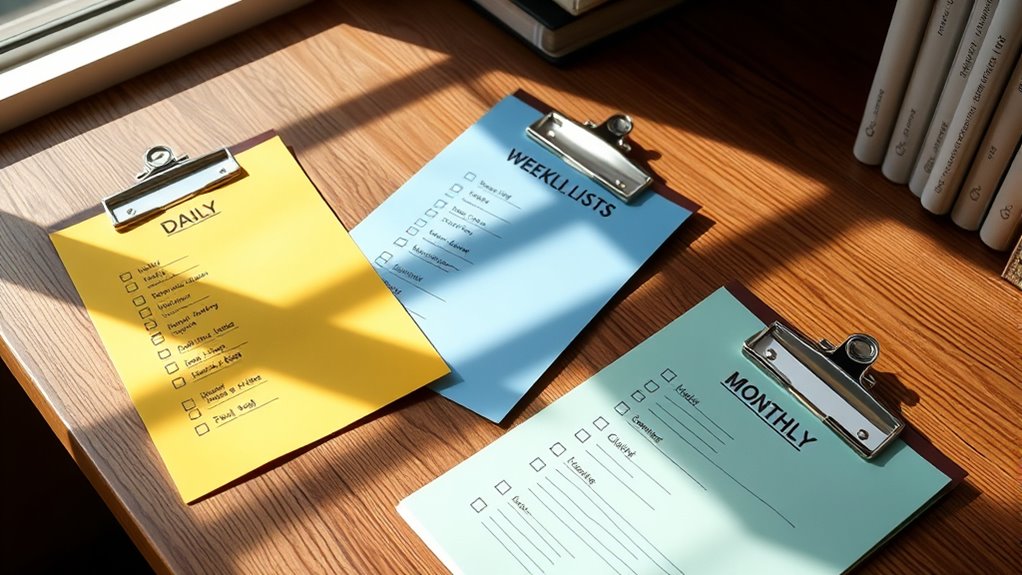
Have you ever felt overwhelmed trying to keep up with daily, weekly, and monthly chores? It’s a common experience, and the key to managing it lies in creating effective checklists. When you develop a system that breaks tasks into manageable routines, you’re practicing habit formation, which makes these chores feel less burdensome over time. Time management becomes easier because you’re not constantly trying to remember everything; instead, your checklists serve as a clear guide, helping you allocate your time efficiently. With consistent use, these lists turn into habits, reducing decision fatigue and making daily life more predictable.
To get started, focus on establishing simple, repeating checklists for each time frame. For daily chores, include essentials like making your bed, preparing meals, or tidying up common areas. These are tasks you want to do every day, and having a set list ensures you don’t forget any important steps. For weekly chores, think about tasks that don’t need daily attention but still contribute to your overall well-being, such as laundry, grocery shopping, or cleaning bathrooms. Monthly chores might include deeper cleaning tasks like washing windows, organizing closets, or scheduling maintenance appointments. By assigning specific days or times for each checklist, you’re reinforcing habits that become second nature.
Creating checklists also improves your time management skills. When you know exactly what needs to be done and when, you avoid wasting time deciding what to do next. Instead, your checklist guides your actions, making your routines more efficient. This structure helps prevent procrastination because you have a clear plan, reducing the mental clutter that often leads to feeling overwhelmed. As you check off tasks daily, weekly, and monthly, you’ll notice your confidence grow—because you’re taking control of your environment instead of letting chores pile up unexpectedly. Additionally, understanding the importance of consistent routines can support habit formation and make these tasks feel more automatic over time.
Another way to make your checklists stick is by keeping them visible. Post your daily list on the fridge or bathroom mirror, and review your weekly and monthly lists at regular intervals. Over time, as these routines become habitual, you’ll find yourself completing chores more quickly and with less effort. This consistency not only improves your environment but also boosts your sense of accomplishment. Remember, habit formation is a process that requires patience, but with persistent use of checklists, managing chores becomes a natural part of your daily life.
In the end, well-structured checklists for daily, weekly, and monthly care are tools that help you stay organized, save time, and develop lasting habits. They take the stress out of chores, giving you clarity and control over your environment. With time, these routines will become automatic, freeing you up to focus on other important aspects of your life.
Frequently Asked Questions
How Do I Customize Checklists for Specific Needs?
To customize checklists for specific needs, use personalization techniques by adding or removing tasks relevant to your routines. You can adapt checklists by prioritizing important items, adjusting frequency, or including personalized reminders. Experiment with different formats until you discover what works best. Regularly review and update your checklist adaptation to guarantee it stays aligned with your evolving needs, making your daily, weekly, or monthly routines more efficient and tailored.
What Tools Are Best for Digital Checklist Management?
You should try apps like Todoist or Microsoft To Do, which integrate seamlessly with your calendar and other tools. They offer customizable checklists, app integration, and reminder alerts to keep you on track. These features help you stay organized and guarantee you don’t forget important tasks. With their user-friendly interfaces, you can easily adapt checklists for your specific needs and receive timely notifications to complete your daily, weekly, or monthly care routines.
How Often Should I Update My Care Checklists?
You should update your care checklists seasonally, like changing gears on a smooth ride, to stay aligned with natural shifts. Incorporate personalization strategies that reflect your evolving needs, ensuring your routines remain relevant and effective. As seasons turn, review and tweak your checklists regularly—monthly or quarterly—to keep them fresh and responsive. This rhythm keeps your care routine seamless, adaptable, and tuned to your lifestyle’s changing landscape.
Can Checklists Help Improve Overall Health Outcomes?
Yes, checklists can considerably improve your health outcomes by supporting habit formation and keeping you accountable. When you follow a structured list, you’re more likely to stick with healthy routines consistently. Sharing your progress with accountability partners boosts motivation and commitment. Over time, this disciplined approach helps you develop lasting habits, leading to better overall health and well-being.
How Do I Ensure Consistency in Following Checklists?
Think of your routine as planting a garden; consistency blooms from habit formation. To stay on track, set clear reminders and create a routine that fits your lifestyle. Enlist accountability partners who can motivate and remind you, much like a gardener tending to plants. Regularly review your checklists and celebrate small wins to reinforce habits. This approach keeps your health goals steady and your commitment strong.
Conclusion
By following these checklists, you create a steady rhythm that transforms your care routine into a peaceful sanctuary. Picture your space gleaming softly in morning light, your tasks seamlessly flowing like a gentle stream. Each small action builds a foundation of comfort and order, turning daily moments into a calming ritual. With consistent care, you cultivate a serene environment that welcomes you home, wrapping you in a sense of calm and accomplishment every day.