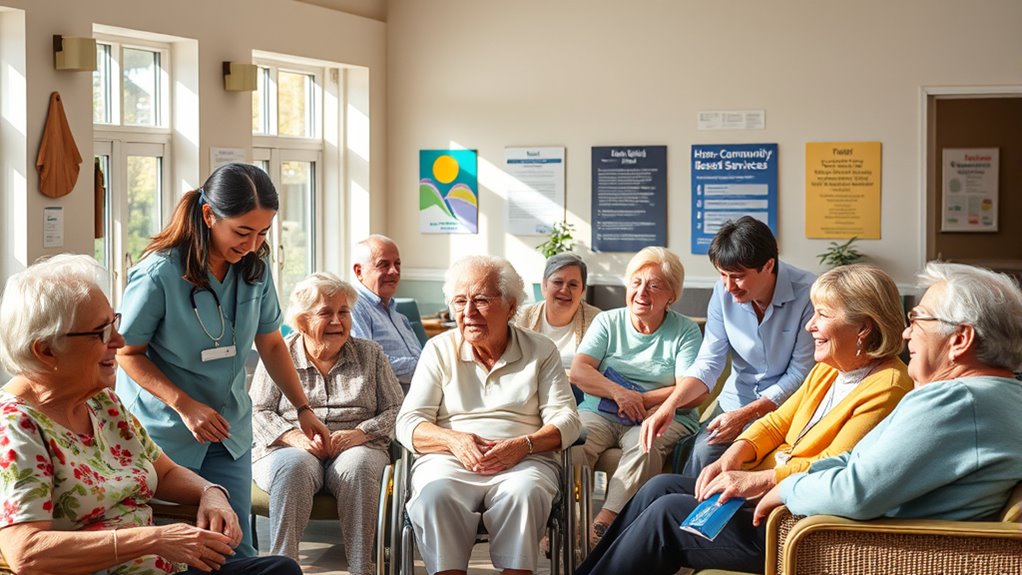

PACE combines medical care with home- and community-based services to support your goal of living independently. It creates a coordinated system where healthcare providers work together to meet your medical, social, and daily living needs. By integrating services like transportation, social activities, and support at home, PACE helps you stay connected and well. If you keep exploring, you’ll discover how this approach can truly make a difference in your everyday life.
Key Takeaways
- PACE integrates medical, social, and community-based services to support seniors living independently at home.
- Care coordination in PACE ensures seamless access to home- and community-based supports tailored to individual needs.
- PACE’s funding model promotes preventive and comprehensive services, including transportation and social activities.
- It facilitates access to a broad range of support systems within the community, enhancing holistic well-being.
- PACE’s integration reduces hospital visits by managing health and social needs proactively in the home environment.

Program of All-Inclusive Care for the Elderly (PACE) is an extensive health model designed to help seniors live independently by providing coordinated medical, social, and support services. As someone exploring options for elder care, you’ll find that PACE focuses on seamless care coordination, ensuring that all healthcare providers work together to meet your needs. This integration reduces unnecessary hospital visits and helps you maintain stability in your daily life. PACE isn’t just about medical treatment; it covers everything from transportation to social activities, creating a comprehensive support system tailored to your preferences and health status.
One of the key strengths of PACE lies in its care coordination. When you participate in the program, a team of professionals—doctors, nurses, social workers, and other specialists—collaborates to develop a personalized care plan. This plan addresses your medical conditions, medications, nutrition, and social needs, making sure all aspects of your well-being are managed efficiently. Because of this team approach, you benefit from consistent communication among providers, which minimizes errors and confusion. If you need a specialist or support service, your care coordinator arranges these seamlessly, so you don’t have to navigate complex healthcare systems alone.
Funding models are another essential aspect of PACE that you should understand. The program operates through a unique funding structure primarily supported by Medicare and Medicaid. This model simplifies billing and reduces out-of-pocket expenses, often covering services that traditional fee-for-service healthcare might not. Since PACE is capitated, it receives a fixed amount of funding per participant, incentivizing providers to focus on preventative care and overall health maintenance rather than just treating illnesses. This approach aligns the financial incentives with your health outcomes, encouraging proactive management of chronic conditions and early intervention. It also means that if your health declines or if you need additional services, your care team can adjust your plan without unexpected costs or bureaucratic delays.
Top picks for "pace home community"
Open Amazon search results for this keyword.
As an affiliate, we earn on qualifying purchases.
Frequently Asked Questions
How Does PACE Coordinate With Other Healthcare Providers?
You’ll find that PACE coordinates with other healthcare providers through interdisciplinary collaboration, ensuring seamless communication and all-encompassing care. They actively share information, treatment plans, and progress updates, fostering provider integration. This teamwork helps address all your health needs holistically, avoiding unnecessary hospitalizations and duplications. By working closely with specialists, primary care, and community resources, PACE creates a coordinated approach that keeps your well-being front and center.
Are There Eligibility Restrictions for Participating in PACE Programs?
You’re eligible for PACE if you’re 55 or older, live in the program’s service area, and require nursing home-level care. To enroll, you’ll need to meet specific eligibility criteria and complete an assessment. The enrollment process involves choosing a PACE organization, attending an orientation, and signing up. If you qualify, you can access all-encompassing healthcare services through coordinated care tailored to your needs.
What Types of Services Are Covered Under Home- and Community-Based Programs?
You get access to a universe of services with home- and community-based programs, covering everything from medical care and prescription drugs to personal care, therapy, and even transportation. The service scope is vast, ensuring you receive all-encompassing support right in your home or community. These programs maximize your independence and well-being, offering program benefits that keep you healthier, happier, and connected, all while staying comfortably at home.
How Is the Cost of Services Determined and Paid For?
The cost structure for services is usually determined by your specific needs and the type of services provided. Payment methods include Medicaid or Medicare, private insurance, or personal funds. Often, programs cover most costs, but you may be responsible for copayments or deductibles. Your provider will help you understand how payments are made and what financial assistance options are available to guarantee you get the services you need without unexpected expenses.
Can Participants Switch Between PACE and Other Medicaid Programs Easily?
Nearly 70% of participants find switching between programs smooth. You can switch between PACE and other Medicaid programs, but program eligibility and service change requirements vary. To make a change, you’ll need to meet eligibility criteria, and your healthcare team helps coordinate the process. Keep in mind, some transitions may require prior approval or documentation, but overall, the process aims to be straightforward to guarantee continuous care.
Conclusion
Imagine yourself walking through a vibrant community, where care feels like a warm embrace and independence blooms like flowers in spring. PACE and home- and community-based services paint a picture of support that surrounds you like sunlight, guiding you toward a life filled with comfort and connection. With these services, you’re not just receiving care—you’re stepping into a caring environment that feels like home, where every day is touched by compassion and dignity.