
To adapt a multi-generational home, focus on optimizing space with versatile furniture, open floor plans, and strategic partitions. Address privacy concerns by creating private zones with soundproofing, room dividers, or personal retreats. Foster strong communication and flexibility to meet evolving needs, ensuring respect and understanding among all members. By balancing shared and private spaces thoughtfully, you can make your home comfortable for everyone; keep exploring to learn more ways to enhance this environment.
Key Takeaways
- Create private zones like guest suites or basement apartments to ensure individual privacy.
- Use soundproofing and room dividers to minimize noise and maintain a peaceful environment.
- Incorporate versatile, multi-use furniture and open floor plans to maximize space efficiency.
- Foster open communication about needs and expectations to enhance adaptability and mutual respect.
- Implement strategic storage solutions and flexible layouts to accommodate changing family dynamics.
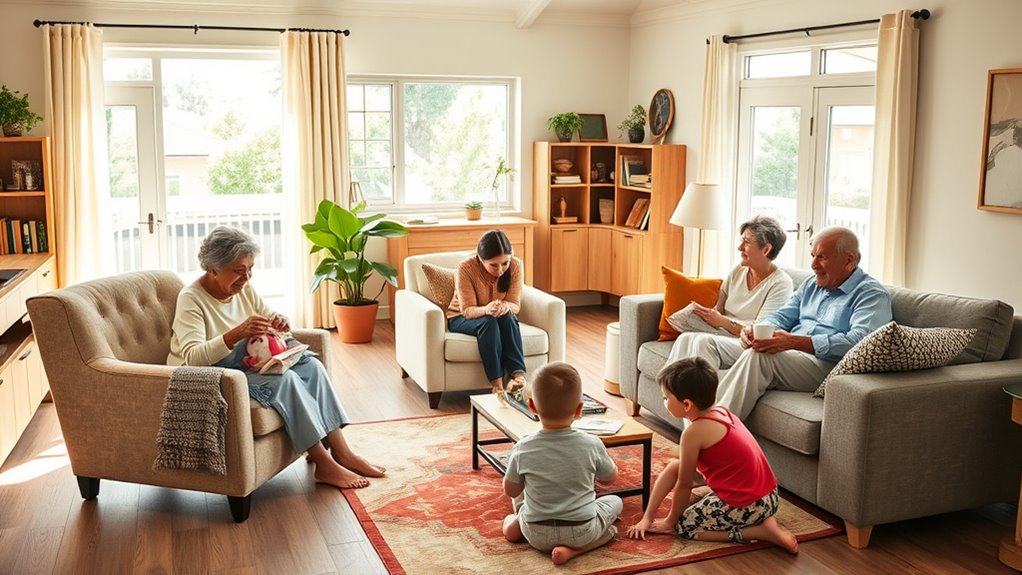
Have you ever considered how multi-generational homes can offer both financial benefits and stronger family bonds? Living with multiple generations under one roof can considerably reduce living expenses, from shared mortgage payments to lowered utility bills. It also fosters close relationships and creates a supportive environment. However, adapting a home to comfortably accommodate everyone requires thoughtful planning, especially when it comes to addressing privacy concerns and space optimization.
Multi-generational living reduces costs and strengthens family bonds through thoughtful space planning and privacy solutions.
Privacy concerns tend to be the biggest challenge in multi-generational living. When several generations share a single home, everyone needs areas where they can unwind and have a sense of personal space. To address this, you might consider creating designated private zones, such as a guest suite or a basement apartment, that serve as a retreat for individual family members. Installing soundproofing measures can also help minimize noise disturbances and enhance privacy. Simple changes like adding room dividers or privacy screens can make shared spaces more functional, giving each person a sense of autonomy while still benefiting from communal living.
Space optimization is equally essential to making multi-generational homes work smoothly. You’ll want to maximize every square foot by choosing versatile furniture, such as fold-away beds or storage ottomans, that serve multiple purposes. Open floor plans can create a sense of spaciousness, but you should also incorporate strategic partitions to delineate different functions within shared areas. Consider built-in storage solutions to reduce clutter and keep common areas tidy. When designing or renovating, focus on multi-use spaces that can adapt to different needs, like a dining area that doubles as a workspace or a living room that can host both family gatherings and quiet evenings. Utilizing vertical storage solutions can further free up floor space and maintain an organized environment.
Communication plays an indispensable role in making these adaptations successful. Discussing each person’s needs and expectations upfront ensures everyone feels heard and respected. Flexibility is key—you might need to adjust the layout or routines as your family evolves. For example, a teenager may need privacy for studying, while an elderly parent might require easy access to common areas. By planning with intention and prioritizing both privacy and shared space, you can create a harmonious environment where each family member feels comfortable and valued.
In the end, transforming a home to suit a multi-generational household isn’t just about physical changes; it’s about fostering an environment of mutual respect and understanding. With careful space optimization and attention to privacy concerns, you can enjoy the many benefits of shared living while maintaining individual comfort and independence.

HOMBIX Extendable Dining Table, Transformer Folding Console Table for 10-12 People, Space Saving Dining Room Table for Apartments & Homes, Walnut
Features 5 removable extension leaves (35.4" x 19.7" each), allowing the table to expand from a compact 20.1"...
As an affiliate, we earn on qualifying purchases.
Frequently Asked Questions
How Can I Ensure Privacy in Shared Multi-Generational Spaces?
To guarantee privacy in shared multi-generational spaces, you should implement privacy solutions like using room dividers, curtains, or sliding doors to create distinct zones. Consider space division strategies such as designated areas for different generations, soundproofing, and visual barriers. Communicate openly about boundaries and schedules. These steps help everyone feel comfortable while maintaining a harmonious living environment.
What Are the Legal Considerations When Adding Family Members?
When adding family members, you need to make certain legal compliance by checking local zoning laws and housing regulations. You should also clarify property rights through updated agreements or deeds to avoid future disputes. It’s wise to consult with a legal professional to review any necessary permits or lease adjustments. This way, you protect your ownership rights and stay within legal boundaries, making sure everyone’s rights are respected.
How Do I Finance Home Modifications for Multi-Generational Living?
You can finance home modifications for multi-generational living by tapping into your home equity or applying for renovation grants. Using your home equity allows you to borrow against your property’s value, providing funds for necessary updates. Additionally, explore local or government-sponsored renovation grants, which can help cover costs without added debt. Combining these options enables you to make essential modifications affordably, ensuring your home adapts to your family’s needs.
What Are the Best Design Tips for Aging-In-Place?
Think of your home as a welcoming bridge, connecting generations with ease. To achieve this, focus on universal design principles and accessibility improvements like wider doorways, non-slip floors, and lever handles. Install grab bars in bathrooms and ensure light switches are reachable. These thoughtful tweaks create a space that’s safe, functional, and comfortable for everyone, turning your home into a lasting haven for aging-in-place.
How Can I Manage Conflicts Between Different Generations?
You can manage conflicts by fostering open intergenerational communication, encouraging everyone to share their feelings honestly. Set clear boundaries to respect each other’s privacy and individual needs. Actively listen when issues arise, and work together to find compromises that suit everyone. By maintaining respectful dialogue and establishing boundaries, you create a harmonious living environment where different generations feel valued and understood, reducing misunderstandings and conflicts.

41 in-78 in Extendable Dining Room Table for 4-8, Round Expandable Kitchen Table with Fluted Base, Modern Oval Dinner Tables for Dining Room Kitchen Living Room (Black)
【Versatile Expandable Design】This expandable round oval dining table transforms from a cozy 41-inch round table for 4 into...
As an affiliate, we earn on qualifying purchases.
Conclusion
As you consider adapting your home for multiple generations, imagine the new possibilities unfolding within those walls—laughter echoing through shared spaces, generations connecting in ways you never thought possible. But beneath that promising harmony lies the unknown: will everyone find their perfect balance? The future of your multi-generational home hangs in the balance, waiting to be shaped by your choices. Are you ready to embrace the challenge and reveal its true potential?

STHOUYN Farmhouse Rustic Extendable Dining Room Table for 8 10, 70.9" (86.6") x 31.5", Rectangular Dinner Table for 6-10, Mid Century Modern Expandable Retractable Wooden Kitchen Table (Brown)
Rustic Farmhouse Dining Table: Extendable from 70.9" to 86.6" to comfortably seat 8-10 guests. The dark wood dining...
As an affiliate, we earn on qualifying purchases.

GarveeHome 63-83" Extendable Dining Table, Industrial Rectangular Dining Room Table for 6-8 People, Expandable Kitchen Table with Heavy Duty Metal Frame for Dining Room, Kitchen & Parties, Brown
【Extendable Dining Table for 6-8 People】:Elevate your home with this versatile dining room table that seamlessly expands from...
As an affiliate, we earn on qualifying purchases.