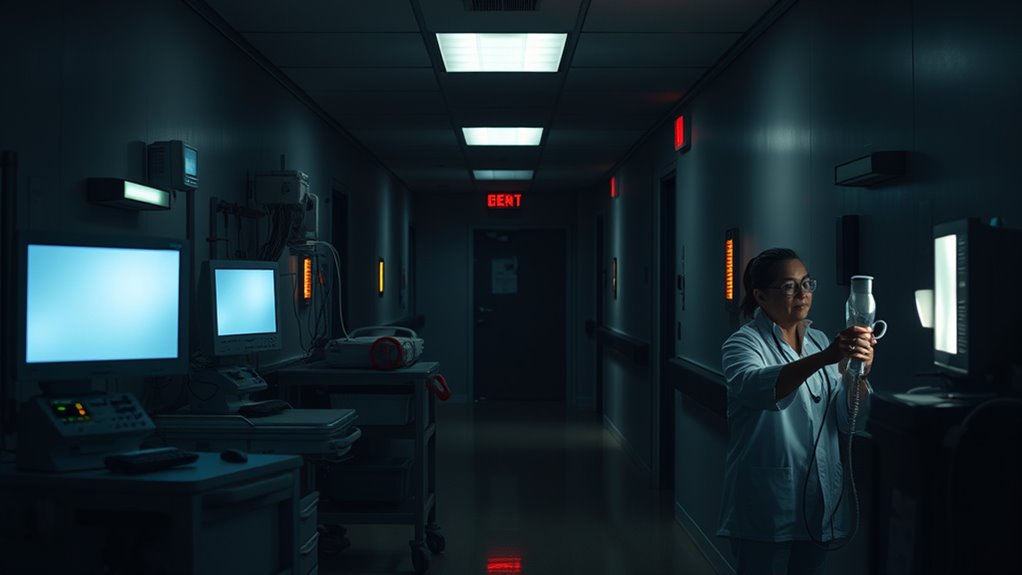

To plan for power outages affecting medical equipment, guarantee you have reliable backup systems like batteries and generators. Regularly test these backups to confirm they work when needed. Develop clear procedures for staff to follow during outages, including equipment shutdowns and patient safety steps. Maintain communication with emergency services and keep essential supplies ready. Implementing these measures safeguards patient health and keeps operations running smoothly—continue exploring strategies to strengthen your outage preparedness.
Key Takeaways
- Regularly test and maintain battery backup systems to ensure readiness during outages.
- Develop detailed emergency procedures for equipment shutdown, restart, and patient safety during power failures.
- Train staff routinely on outage response protocols and conduct drills to identify response gaps.
- Create accessible checklists to monitor backup power status, equipment functionality, and critical supplies.
- Coordinate with emergency services and utility providers to facilitate effective communication and response during outages.

Power outages can pose serious risks to medical equipment, jeopardizing patient safety and disrupting care. When the power goes out unexpectedly, critical devices like ventilators, infusion pumps, and monitors may cease functioning, leading to dangerous situations. To minimize these risks, you need a well-thought-out plan that includes reliable battery backup systems and clearly defined emergency procedures. A battery backup provides immediate power when the mains supply fails, giving you precious time to respond or switch to alternative power sources. These systems should be tested regularly to guarantee they’re operational and capable of supporting essential equipment during outages. Without a dependable battery backup, you risk equipment shutting down abruptly, potentially endangering patients’ lives.
Power outages threaten patient safety without reliable backup systems and emergency plans in place.
In addition to installing battery backup units, you must develop and rehearse extensive emergency procedures. These procedures should outline step-by-step actions to take when a power outage occurs, including how to safely shut down and restart equipment, relocate patients if necessary, and communicate with staff and emergency services. Make sure all staff members are trained on these protocols so that everyone knows their role during an outage. Clear communication is crucial; everyone should understand how to access backup power sources and when to escalate the situation to higher authorities. Regular drills help identify gaps in your plan, allowing you to refine your response and ensure everyone remains prepared.
You should also consider creating an outage response checklist that’s easily accessible in key areas. This checklist might include verifying backup power status, confirming backup equipment’s functionality, and ensuring that critical supplies are on hand. Having such a checklist simplifies decision-making during stressful moments, reducing the likelihood of overlooking vital steps. Additionally, establish partnerships with local emergency services and utility providers to stay informed about potential outages or maintenance work. This proactive approach allows you to prepare in advance, reducing surprises and enabling smoother transitions to backup systems. Regular testing of medical device backup systems is essential to ensure continuous operation during emergencies.
Finally, incorporate your power outage plan into your overall facility emergency preparedness strategy. Coordinate with other departments, like security and facilities management, to ensure everyone understands their responsibilities. Keep detailed records of all safety measures, maintenance routines, and staff training sessions related to power outage readiness. By doing so, you reinforce a culture of preparedness that prioritizes patient safety and operational continuity. Power outages are unpredictable, but with proper planning—centered on battery backup and emergency procedures—you can confidently safeguard your patients and maintain essential care, no matter what happens to the power grid.

CyberPower CP1500AVRLCD3 Intelligent LCD UPS System, 1500VA/900W, 12 Outlets, 2 USB Ports, AVR, Mini Tower, Black
1500VA/900W Intelligent LCD Battery Backup Uninterruptible Power Supply (UPS) System uses simulated sine wave output to safeguard workstations,…
As an affiliate, we earn on qualifying purchases.
As an affiliate, we earn on qualifying purchases.
Frequently Asked Questions
How Often Should Backup Power Systems Be Tested?
You should test your backup power systems at least twice a year to guarantee reliability. Regular testing helps identify issues with battery maintenance and confirms system redundancy, so your medical equipment stays operational during outages. Keep a detailed log of each test, perform preventive maintenance, and replace batteries as needed. Frequent testing and maintenance are key to maintaining readiness and ensuring patient safety during power disruptions.
What Are the Costs Associated With Emergency Power Solutions?
They say “you get what you pay for,” and emergency power solutions are no exception. Your costs include initial setup for generators, ongoing battery maintenance, and regular safety checks. Don’t forget, investing in generator safety and maintenance can save you money and prevent failures during outages. While it might seem costly upfront, reliable backup power ensures patient safety and reduces long-term risks, making it a essential expense.
How Do Power Outages Affect Sensitive Medical Devices Differently?
Power outages impact sensitive medical devices differently because their device sensitivity determines how quickly they are affected. Devices with high sensitivity, like ventilators and infusion pumps, require immediate power backup, such as battery backup systems, to prevent malfunctions or data loss. Less sensitive devices may tolerate short outages, but prolonged power loss can still compromise their function. Ensuring appropriate battery backup solutions matches each device’s sensitivity is essential for patient safety.
Are There Legal Requirements for Power Outage Preparedness in Healthcare?
You must follow legal compliance and regulatory standards to prepare for power outages in healthcare. Failure to meet these requirements can lead to severe penalties, risking patient safety, and even legal action. Regulations like those from OSHA and The Joint Commission demand robust emergency plans, backup power systems, and staff training. Ignoring these laws isn’t just risky—it’s a direct threat to lives and your facility’s reputation.
How Can Staff Be Trained Effectively for Power Outage Scenarios?
To train staff effectively for power outage scenarios, you should conduct regular simulation drills that mimic real-life situations. During these drills, emphasize clear staff communication to make certain everyone knows their roles and responsibilities. Encourage active participation, provide constructive feedback, and review procedures afterward. This hands-on approach helps staff become confident and prepared, reducing confusion and ensuring swift, coordinated responses during actual power outages.

MARBERO Portable Power Station 88Wh Camping Lithium Battery Solar Generator Fast Charging with AC Outlet 120W Peak Power Bank(Solar Panel Optional) for Home Backup Outdoor Emergency RV Van Hunting
EFFICIENT CHARGING: Use the adapter included in the package to charge the power station from 0 to 80%…
As an affiliate, we earn on qualifying purchases.
As an affiliate, we earn on qualifying purchases.
Conclusion
So, next time the power goes out, remember that your medical equipment isn’t just a fancy gadget—it’s a matter of life and death. Who needs backup plans or emergency preparedness, right? Just cross your fingers and hope the lights come back on before the unthinkable happens. After all, what’s a little blackout compared to the thrill of living on the edge? Stay prepared, or enjoy the exciting game of medical roulette.

TRIPP LITE Hospital-Grade Surge Protector Medical Power Strip, 6 Outlets, Right-Angle NEMA 5-15PHG Plug, 6 Foot / 1.8M Cord, 1050 Joule Protection, (SPS606HGRA)
PROTECT ELECTRONIC DEVICES FROM POWER SURGES & SPIKES IN HOSPITALS AND HEALTHCARE ENVIRONMENTS: Six NEMA 5-15R-HG AC outlets…
As an affiliate, we earn on qualifying purchases.
As an affiliate, we earn on qualifying purchases.
Insurance Provider Checklist Medical Labels
2" x 1" Labels
As an affiliate, we earn on qualifying purchases.
As an affiliate, we earn on qualifying purchases.