Having an accurate, accessible medication list and emergency duplicates is vital for quick, safe medical help during urgent situations. When you keep your medication info current and organized, you enable healthcare providers and pharmacists to make fast, informed decisions, reducing risks of adverse interactions or delays. Using multiple formats like digital files, printed lists, or medical ID bracelets ensures you’re always prepared. Keep these tools handy, and you’ll be surprised how much easier emergency care becomes—there’s more to reflect on if you keep going.
Key Takeaways
- Maintaining updated medication lists prevents duplicate prescriptions during emergencies.
- Digital or printed lists help healthcare providers identify existing medications quickly.
- Emergency duplicates can be avoided by cross-referencing current medication lists before prescribing.
- Organized medication lists facilitate detection of overlapping drugs, reducing duplicate therapy risks.
- Accessible medication records ensure safe, efficient treatment and prevent unnecessary duplicate medication use.
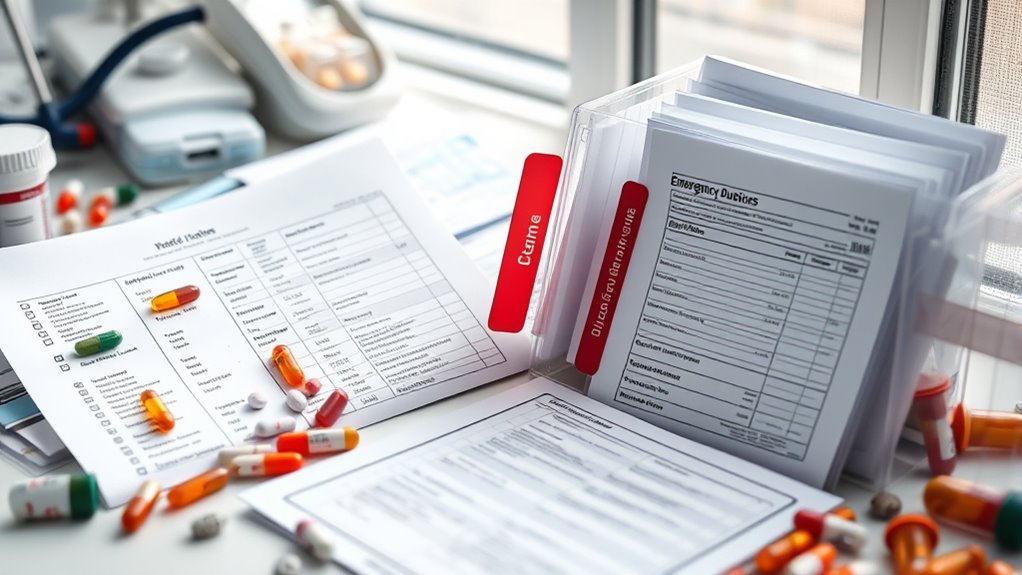
Have you ever wondered what would happen if you needed urgent medical care and your medication list wasn’t readily available? In emergencies, every second counts, and knowing exactly what medications you’re taking can be vital. Without an up-to-date list, healthcare providers might face hurdles in quickly understanding your medication history, which can lead to dangerous drug interactions or delays in treatment. That’s why maintaining an accurate medication list is necessary, especially when considering pharmacy procedures and how they impact your care.
Having an up-to-date medication list ensures quick, safe medical care during emergencies.
When you visit a pharmacy, the staff follow specific procedures to ensure they dispense the correct medications and avoid harmful interactions. They check your current prescriptions against your medication list to prevent drug interactions that could cause adverse effects. In an urgent situation, if your medication list isn’t clear or accessible, pharmacy procedures might involve contacting your healthcare provider, which can take precious time. Having an accurate, up-to-date list helps streamline this process and reduces the risk of errors. It also allows pharmacists to provide proper counseling on medication use, potential side effects, and interactions, ensuring your safety.
In emergency scenarios, healthcare professionals often rely on your medication list to make quick decisions. If they don’t have immediate access, they might need to perform additional tests or make educated guesses about your medication history, increasing the risk of harmful drug interactions. For example, certain drugs can dangerously interact with others, leading to increased side effects or reduced effectiveness. By having your medication list ready, you help minimize these risks and ensure that emergency treatments consider all potential interactions.
Creating a system for easy access to your medication list, whether through a printed document, digital app, or medical ID bracelet, makes a significant difference. When you’re prepared, emergency responders and healthcare providers can quickly review your medication history, avoid adverse drug interactions, and follow proper pharmacy procedures to administer the safest care. This preparation not only protects you but also facilitates a smoother treatment process during high-stress moments. Remember, the key is keeping your medication list current and accessible at all times. Having an organized medication list makes a crucial difference in ensuring your safety and the efficiency of emergency care. Doing so empowers you to take control of your health and guarantees that in critical moments, your medical team has the information they need to act swiftly and accurately.
Frequently Asked Questions
How Often Should I Update My Medication List?
You should update your medication list every time you have a medication review or when your prescriptions change. Regular updates ensure accuracy and help you avoid errors. Use medication reminders to prompt you to review and update your list regularly, ideally at least every few months. Staying current with your medication list is vital for your safety, especially during doctor visits or emergencies, so make it a habit to keep it fresh.
What Should I Do if I Lose My Emergency Duplicate?
Imagine your emergency duplicate as a crucial key to medication safety, opening swift care when needed. If you lose it, act quickly—reach out to your healthcare provider or pharmacy to get a new one. Keep in mind, staying prepared is part of emergency preparedness, so regularly update your medication list and store duplicates securely. This proactive step guarantees you’re ready for unexpected situations, safeguarding your health and peace of mind.
Can I Include Over-The-Counter Medicines on My List?
Yes, you should include OTC medications on your list to guarantee medication safety. Listing these medicines helps your healthcare providers understand all substances you’re taking, which can prevent harmful interactions or side effects. Make sure to note the dosage and frequency. Including OTC drugs is a simple step that promotes overall safety and ensures your medical team has a complete picture of your medications, especially in emergencies.
Who Should Have Access to My Emergency Medication Duplicates?
You should grant access permissions to trusted individuals like family members, caregivers, or emergency responders who might need your emergency medication duplicates in urgent situations. Be mindful of privacy concerns and only share this sensitive information with people you trust wholeheartedly. It’s important to clearly communicate who has access and ensure they understand the importance of maintaining your privacy and confidentiality during emergencies.
How Do I Ensure My Emergency Duplicates Are Secure?
To keep your emergency duplicates secure, you should implement strong digital security measures like unique passwords and two-factor authentication. Control access by sharing them only with trusted individuals, such as your healthcare providers and emergency contacts. Regularly review and update your access permissions to guarantee only authorized people can view or use your duplicates. This way, you protect sensitive information while ensuring quick access during emergencies.
Conclusion
By keeping your medication list updated and accessible, you might just find that in moments of crisis, everything falls into place more smoothly. Sometimes, an emergency duplicates list isn’t just a precaution but a coincidence of foresight that saves time and prevents errors. Staying organized isn’t just about safety; it’s about being ready when life unexpectedly surprises you. So, stay vigilant—because the smallest detail could be the coincidence that makes all the difference.