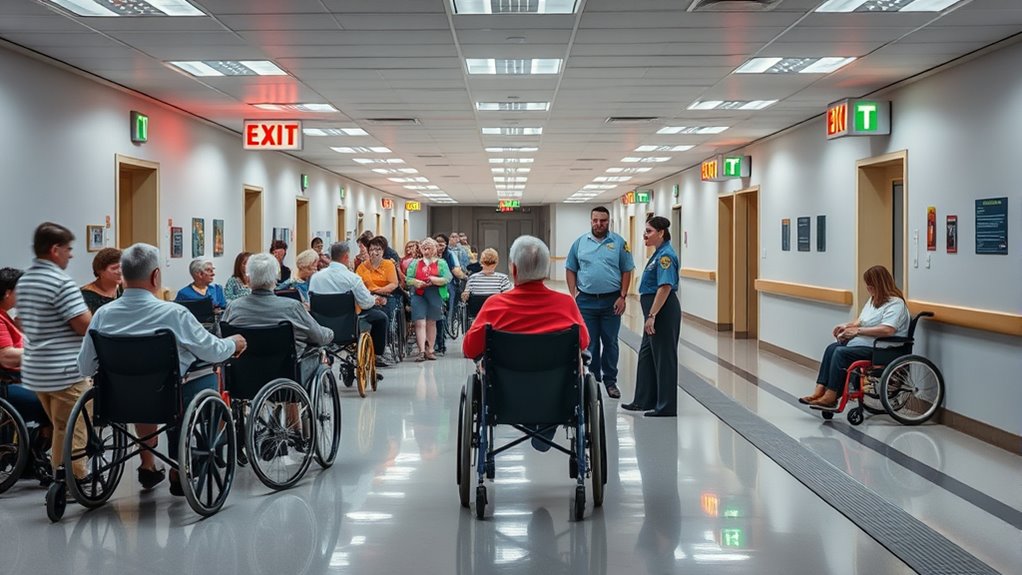

To plan effective evacuations for limited mobility, identify accessible routes and practice using your assistive devices regularly. Keep your devices well-maintained and labeled with contact info, and make certain your emergency kit is stocked with essentials. Use multiple alert systems and coordinate with neighbors or responders about your needs. Familiarize yourself with building exits, stairwells, and outdoor pathways. Following these steps will help you stay safe, and exploring more strategies will make your plan even stronger.
Key Takeaways
- Identify and practice accessible evacuation routes, including stairs, elevators, and outdoor pathways suited for mobility devices.
- Maintain and label assistive devices with contact info, ensuring they are in good condition and ready for emergencies.
- Develop a communication plan using multiple alert methods and keep emergency contacts easily accessible.
- Prepare an emergency kit with essential supplies, medications, and backup power sources for assistive devices.
- Regularly review and update the evacuation plan, involving drills to improve safety and response confidence.
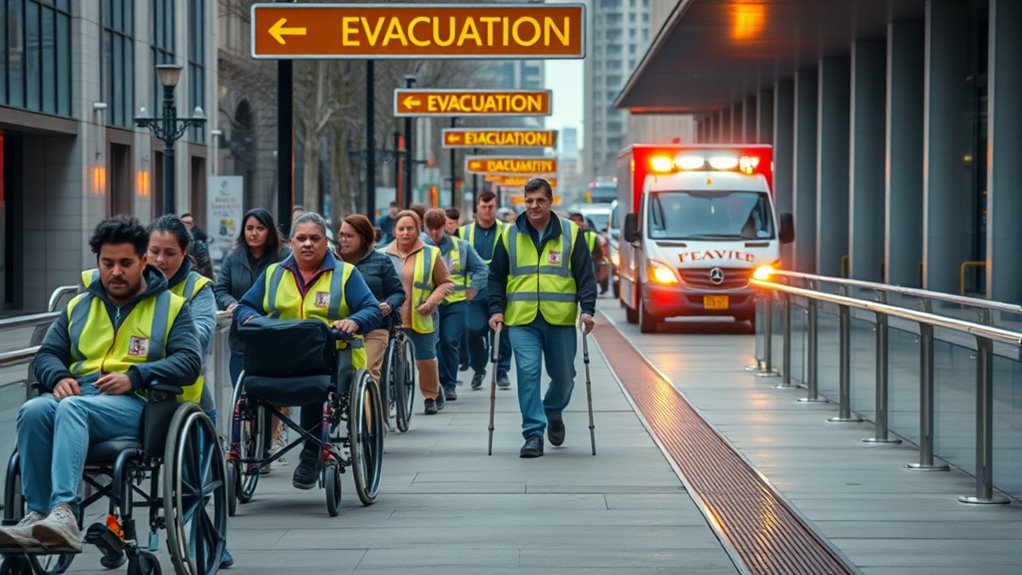
When emergencies strike, having a well-thought-out evacuation plan is essential, especially for individuals with limited mobility. Your safety depends on knowing how to quickly and efficiently move yourself or others to safety. To do this effectively, you need to incorporate assistive devices into your plan. These devices—such as wheelchairs, walkers, canes, or stairlifts—are vital tools that help maintain independence and stability during emergencies. Ensure your assistive devices are in good condition and easily accessible. Practice using them in various scenarios so you feel confident in your ability to rely on them when seconds count.
Having an evacuation plan with assistive devices ensures safety and independence during emergencies.
In addition to assistive devices, establishing reliable emergency communication is equally crucial. Make sure you have multiple ways to alert others to your situation, such as a charged cell phone, a portable alert system, or a whistle. Keep emergency contact information in a visible location or programmed into your devices. Consider using specialized emergency communication apps that can send alerts to family, friends, or rescue services with your location details. Having these tools ready guarantees you won’t be left stranded or unable to call for help when needed.
Planning ahead means identifying safe exits and alternative routes from your home or workplace. Walk through these routes regularly, practicing how to navigate with assistive devices if necessary. Make sure pathways are clear of obstacles, and consider installing grab bars or handrails in key areas to improve stability. If you live in a multi-story building, familiarize yourself with stairwells and elevator procedures. Some elevators may not be operational during emergencies, so knowing how to use assistive devices to descend stairs safely or having a plan to wait for rescue is important. Additionally, exploring adapted outdoor environments in your area can be beneficial for practicing evacuation scenarios in accessible settings.
Creating a personalized emergency kit is another essential step. Include items like extra batteries for your communication devices, a list of emergency contacts, and any medication or supplies you might need. Label your assistive devices with your contact information in case they are misplaced. Also, inform neighbors, building security, or emergency responders about your mobility needs so they can assist you promptly if necessary.
Lastly, regularly update your plan. Emergencies evolve, and so should your preparedness. Schedule drills, review your communication methods, and check your assistive devices periodically. By taking these proactive steps, you’ll markedly improve your chances of a safe evacuation, ensuring you’re prepared to handle any situation with confidence and independence.

USKITS NEMT and DOT Compliant Kit – Caregiver Transportation Kit for Wheelchair Accessible Vans, Busses and Shuttles, with Two Window Breaker Hammers for Easier Emergency Evacuation!
This kit helps meet DOT and NEMT Compliance!
As an affiliate, we earn on qualifying purchases.
As an affiliate, we earn on qualifying purchases.
Frequently Asked Questions
How Often Should Evacuation Plans Be Reviewed and Updated?
You should review and update your evacuation plans at least annually to guarantee they’re effective and current. Conduct regular drills, ideally twice a year, to identify any issues and improve response times. Plan revisions should be based on drill feedback, changes in building layout, or new mobility requirements. Staying proactive helps you keep everyone safe, especially those with limited mobility, and ensures your plan remains reliable during emergencies.
What Are the Best Communication Methods for Limited Mobility Individuals?
You should prioritize using assistive technology and emergency communication tools tailored for limited mobility individuals. Consider devices like amplified phones, text alerts, or visual notification systems that guarantee clear, quick communication. Keep emergency plans updated with these tools, and practice using them regularly. Make sure communication methods are accessible, reliable, and easy to operate, so you can efficiently relay or receive critical information during emergencies.
How Can Neighbors Assist During an Emergency Evacuation?
During an emergency evacuation, you can assist neighbors by offering support through neighbor support networks and community coordination efforts. Check in on those with limited mobility, help them gather emergency supplies, and assist with transportation if needed. Stay informed about local resources and communicate clearly. Your proactive involvement guarantees a safer, more organized evacuation, fostering a strong sense of community and ensuring everyone’s needs are met efficiently during the crisis.
Are There Specific Assistive Devices Recommended for Evacuation?
A stitch in time saves nine, so plan ahead. You should consider assistive technology like stairlifts, wheelchair ramps, and portable evacuation aids such as sturdy wheelchairs or rescue chairs. These devices make evacuation safer and more efficient for limited mobility. Always guarantee your assistive technology is well-maintained, and practice your evacuation plan regularly. Being prepared with the right aids helps you stay safe when urgency strikes.
What Training Is Available for Emergency Personnel on Mobility Disabilities?
You can access specialized training programs that focus on disability awareness and the use of accessible equipment. Emergency personnel often receive courses on assisting individuals with mobility disabilities, including proper handling techniques and communication strategies. These trainings guarantee responders understand the unique needs of people with disabilities, helping them provide respectful, effective assistance during evacuations. By participating in such programs, responders improve their skills and confidence when supporting individuals with mobility challenges.

Makeid Label Maker Machine with Tape – Compatible with 9/12/16mm Waterproof Tape, Portable & Rechargeable with Built-in Cutter Wireless Label Printer Compatible with Android & iOS Devices
Print Labels Anytime, Anywhere: Create custom labels at home, school, or work! The MakeID labeler machine with tape…
As an affiliate, we earn on qualifying purchases.
As an affiliate, we earn on qualifying purchases.
Conclusion
Remember, nearly 15% of the world’s population has some form of disability that affects mobility. You play a vital role in ensuring their safety during emergencies. By planning ahead and considering their needs, you can make a real difference. Evacuation plans that include accessible routes and assistance can save lives. So, take action now—your preparedness could be the key to keeping someone safe when it matters most.

SYNLETT Caregiver Pager Wireless Call Buttons for Elderly Monitoring SOS Alert System Portable Alarm for Nurse Call Seniors Patients Emergency Home
PORTABLE CAREGIVER PAGER: This wireless pager system comes with 2 wireless call buttons and 1 portable pager. It…
As an affiliate, we earn on qualifying purchases.
As an affiliate, we earn on qualifying purchases.

CHICAURA Ladder Leveler Pro | Heavy-Duty Ladder Stabilizer for Stairs | 750lb Safety Ladder Platform & Extender, Adjustable 12.6"-19.6" | Fits Ladders up to 23.5" Wide
Adjustable Height for Stair Safety: Provides a height adjustment range from 12.6" to 19.6" to compensate for differences…
As an affiliate, we earn on qualifying purchases.
As an affiliate, we earn on qualifying purchases.