To prepare for outages, make certain your medical facility has a reliable backup power system in place. Use portable generators to supply ample power during extended outages and battery backups for quick response and critical device support. Regular maintenance and testing are key to dependable operation. Combining these solutions keeps essential equipment running and safeguards patient safety. Stay tuned to learn how to optimize your backup power setup for any emergency situation.
Key Takeaways
- Implement layered backup systems combining battery backups for immediate power and portable generators for extended outages.
- Regularly test and maintain backup equipment to ensure readiness during emergencies.
- Train staff on proper activation and troubleshooting procedures for backup power systems.
- Prioritize critical medical devices like ventilators and monitors to ensure continuous operation.
- Develop a comprehensive emergency power plan aligned with safety standards and facility needs.
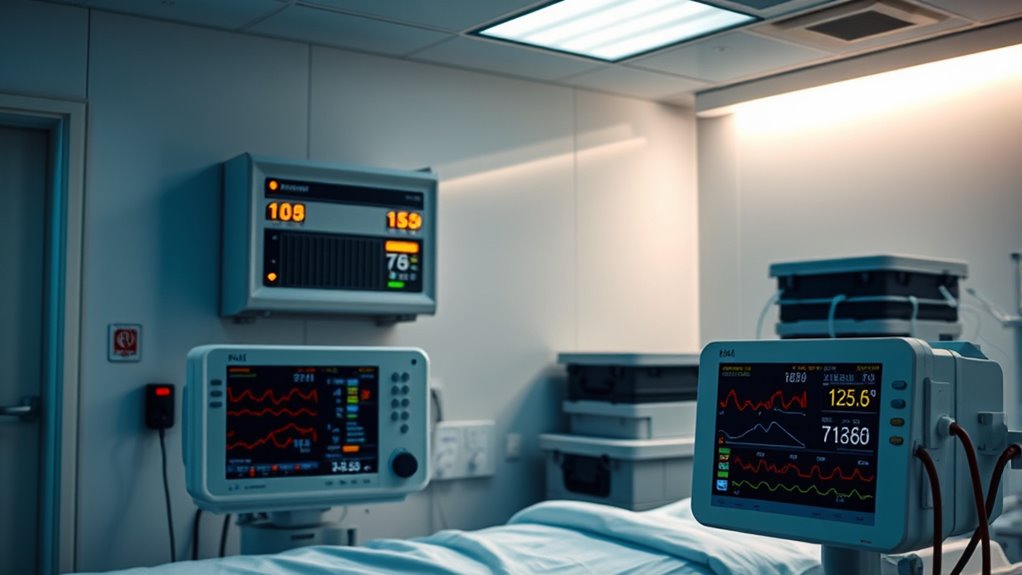
Power outages can pose serious risks to medical facilities and the patients relying on life-saving equipment. When the power goes out unexpectedly, critical devices like ventilators, infusion pumps, and monitors can shut down, jeopardizing patient health and safety. That’s why having reliable backup power sources isn’t just a good idea; it’s an essential part of your emergency preparedness plan. Two of the most effective solutions are portable generators and battery backups, each offering distinct advantages depending on your facility’s needs.
Power outages threaten patient safety—reliable backup power like generators and batteries is essential.
Portable generators are a popular choice because they can supply substantial power quickly during an outage. They are versatile, relatively easy to move, and can support multiple essential devices simultaneously. When choosing a portable generator, you want one with enough wattage to run your critical equipment without overloading. Keep in mind that it needs to be properly maintained and fueled beforehand, so it’s ready to deploy at a moment’s notice. Regular testing is indispensable to ensure it will perform when needed. Portable generators are especially useful in larger facilities or during extended outages, providing a robust, on-demand power source that can keep your operations running smoothly until the main power is restored.
Battery backups, on the other hand, offer a quieter and more maintenance-free solution for short-term power needs. These systems use rechargeable batteries to provide immediate power when the grid fails, bridging the gap until a generator kicks in or power is restored. They are particularly effective for critical devices that require uninterrupted operation, such as life support systems and emergency communication equipment. Battery backups are easy to install and require minimal upkeep, making them an ideal choice for smaller clinics or specific areas within a hospital. They ensure that vital equipment remains operational even during brief outages, reducing the risk of data loss or medical mishaps.
Integrating both portable generators and battery backups into your emergency plan provides thorough coverage. Batteries can handle quick power interruptions, while generators can support longer outages, ensuring continuous operation of your essential medical equipment. Regular testing of these backup systems is essential; it guarantees they’ll work when needed and helps identify potential issues before an emergency occurs. Additionally, understanding the signs of spoilage of backup power equipment, such as unusual noises or failure to start, can prevent unexpected failures. Training staff on how to activate and maintain these systems also plays a crucial role in effective emergency response.
Ultimately, investing in portable generators and battery backups isn’t just about compliance—it’s about safeguarding patient lives and maintaining the integrity of your medical services during power disruptions. Preparedness means having a layered, dependable approach to backup power that keeps your facility running, no matter what outages may come.

Oxseryn 2800-Watts Portable Inverter Generator, Gas Generators for Home Use, Camping, Super Quiet Emergency Home Backup, with Fuel Shut Off, 1.1Gal Fuel Tank, 39Lbs, EPA Compliant
𝗣𝗼𝘄𝗲𝗿𝗳𝘂𝗹 𝗢𝘂𝘁𝗽𝘂𝘁: 2800 peak watts and 2000 running watts, gas powered by 79.8CC 4-stroke OHV engine, 1.1 gallon…
As an affiliate, we earn on qualifying purchases.
As an affiliate, we earn on qualifying purchases.
Frequently Asked Questions
How Long Should Backup Power Last During Outages?
You should guarantee your backup power lasts at least the duration of your typical outage, usually 2 to 4 hours, depending on your needs. Check the battery capacity to determine power duration, as larger capacities provide longer backup. If your medical equipment requires continuous operation, consider systems with extended power duration or multiple backup sources. Always test your setup regularly to confirm it can sustain your essential devices during outages.
What Types of Emergency Power Sources Are Most Reliable?
Did you know that generators with higher capacity are 30% more reliable during outages? You should prioritize generators with sufficient capacity to meet your medical equipment’s needs, ensuring continuous operation. Battery-based systems, like UPS units, are dependable but require regular maintenance to extend their lifespan. Combining both options offers a robust backup, so you’re prepared for any outage, minimizing risks to patient care.
How Often Should Backup Systems Be Tested?
You should test your backup systems at least quarterly to guarantee reliability. During these tests, focus on battery calibration to confirm the batteries deliver proper power and check fuel quality if using generators. Regular testing helps identify issues early, preventing failures during outages. Keep detailed records of each test, and immediately address any discrepancies to maintain the system’s readiness for medical equipment support when needed.
Are There Specific Regulations for Backup Power in Healthcare?
Think of your healthcare facility as a fortress; regulations guard its integrity. You must adhere to specific regulations for backup power, such as those from The Joint Commission and FDA. These standards ensure regulatory compliance and meet licensing requirements, safeguarding patient safety during outages. Staying current with these regulations not only fulfills legal obligations but also demonstrates your commitment to high-quality care and emergency preparedness.
What Maintenance Is Required for Backup Power Systems?
You need to regularly inspect your backup power systems, checking battery lifespan and performance. Replace batteries as recommended by the manufacturer to prevent failures during outages. Schedule routine testing and maintenance to ensure system reliability. Stay updated on system upgrades to incorporate the latest technology and improve safety. Proper maintenance helps avoid unexpected downtime and guarantees your medical equipment remains operational when you need it most.

CyberPower CP1500PFCLCD PFC Sinewave UPS Battery Backup and Surge Protector, 1500VA/1000W, 12 Outlets, AVR, Mini Tower, UL Certified
1500VA/1000W PFC Sine Wave Battery Backup Uninterruptible Power Supply (UPS) System designed to support active PFC and conventional…
As an affiliate, we earn on qualifying purchases.
As an affiliate, we earn on qualifying purchases.
Conclusion
Ensuring backup power for your medical equipment is vital, especially as power outages become more frequent. Did you know that nearly 60% of healthcare facilities experience at least one outage annually? By investing in reliable backup systems, you protect your health and well-being during emergencies. Stay proactive, test your backup power regularly, and always have a plan in place. Your readiness can make all the difference in critical moments, safeguarding your health when it matters most.

EnginStar Portable Power Station 300W 296Wh Battery Bank with 110V Pure Sine Wave AC Outlet for Outdoors Camping Hunting and Emergency, 80000mAh Backup Battery Power Supply for CPAP
PORTABLE BUT POWERFUL: EnginStar Portable Power Station with ETL Certification, and the portable size of 9 x 5.5…
As an affiliate, we earn on qualifying purchases.
As an affiliate, we earn on qualifying purchases.

Power Pal Power Monitoring Device. Smart Plug with Power Outage Notifications via Text or Email. Monitors Power Within The Location, with or Without Connected Devices
Real-time Power Outage Notifications – Power Pal continuously monitors the power within your location, enabling you to receive…
As an affiliate, we earn on qualifying purchases.
As an affiliate, we earn on qualifying purchases.