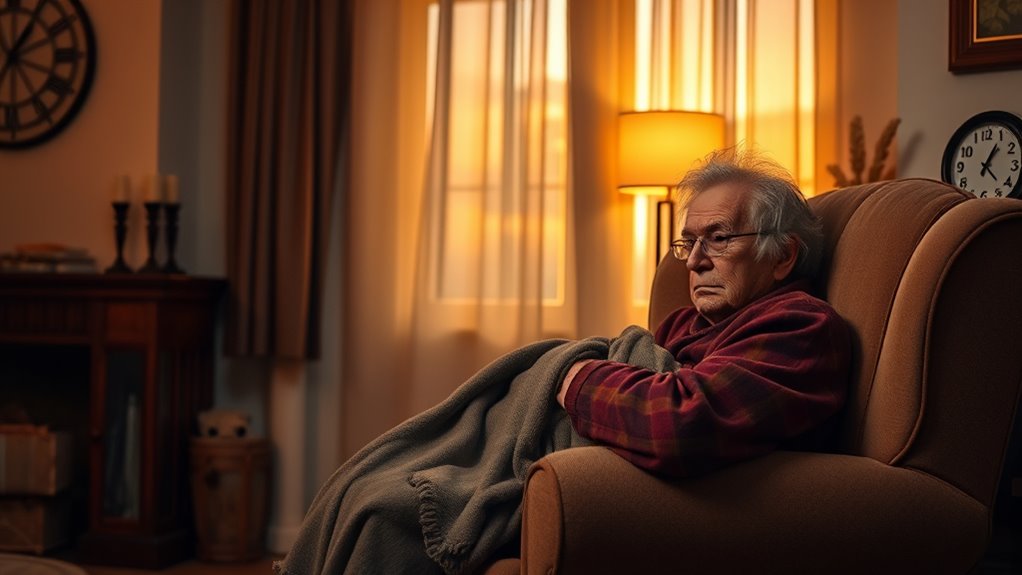

Sundowning is a phenomenon seen in Alzheimer’s and dementia patients where confusion, irritability, and agitation worsen in the evening. It occurs partly because of disruptions in the circadian rhythm, which affects sleep and mood. Environmental factors like poor lighting, noise, and clutter can trigger or worsen these symptoms. Maintaining a calm, familiar environment with consistent routines helps reduce triggers. If you keep exploring, you’ll discover how understanding these triggers and science behind sundowning can improve management strategies.
Key Takeaways
- Sundowning occurs in dementia patients, causing confusion and agitation as evening approaches due to circadian rhythm disruptions.
- Environmental factors like decreased natural light, flickering lights, and noise can trigger or worsen sundowning behaviors.
- Consistent routines and calming environments help stabilize mood and reduce sundowning symptoms.
- External stimuli, stress, and weather changes can influence behavior, making environmental management crucial.
- Understanding triggers enables targeted interventions to minimize agitation and improve quality of life for affected individuals.
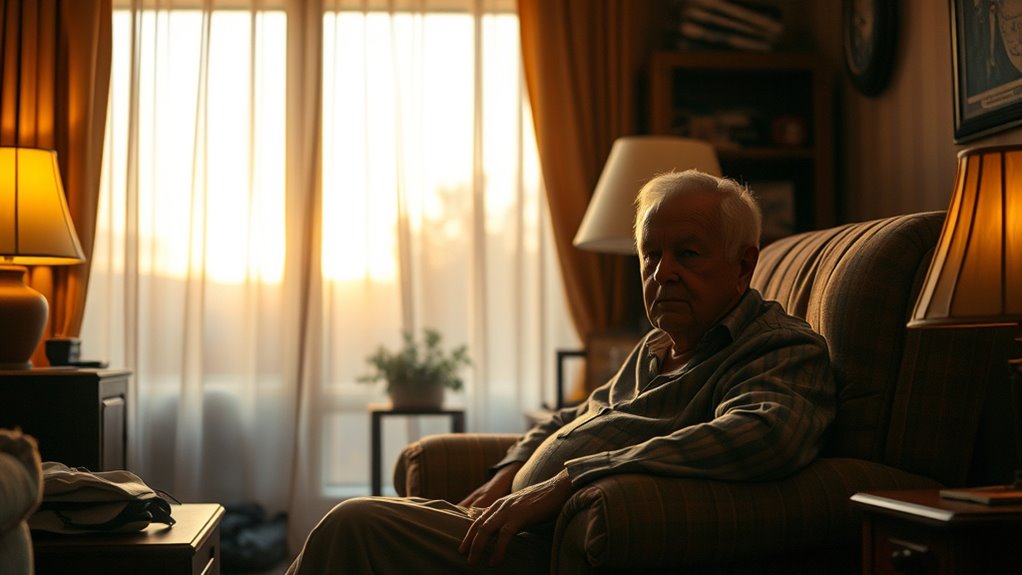
Sundowning is a phenomenon that many caregivers and loved ones notice in individuals with Alzheimer’s disease or other forms of dementia, often causing confusion and agitation as evening approaches. You might observe that your loved one becomes more restless, irritable, or disoriented during this time. Understanding the underlying factors behind these behavior patterns can help you manage the symptoms more effectively. One key aspect to contemplate is how environmental influences contribute to sundowning. Changes in light levels, noise, and the overall environment can considerably impact a person’s mood and behavior. As daylight fades, the decrease in natural light can disrupt the brain’s internal clock, leading to increased confusion and agitation. Bright or flickering lights, cluttered spaces, or unfamiliar surroundings can heighten feelings of disorientation, making it harder for your loved one to find comfort or understand their surroundings.
Environmental changes like lighting and noise levels significantly influence sundowning behaviors.
It’s essential to recognize that behavior patterns linked to sundowning are often a response to these environmental triggers. For example, a chaotic or overly noisy environment might cause your loved one to feel overwhelmed, prompting agitation or restlessness. Conversely, a calm, familiar setting can help reduce these symptoms. Creating a soothing environment by dimming lights, minimizing noise, and maintaining familiar routines can help ease the shift into evening. You might notice that consistent daily routines, such as regular meal and sleep times, help stabilize behavior patterns and reduce the severity of sundowning symptoms. Keeping a predictable schedule provides a sense of security, diminishing anxiety and confusion.
Furthermore, environmental influences extend beyond physical surroundings. The emotional atmosphere you create plays a key role. If your loved one senses tension or stress, these feelings can heighten their agitation. Maintaining a calm, reassuring demeanor and avoiding conflict or hurried interactions can make a noteworthy difference. Sometimes, natural changes in the environment, like sunset or weather shifts, are unavoidable, but you can adapt by adjusting lighting, reducing external stimuli, or providing comforting activities during vulnerable times. Additionally, understanding that circadian rhythm disruptions are a core component of sundowning can guide the development of more effective strategies to support your loved one.
In understanding behavior patterns, it’s imperative to see sundowning as a symptom triggered by a combination of environmental influences and the individual’s internal state. Recognizing these factors allows you to implement strategies that create a more supportive environment, helping your loved one feel safer and more at ease as evening falls. By controlling external stimuli and establishing consistent routines, you can lessen the intensity of sundowning episodes and improve overall quality of life for both of you.

Calming Sensory Lights, Sensory Toys for Kids with Autism, Ocean Light Projector with 15 Color Patterns, Light Projects Water Ripple Effects onto Walls and Ceilings, Autism Toy,for Children and Adults
Enjoy Calming Ocean Waves: Experience the soothing effects of the deep ocean with our calming autism sensory light…
As an affiliate, we earn on qualifying purchases.
As an affiliate, we earn on qualifying purchases.
Frequently Asked Questions
Can Sundowning Affect People With Early-Stage Dementia?
Yes, sundowning can affect people with early-stage dementia. An early diagnosis helps you recognize signs sooner, allowing you to implement behavioral strategies that reduce its impact. You might notice increased confusion or agitation in the evening. By establishing a routine, ensuring proper lighting, and calming activities, you can help manage symptoms effectively. Early intervention makes it easier to support your loved one’s well-being and improve their quality of life.
Are There Specific Medications to Treat Sundowning Symptoms?
Are there specific medications to treat sundowning symptoms? Yes, several medication options can help with symptom management, like antipsychotics, sedatives, or antidepressants, but they should be used cautiously and under medical supervision. Do you realize how important it is to tailor treatments to individual needs? Always consult a healthcare professional to evaluate the risks and benefits before starting any medication, ensuring safe and effective care.
How Can Caregivers Prevent Sundowning Episodes Effectively?
To prevent sundowning episodes effectively, you should incorporate mindfulness techniques like calming routines and gentle activities to reduce anxiety. Make environmental modifications by ensuring proper lighting, reducing noise, and creating a consistent schedule. These steps help your loved one feel secure and relaxed as evening approaches. Staying calm yourself and maintaining a familiar routine can also minimize triggers, making it easier to manage symptoms and promote peaceful evenings.
Is Sundowning Linked to Other Sleep Disorders?
Think of your sleep cycle as a delicate dance, guided by your circadian rhythm. Sundowning often links to other sleep disorders, disrupting this rhythm and causing confusion or agitation. When sleep patterns falter, it’s like a symphony losing its rhythm, making sundowning more intense. Recognizing these connections helps you create a calming environment, helping your loved one find harmony in their sleep, reducing sundowning episodes effectively.
What Lifestyle Changes Can Reduce Sundowning Severity?
You can reduce sundowning severity by making simple lifestyle changes. Focus on diet adjustments by limiting caffeine and sugar in the evening, which can help stabilize mood and sleep. Maintain routine consistency by establishing a calming evening routine and sticking to regular sleep and activity schedules. These changes promote better rest and reduce the triggers that worsen sundowning, helping you or your loved one feel calmer and more comfortable during the evening hours.

Relaxium Sleep Aid for Adults – Melatonin 5mg with Magnesium Glycinate, Valerest & Ashwagandha – Non-Habit Forming Sleep Support for Falling Asleep & Staying Asleep – 60 Capsules (30-Day Supply)
FALL ASLEEP, STAY ASLEEP: Relaxium's Triple-Action formula is guaranteed to help you wake up each morning without feeling…
As an affiliate, we earn on qualifying purchases.
As an affiliate, we earn on qualifying purchases.
Conclusion
Now that you understand the science and triggers behind sundowning, you can better support your loved one. It’s easy to feel overwhelmed, but remember, with patience and a calm environment, you can help reduce their anxiety during those difficult evening hours. Don’t assume there’s nothing you can do; small adjustments make a big difference. By staying informed and gentle, you create a sense of safety, helping your loved one find comfort when they need it most.

Magicteam Sound White Noise Machine with 20 Non Looping Natural Soothing Sounds and Memory Function 32 Levels of Volume Powered by AC or USB and Sleep Sound Timer Therapy for Baby Kids Adults
❤20 Non-Looping Sleep Sounds: White noise ,Brown noise, pink noise, blue noise, fan,brook, rain, ocean,bird and Bonfire,suitable for…
As an affiliate, we earn on qualifying purchases.
As an affiliate, we earn on qualifying purchases.

Bonfire Essential Oil Diffuser, 280ml Ultrasonic Flickering Flame Aroma Diffuser with 7 Color LED Lights, Remote & Timer Humidifier, Campfire Diffusers for Bedroom Yoga Home Office Decor Gift
【Realistic Bonfire Ambiance & Aroma】Immerse your space in the warm, calming glow of a campfire without the smoke…
As an affiliate, we earn on qualifying purchases.
As an affiliate, we earn on qualifying purchases.