To keep your home dementia-friendly, remove clutter and hazards like loose rugs and cords, while adding grab bars and non-slip flooring for safety. Make simple adjustments such as placing items within reach and using contrasting colors for better visibility. Maintain consistent routines and familiar activities to reduce confusion and anxiety. Regularly reassess and update your home to support independence and safety. Continue to explore these strategies to create a secure and comforting environment for your loved one.
Key Takeaways
- Remove clutter and tripping hazards to create a safe environment for dementia patients.
- Install grab bars and non-slip flooring to prevent falls and ensure stability.
- Use clear lighting and contrasting colors to improve visibility and orientation.
- Keep routines simple and consistent to reduce confusion and promote familiarity.
- Regularly reassess and modify the home to accommodate changing needs and maintain safety.
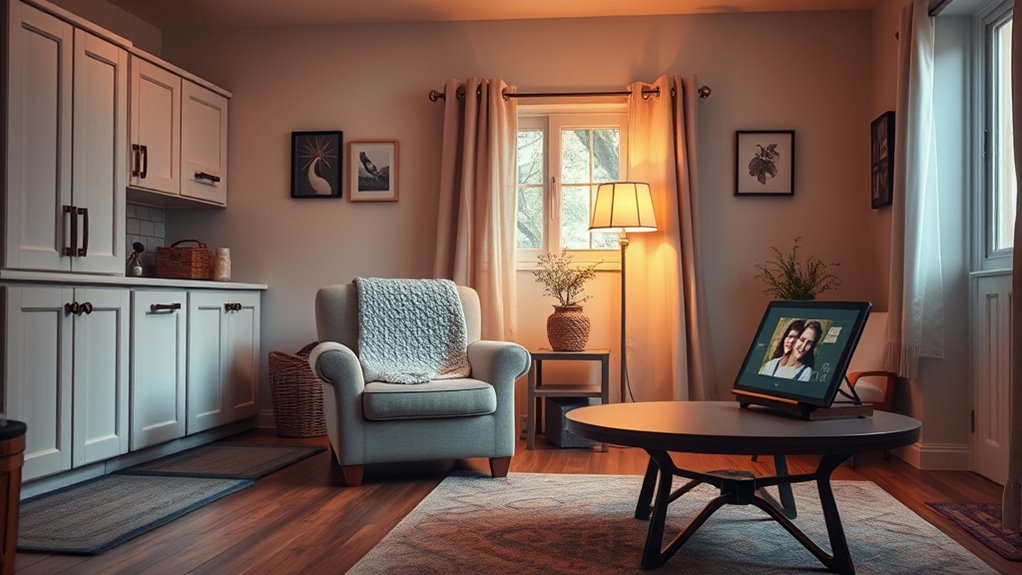
Are you wondering how to make your home safer and more comfortable for a loved one with dementia? It’s a common concern, and the good news is that small adjustments can make a meaningful difference. One of the most effective ways to do this is by focusing on remodeling safety. You want to create an environment that minimizes hazards and promotes independence, which often means rethinking the layout and features of your home. Start by removing clutter and tripping hazards like loose rugs or cords that could cause falls. Installing grab bars in bathrooms, non-slip flooring, and ensuring good lighting throughout the house can help prevent accidents. Consider replacing sharp furniture edges with rounded ones, and secure heavy furniture to the wall to avoid tipping. These remodeling safety measures aren’t just about preventing injuries—they also help reduce anxiety and confusion for your loved one, making them feel more secure in their space.
In addition to physical adjustments, maintaining consistent daily routines can markedly support a loved one’s well-being. People with dementia often rely heavily on routines to navigate their day, which provides a sense of stability and reduces confusion. Establishing a predictable schedule for meals, activities, and rest helps your loved one feel more in control and less overwhelmed. Keep daily routines simple and consistent, and use visual cues like clocks, calendars, or labeled drawers to guide them through daily tasks. When routines are predictable, it’s easier for them to remember what comes next, which can boost confidence and reduce frustration. Incorporate familiar activities that they enjoy, and try to keep the environment calm and clutter-free during routine times to prevent overstimulation.
Balancing remodeling safety with consistent routines creates a supportive environment that fosters independence while reducing risks. It’s about creating a space that feels familiar and secure, where your loved one can move freely without fear of injury. Regularly reassess the home as their needs evolve, making adjustments as necessary. Simple changes like placing frequently used items within easy reach or using contrasting colors for better visibility can make a big difference. Additionally, understanding motivation can help you better support their engagement in daily activities and promote a positive atmosphere. The goal is to make your home a place that adapts to their changing needs, offering both safety and comfort. By combining thoughtful remodeling safety with clear, predictable routines, you’re helping your loved one retain as much independence as possible while ensuring their safety and peace of mind.

Grab Bars for Shower, 2 Pack 16 Inch Anti-Slip Safety Shower Handle for Senior, Stainless Steel Shower Grab Bars, Handicap Elderly Bathtub and Toilet Bathroom Assist
SUPERB MATERIAL: The shower grab bars for seniors is made of stainless steel which is waterproof, rustproof and…
As an affiliate, we earn on qualifying purchases.
As an affiliate, we earn on qualifying purchases.
Frequently Asked Questions
How Can I Prevent My Loved One From Wandering at Home?
To prevent your loved one from wandering at home, guarantee their personal safety by installing locks or alarms on doors and windows. Use visual cues like signs or color-coded markers to help them find their way. Provide emotional support by maintaining a calm environment and reassuring them. Spend quality time together to reduce anxiety, and consider wearable devices for added security. Your attentive care helps keep them safe and feeling supported.
What Are the Best Ways to Reduce Confusion in the Home?
To reduce confusion in your home, use memory aids like labels and visual cues to help your loved one recognize objects and areas easily. Keep the environment simple by reducing clutter, which minimizes distractions and prevents them from feeling overwhelmed. Consistently maintaining clear, organized spaces allows your loved one to navigate more confidently, reducing anxiety and confusion. These strategies foster a calmer, safer environment where they can feel more secure.
How Do I Handle Aggressive or Agitated Behaviors?
When your loved one is aggressive or agitated, you should remain calm and use calming techniques like soft voice and gentle touch. Offer emotional validation by acknowledging their feelings without arguing or correcting. Give them space if needed, and try to identify triggers. Remain patient, speak reassuringly, and distract with a favorite activity or soothing music. Your calm presence helps de-escalate the situation and provides comfort.
Are There Specific Lighting Recommendations for Dementia-Friendly Homes?
You should prioritize soft, consistent lighting that minimizes shadows and glare, creating a calm environment. Use warm-colored bulbs for comfort and avoid flickering bulbs that can cause confusion. Proper lighting design includes ample illumination in key areas, like hallways and bathrooms, to reduce disorientation. Bright but gentle lighting helps residents feel secure and aware of their surroundings, making their home a safer, more comfortable space.
How Can I Support Independence While Ensuring Safety?
You can support independence and safety by incorporating assistive technology like motion sensors, medication reminders, and easy-to-use devices into daily routines. Encourage autonomy by simplifying tasks and organizing the environment so they’re easy to navigate. Regularly check in to adapt routines as needed, and use technology to monitor safety without being intrusive. This balance helps maintain their independence while ensuring they stay safe at home.

Vive Fall Mat – 72" x 24" Bedside Fall Safety Protection Mat for Elderly, Senior, Handicap – Prevention Pad Reduce Risk of Injury from Impact – Prevent Bed Falling – Anti Fatigue, Standing Non Slip
FULL BEDSIDE PROTECTION – At 72" x 24", this fall safety mat provides wide coverage to safeguard patients,…
As an affiliate, we earn on qualifying purchases.
As an affiliate, we earn on qualifying purchases.
Conclusion
By making your home safe, simple, and supportive, you create a space where your loved one can feel secure, comfortable, and confident. Keep the environment familiar, reduce hazards, and foster independence. Encourage connection, promote understanding, and show patience. When you prioritize safety, clarity, and compassion, you build a dementia-friendly home that nurtures dignity. In doing so, you not only support their well-being but also strengthen your bond, making every day a little easier and a lot more meaningful.

Easy Memory Games for Dementia Patients, Color Matching Dementia Activities for Seniors, Wooden Alzheimers Products for Elderly, Fidget Sensory Busy Board Gadgets Gifts
BOOST COGNITIVE ABILITIES-The wooden memory match board is designed to enhance cognitive abilities in dementia elderly. With solid…
As an affiliate, we earn on qualifying purchases.
As an affiliate, we earn on qualifying purchases.

USKITS NEMT DOT OSHA Compliant All-in-One Truck Safety Kit
NEMT products you need to help meet compliance, in a convenient package!
As an affiliate, we earn on qualifying purchases.
As an affiliate, we earn on qualifying purchases.