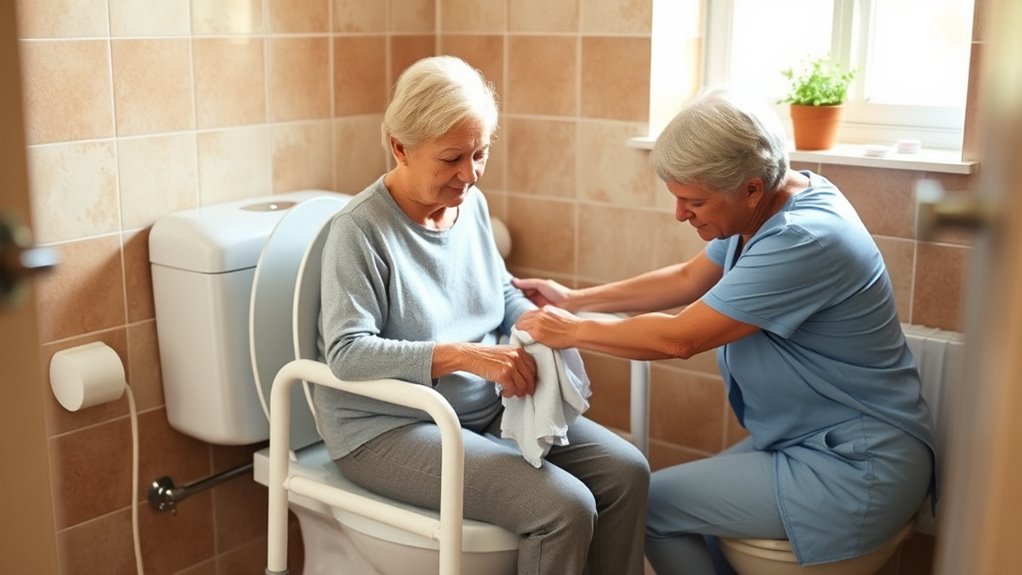

To provide dignified toileting support, prioritize privacy by closing doors or curtains and speaking softly to reassure them. Encourage independence by offering choices and using appropriate adaptive equipment like grab bars or raised seats to guarantee safety and comfort. Be patient and attentive, respecting their preferences and feelings. Creating a respectful, supportive environment helps maintain their dignity and confidence throughout the process. Continue exploring ways to enhance comfort and independence for a positive experience.
Key Takeaways
- Respect privacy by providing a private space, closing doors or curtains, and speaking softly to ensure comfort.
- Use adaptive equipment properly, matching devices to individual needs for safety and independence.
- Encourage participation in toileting tasks to promote dignity and foster autonomy.
- Be patient, attentive, and honor personal preferences to create a respectful, supportive environment.
- Maintain equipment regularly and incorporate emotional cues to ensure safety, comfort, and emotional well-being.

Have you ever wondered how to effectively support someone with toileting needs? Providing assistance with dignity requires careful attention to both practical and emotional aspects. One of the most important considerations is privacy. Respecting a person’s privacy means giving them space and time, ensuring they feel safe and respected during this vulnerable moment. You can achieve this by closing doors or curtains, speaking softly, and offering reassurance. Always ask for their preferences—some might want help with dressing or wiping, while others prefer to do as much as they can independently. Maintaining their dignity involves allowing choices whenever possible, rather than making assumptions about their needs.
Supporting toileting with dignity involves respecting privacy, offering choices, and maintaining comfort and independence.
In addition to privacy, adaptive equipment plays a pivotal role in supporting toileting with dignity. These tools are designed to make the process safer, more comfortable, and more independent for the individual. For example, raised toilet seats can reduce the strain of sitting down or standing up, making transfers easier and less risky. Grab bars installed near the toilet provide stability and confidence, especially for those with mobility challenges. Portable commodes or bedside urinals are useful options for individuals who cannot easily reach the bathroom, allowing them to maintain independence without feeling embarrassed. When choosing adaptive equipment, it’s important to consider the person’s specific needs and preferences. Proper size, height, and design influence how comfortable and effective the tools will be.
Using adaptive equipment also involves teaching and supporting the individual to use these aids correctly. Demonstrate how to operate or position devices, and encourage them to participate as much as possible. This not only promotes independence but also helps build confidence. Keep in mind that equipment should be kept clean and well-maintained to prevent infections and ensure safety. Regularly check for wear and tear, and replace items as needed. Incorporating vibrational awareness can also help caregivers better understand the emotional state of the individual during care, leading to more empathetic support.
Supporting someone with toileting needs with dignity is a balance of respecting their privacy and providing the right tools. Your role is to create a supportive environment where they feel safe, respected, and empowered to maintain as much independence as possible. Never rush or hurry them; instead, be patient and attentive to their cues. Remember, dignity isn’t just about physical assistance—it’s about honoring their feelings, preferences, and autonomy throughout the process. By combining thoughtful privacy considerations with appropriate adaptive equipment, you can help make toileting a respectful, comfortable experience that preserves their dignity every step of the way.
Top picks for "toilet support dignity"
Open Amazon search results for this keyword.
As an affiliate, we earn on qualifying purchases.
Frequently Asked Questions
How Can I Maintain Dignity During Toileting Assistance?
You can maintain dignity during toileting assistance by offering emotional reassurance and respecting privacy. Use gentle words to comfort and explain each step, making the person feel secure. Manage discomfort by ensuring a clean, comfortable environment and assisting with any needs discreetly. Always ask for their preferences, listen carefully, and avoid rushing, so they feel respected and dignified throughout the process.
What Are Common Challenges Faced in Toileting Support?
You might face deep emotional and cultural sensitivities when providing toileting support, which can make communication and comfort challenging. You could struggle with respecting personal boundaries while ensuring safety and hygiene. Additionally, managing physical limitations or cognitive impairments can complicate assistance, leading to frustration or embarrassment. Being aware of these common challenges helps you approach support with empathy, patience, and cultural awareness, fostering a respectful and dignified environment.
How Do I Address Privacy Concerns Effectively?
You can address privacy concerns effectively by strictly following privacy protocols and ensuring consent procedures are clear and respected. Always knock before entering, close curtains or doors, and explain each step to the individual to gain their consent. Keep their dignity intact by covering them appropriately and minimizing exposure. Regularly review privacy policies with your team, and stay attentive to personal preferences to foster trust and comfort during toileting support.
Are There Specific Hygiene Practices to Follow?
You should follow specific hygiene practices like thoroughly washing your hands before and after assisting with toileting to maintain personal hygiene. Use gloves to prevent infection control issues, and make sure the area is clean and sanitized regularly. Encourage the individual to wipe properly and change any soiled clothing promptly. These steps promote dignity and help prevent infections, keeping everyone safe and comfortable during toileting support.
How Can I Encourage Independence in Toileting?
Imagine a moment when you realize small changes can boost confidence—encouraging independence in toileting starts with simple steps. You can do this by establishing consistent toileting routines and introducing adaptive equipment tailored to their needs. Offer gentle encouragement and praise each effort. As they become familiar with the routine, they’ll gain confidence, fostering independence while maintaining dignity. Your support makes a meaningful difference every step of the way.
Conclusion
Remember, providing toileting support with dignity means treating everyone with kindness, patience, and respect. You’re not just helping them meet a basic need—you’re honoring their independence and human worth. Think of it as your personal act of chivalry, a timeless gesture that never goes out of style. By approaching this with compassion, you create a safe and trusting environment, ensuring they feel valued and respected, no matter the era or situation.