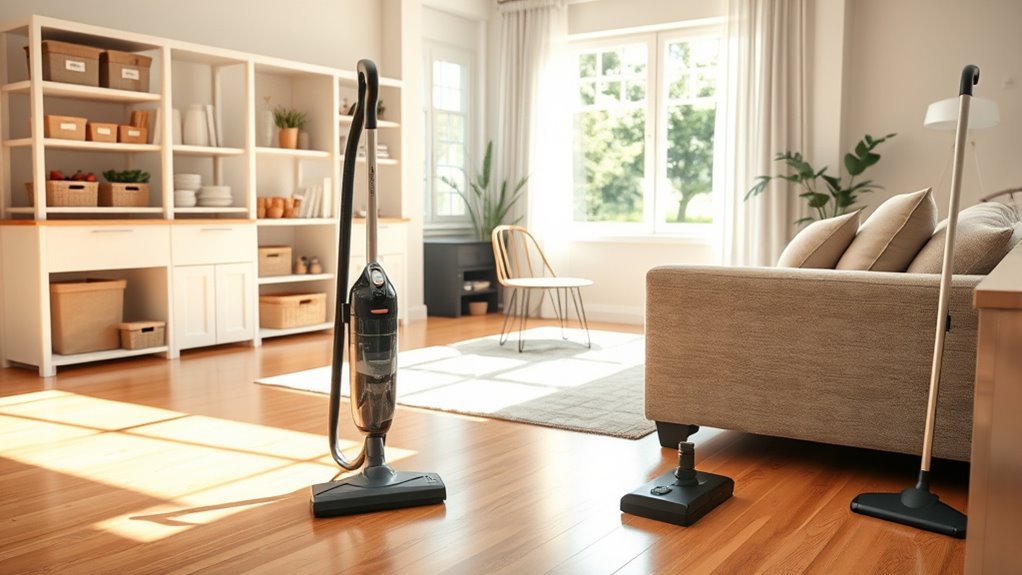

To keep your home safe, prioritize establishing consistent cleaning routines and controlling clutter. Regularly clean essential areas like bathrooms and ensure belongings are organized to prevent hazards and improve hygiene. Staying on top of chores helps catch issues early and reduces risks like slips, trips, or health problems. Maintaining discipline in your routine and adjusting as needed creates a healthier, safer space for everyone. Discover more tips to optimize your home safety by exploring further.
Key Takeaways
- Establish a consistent cleaning routine for key areas like bathrooms and kitchens.
- Regularly declutter to prevent hazards and improve safety and cleaning efficiency.
- Balance cleaning and clutter control to quickly identify and address maintenance issues.
- Continuously reassess and adapt organization practices to maintain a safe environment.
- Prioritize foundational routines to promote hygiene, safety, and early detection of potential hazards.
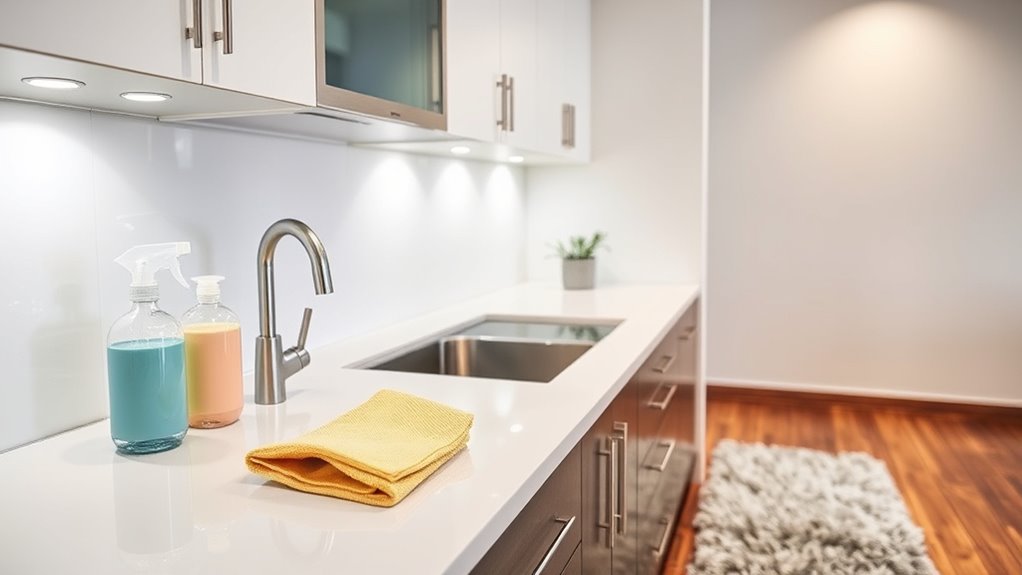
Have you ever wondered what should come first when organizing your home? The answer often depends on your specific needs, but establishing a solid foundation with cleaning schedules and clutter control is key. When you create a cleaning schedule, you set a routine that guarantees essential areas stay tidy and safe. This helps prevent messes from piling up and reduces the risk of accidents or health issues caused by dust, mold, or bacteria. Consistency is pivotal—by sticking to your schedule, you develop habits that keep your living space manageable and hygienic. Whether you clean the bathrooms three times a week or do laundry every few days, a clear plan helps you stay on top of chores without feeling overwhelmed.
Establishing cleaning routines and managing clutter are essential for a safe, hygienic home.
Clutter control is another indispensable aspect of housekeeping priorities. When your home is cluttered, it’s easier to overlook hazards or forget about maintenance tasks. Clutter can block exits, create tripping hazards, and make it difficult to clean thoroughly. You should start by sorting through your belongings regularly, discarding or donating items you no longer need. Designate storage spaces for essentials so everything has a proper place. When clutter is under control, your home becomes safer and more inviting, and cleaning becomes faster and more effective. It’s a cycle—less clutter means less dirt, and a cleaner home encourages you to maintain orderly habits.
Balancing cleaning schedules and clutter control creates a safe environment where health risks are minimized. You’re more likely to notice issues like leaks, mold, or broken fixtures early when your home is clutter-free and regularly cleaned. Maintaining this balance requires discipline, but the rewards are worth it. You won’t be constantly battling messes, and your living space will feel more comfortable and secure. Keep in mind that small daily tasks, like wiping down surfaces and tidying up after yourself, contribute considerably to your overall housekeeping priorities. These habits, paired with a well-planned schedule and clutter control, form the backbone of a safe, healthy home. Additionally, understanding proper storage techniques can help prolong the freshness and safety of your household items.
Finally, remember that organizing your home isn’t a one-time task. It’s a continuous process of reassessment and adjustment. As your household changes, so do your priorities. Regularly evaluate your cleaning routines and decluttering efforts to stay ahead of potential hazards. When you give importance to these foundational aspects, you’re creating a safer environment for yourself and everyone else in your home. The key is consistency, awareness, and a proactive approach—making your home not only cleaner but also a safer place to live.

AMADA HOMEFURNISHING 8x10 Washable Area Rug, Low-Profile with Non-Slip Backing & Durable Edge Binding, Vintage Large Rugs for Living Room, Bedroom, Dining Room, Blue
Machine Washable: The short pile design of this washable rug is easy to maintain using an upright vacuum...
As an affiliate, we earn on qualifying purchases.
Frequently Asked Questions
How Often Should I Replace My Household Fire Extinguisher?
You should replace your fire extinguisher every 5 to 15 years, depending on the manufacturer’s guidelines. Regular fire extinguisher maintenance and safety inspection schedules help guarantee it’s ready when needed. Check the pressure gauge monthly, keep it in a visible spot, and look for any damage or corrosion. If it’s expired, damaged, or doesn’t discharge properly during a test, replace it immediately to keep your home safe.
Which Cleaning Products Are Safest for Children and Pets?
You might think all cleaning products are safe, but research shows many contain harmful chemicals. To keep your home safe for children and pets, opt for child-safe cleaners and pet-friendly products. Look for labels that specify they’re non-toxic, biodegradable, and free from harsh chemicals like ammonia or bleach. Using natural ingredients like vinegar, baking soda, or plant-based cleaners can also effectively clean without risking your loved ones’ health.
How Can I Prevent Mold in Humid Areas?
To prevent mold in humid areas, you should improve ventilation strategies by using exhaust fans and opening windows regularly. Keep moisture levels low by fixing leaks promptly and using dehumidifiers. Guarantee your space stays dry and well-ventilated, as mold thrives in damp environments. Regularly clean and dry surfaces prone to moisture buildup, like bathrooms and basements, to maintain a safe, mold-free home environment.
What Is the Best Way to Organize Emergency Supplies?
To organize your emergency supplies effectively, use sturdy storage solutions like clear bins or labeled containers. Implement a labeling system so you can quickly identify items like first aid kits, flashlights, and batteries. Keep frequently used supplies at the front for easy access, and store less-needed items in the back. Regularly check and update your supplies to make certain everything is in working order and ready when needed.
How Do I Identify Hidden Mold or Pests?
To identify hidden mold or pests, start by inspecting areas prone to moisture, like under sinks, behind appliances, and in basements. Look for signs like musty odors, discoloration, or water stains that indicate hidden mold. For pest detection, watch for droppings, gnaw marks, or shed skins in dark corners and behind furniture. Regularly check these spots to catch problems early and maintain a safe, healthy home.

RELEANY Area Rugs 8'x10' Washable Non-Slip, Floral Vintage Distress Print Pattern Medallion Carpet for Living Room Bedroom Dining Room, Brick Red Rust Neutral Brown Burnt Orange Green
Machine Washable Rugs Easy to Clean: the surface is water-repellent which allows for easy cleanup when beverages are...
As an affiliate, we earn on qualifying purchases.
Conclusion
Think of your home as a garden—you need to tend to it regularly to keep it thriving and safe. By prioritizing cleaning high-touch areas, organizing clutter, and staying consistent, you’re watering the roots of a healthier, safer home. Just like a garden flourishes with care, your home becomes a sanctuary when you focus on these housekeeping priorities. Keep nurturing your space, and it’ll reward you with comfort, safety, and peace of mind every day.

8x10 Area Rugs for Living Room: Floral Washable Rug Vintage Large Soft Boho Non-Slip Carpet Indoor Floor Stain Resistant Carpets for Bedroom Dining Room Farmhouse Nursery Home Office Dark Green
Elegant Floral Rug: This 8x10 area rugs vintage-inspired botanical rug blends rich dark greens, vibrant and delicate floral...
As an affiliate, we earn on qualifying purchases.

5x7 Area Rug Living Room Rug: Washable Modern Abstract Soft Thin Rug Indoor Floor No Slip Stain Resistant Carpet for Bedroom Dining Room Farmhouse Nursery Home Office - Black
Beautiful Design Abstract Rug:The 5x7 rug design is unique and trendy, the colors blend with nature, the abstract...
As an affiliate, we earn on qualifying purchases.