
To master grooming and oral care essentials, focus on daily habits like brushing twice with fluoride toothpaste, flossing, and visiting your dentist regularly. Keep your face clean by shaving, trimming, and using skincare products suited for your skin type. Well-maintained eyebrows and skin improve your appearance and help detect health issues early. These simple routines boost confidence, enhance your personal presentation, and support overall health—discover how to make them part of your daily life for lasting benefits.
Key Takeaways
- Brush teeth twice daily with fluoride toothpaste to prevent cavities and gum disease.
- Floss regularly to remove plaque and food particles between teeth.
- Maintain facial grooming, including shaving and skin care, to promote skin health and a polished appearance.
- Use skincare products suited to your skin type to prevent irritation, dryness, or oiliness.
- Establish consistent routines for oral and facial care to boost confidence and support overall health.
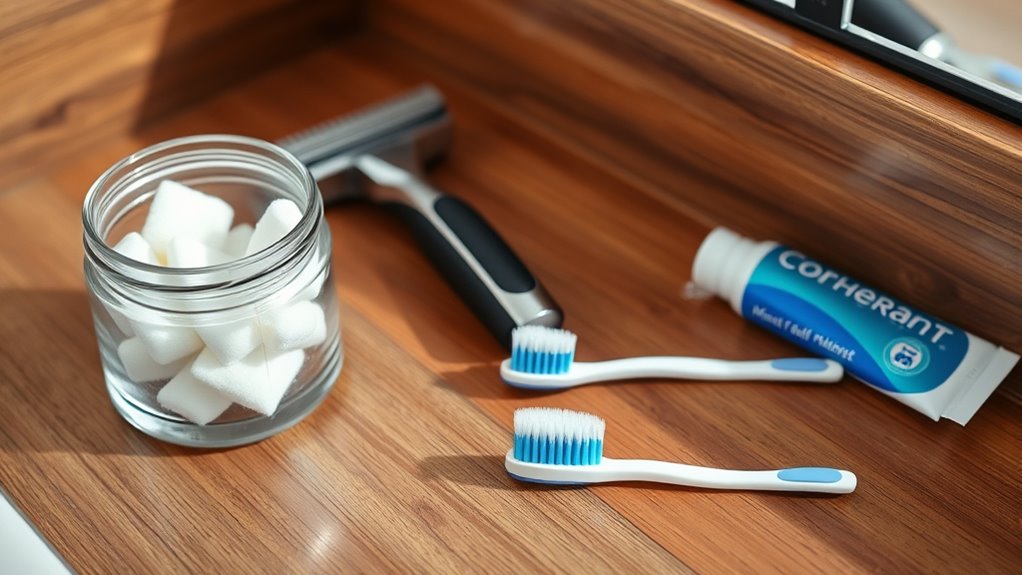
Have you ever wondered why grooming and oral care are vital parts of your daily routine? The truth is, maintaining good dental hygiene and facial grooming isn’t just about looking good; it’s about protecting your overall health and boosting your confidence. When you prioritize these routines, you set yourself up for a healthier, more vibrant life. Dental hygiene, in particular, plays a pivotal role in preventing cavities, gum disease, and bad breath. Brushing twice a day with fluoride toothpaste, flossing regularly, and visiting your dentist for checkups keep your teeth and gums strong. Neglecting these habits can lead to plaque buildup, tartar, and even more serious health issues like heart disease, as oral bacteria can enter your bloodstream. It’s a simple, effective way to safeguard your well-being.
Facial grooming, on the other hand, often gets overlooked but is equally important. A well-groomed face not only enhances your appearance but also promotes skin health. Regular shaving, trimming, or shaping your facial hair removes dirt and dead skin cells that can clog pores, leading to acne or irritation. Using the right skincare products suited to your skin type can prevent dryness, oiliness, or sensitivity. Keeping your eyebrows neat and your skin moisturized helps you look fresh and well-kept. Plus, facial grooming allows you to check for skin abnormalities or signs of health issues early on. Whether you prefer a clean-shaven look or a well-maintained beard, consistency is key. Taking the time to groom your face daily ensures you look polished, which can positively influence your personal and professional interactions. Additionally, professional grooming techniques can enhance your overall appearance and boost your self-confidence.
Both dental hygiene and facial grooming are about establishing habits that become second nature. They’re simple routines that pay off by making you feel more confident and comfortable in your own skin. Remember, good grooming isn’t about vanity; it’s about respecting yourself and taking responsibility for your health. It’s also a way to make a positive impression on others. Think of your daily grooming routine as a form of self-care—an investment in your health and self-esteem. Incorporate these practices into your schedule, and you’ll notice the difference not just in your appearance but in how you feel every day. Consistency, attention to detail, and the right tools will help you maintain these essential habits effortlessly.
Frequently Asked Questions
How Often Should I Replace My Toothbrush?
You should replace your toothbrush every 3 to 4 months to maintain good toothbrush hygiene. Worn-out bristles become less effective at cleaning and can harbor bacteria, which impacts your dental hygiene routines. Keep an eye on the fraying of the bristles, and if you’ve been sick, consider swapping it sooner. Regular replacement guarantees your toothbrush works efficiently, helping you maintain healthier teeth and gums.
Are Electric Toothbrushes Better Than Manual Ones?
Think of electric toothbrushes as your personal dental dynamos, outpacing manual ones in efficiency. They often provide better plaque removal and consistent brushing motions, making your oral care routine more effective. While manual brushes work just fine, electric toothbrushes tend to do a superior job, especially for those with limited dexterity. Ultimately, choosing electric vs manual depends on your needs, but electric brushes generally offer enhanced toothbrush efficiency for a brighter, healthier smile.
What Is the Best Way to Whiten Teeth Naturally?
You can whiten your teeth naturally by using remedies like baking soda or hydrogen peroxide, which help remove stains. Eating crunchy fruits and vegetables like apples and carrots can also promote stain prevention and boost oral health. Regularly brushing and flossing is essential, and avoiding foods and drinks that stain, like coffee or red wine, helps maintain your bright smile. Consistency is key for natural whitening results.
How Can I Prevent Bad Breath Effectively?
You can stop bad breath in its tracks by tackling halitosis causes head-on! Brush your teeth and tongue thoroughly after meals, floss daily, and use a mouthwash to banish odor-causing bacteria. Chewing sugar-free gum or mint can offer quick breath freshening techniques. Stay hydrated to prevent dry mouth, a major culprit. Consistent oral hygiene keeps halitosis at bay, ensuring your breath stays fresh and confident all day long!
When Should I See a Dentist for Oral Issues?
You should see a dentist promptly if you experience persistent tooth pain, bleeding gums, or any signs of dental emergencies like a broken tooth. Regular check-ups are also essential for oral cancer screenings and preventing issues before they worsen. Don’t wait for symptoms to worsen; routine visits help catch problems early and maintain your oral health. Schedule an appointment at least twice a year or as recommended by your dentist.
Conclusion
Keeping up with grooming and oral care might seem time-consuming, but it’s worth it for your confidence and health. Even if you think you don’t have the time, just a few minutes each day can make a huge difference. Regular routines prevent issues before they start, saving you money and discomfort later. So, don’t skip it—your future self will thank you for taking these simple steps today. Start now, and enjoy the benefits of a fresh, healthy look and smile.