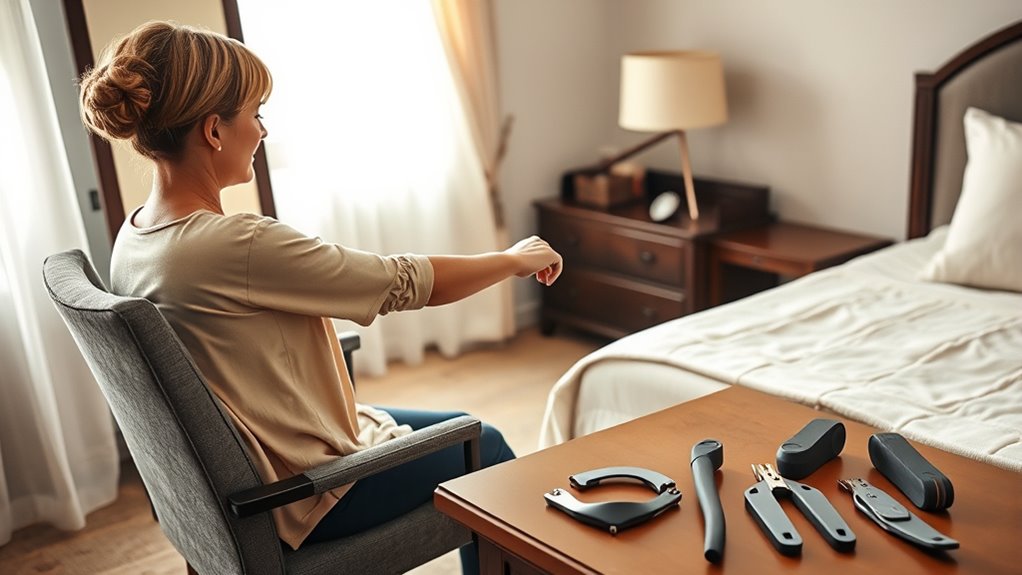

To make dressing easier with limited mobility, choose adaptive clothing with simple fasteners like velcro or elastic waistbands. Use dressing aids such as long-handled shoehorns, zipper pulls, and dressing sticks to reduce strain. Organize your wardrobe with accessible items within reach and set up a comfortable dressing area. Incorporating these strategies can boost your independence and comfort—stay tuned for more tips on dressing with ease and confidence.
Key Takeaways
- Use adaptive clothing with magnetic closures, elastic waistbands, or velcro for easier dressing.
- Incorporate dressing aids like long-handled shoehorns and zipper pulls to reduce strain.
- Organize clothes for quick access and set up an accessible dressing area to streamline routines.
- Prioritize simple fasteners and wide-open garments to minimize effort and improve independence.
- Choose comfortable, stretchy fabrics and adjustable features to enhance mobility and ease dressing.
Dressing can be challenging if you have limited mobility, but with the right strategies and tools, it becomes much more manageable. One of the most effective ways to simplify your daily routine is to explore adaptive clothing designed specifically for ease of wear. These garments often feature features like magnetic closures, elastic waistbands, and adjustable fasteners, making dressing less frustrating and more comfortable. Adaptive clothing helps you maintain independence and dignity, reducing the need for constant assistance. Pairing this with the right dressing aids, such as long-handled shoehorns, zipper pulls, and dressing sticks, further streamlines the process. These tools are lightweight, easy to grip, and designed to minimize strain on your joints, making each step of dressing quicker and less tiring.
When choosing clothing, focus on items that are easy to put on and take off. Look for clothes with stretchy fabrics, wide openings, and simple fasteners. For example, shirts with velcro closures or pull-over styles eliminate the need to struggle with buttons or tight necklines. Pants with elastic waistbands or adjustable drawstrings offer comfort and flexibility, allowing you to avoid bending or reaching in awkward positions. Remember, the goal is to reduce the physical effort required, so don’t hesitate to invest in high-quality adaptive clothing that caters specifically to your needs. It might be a little more expensive initially, but the increased independence and reduced frustration are well worth it.
Using dressing aids can markedly boost your confidence and efficiency. For instance, a dressing stick with a hook can help you reach and pull up clothing without bending too much. Zipper pulls make fastening zippers easier, especially if you have limited dexterity. Shoehorns with extended handles help you slip into shoes without excessive bending or contorting your body. Incorporating adaptive clothing options can also be beneficial, as they are designed to accommodate mobility challenges and provide easier dressing solutions. When you incorporate these aids into your routine, you’ll find that dressing becomes less of a chore and more of a manageable task. It’s also beneficial to set up your dressing area thoughtfully—keep your clothing organized and within easy reach to minimize unnecessary movement.
Frequently Asked Questions
How Can I Prevent Falls While Dressing?
To prevent falls while dressing, focus on fall prevention strategies. Make sure your space is clutter-free and well-lit. Use sturdy, non-slip mats and grab bars for added support. Practice balance exercises regularly to increase stability. Take your time, sit down if needed, and avoid rushing. Wearing slip-resistant shoes can also help. These steps help you stay steady and reduce the risk of falls during dressing.
What Adaptive Clothing Options Are Best for Limited Mobility?
Why struggle with buttons and zippers when adaptive clothing options exist? You’ll love clothes made from adaptive fabrics that stretch comfortably and are easy to care for. Look for pieces with easy fastenings like Velcro, magnetic closures, or elastic waistbands—no more wrestling with tiny buttons. These choices make dressing smoother, boost independence, and keep you comfortable all day. Who knew dressing could be this effortless?
How Do I Choose Clothing That’s Easy to Put On?
You should choose clothing made from adaptive fabrics that stretch and breathe, making them easier to put on. Look for options with clothing modifications, like magnetic closures or side openings, which simplify dressing. Prioritize loose-fitting styles that require less effort to pull on and take off. By selecting adaptive fabrics and clothing modifications, you’ll find dressing more manageable and comfortable, boosting your independence and confidence each day.
Are There Specific Tools to Assist Dressing?
Ever wondered if there are tools that make dressing easier? Yes, adaptive aids and dressing tools are designed specifically for this purpose. You can use zipper pulls, button hooks, or dressing sticks to help with fastening and reaching. These tools reduce strain and increase independence, making dressing less frustrating. Have you considered trying different adaptive aids to find what works best for your needs? They’re simple, effective solutions to assist your daily routine.
How Can I Stay Fashionable With Mobility Challenges?
You can stay fashionable despite mobility challenges by focusing on accessorizing tips like adding bold jewelry or scarves to elevate your outfits. Use color coordination to create cohesive looks that brighten your style while being easy to put together. Opt for adaptive clothing with stylish details that suit your needs. With a little creativity, you’ll look fantastic and feel confident, showcasing your unique personal style every day.
Conclusion
Remember, dressing with limited mobility might seem challenging at first, but with the right tips and a bit of patience, you’ll find your rhythm. Keep things simple, stay organized, and don’t be afraid to ask for help when needed. When you adapt your approach, you’ll realize it’s not as tough as it looks—you just have to roll with the punches. Stay positive, and soon dressing will become a smoother part of your day.