
To bathe a senior safely, start by checking the water temperature to keep it between 90-100°F, avoiding burns or chills. Prepare supplies beforehand and explain each step clearly to reduce anxiety. Use non-slip mats, grab bars, and a shower chair if needed for stability. Supervise closely to prevent accidents, keep water steady, and assist with thorough drying and moisturizing afterward. For detailed safety tips and a complete step-by-step process, continue with these essential guidelines.
Key Takeaways
- Maintain water temperature between 90-100°F and test it before bathing to prevent burns and chills.
- Prepare all supplies beforehand and encourage the senior’s participation for dignity and comfort.
- Use non-slip mats, grab bars, and a shower chair for safety, and never leave the senior unattended.
- Communicate each step clearly to reduce anxiety and support the senior throughout the bathing process.
- Dry the senior thoroughly, apply moisturizer if needed, and ensure a comfortable, respectful experience.
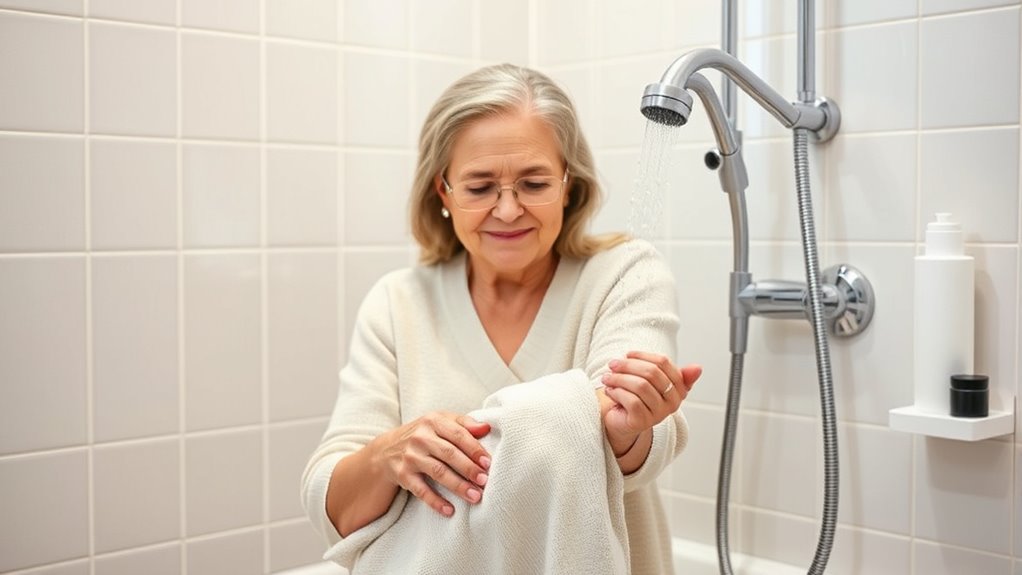
Bathing a senior can be a safe and comfortable experience when you follow the right precautions. The first step is ensuring water temperature is just right—warm but not hot. You want the water to be comfortably warm, around 90 to 100 degrees Fahrenheit, to prevent burns or discomfort. Always test the water with your wrist or elbow before letting the senior step in. Sudden changes in temperature can cause surprises, so maintain steady water flow and check frequently. Keeping the water at an appropriate temperature not only keeps the senior comfortable but also minimizes the risk of burns or chills. Proper projector setup can influence the overall viewing experience in a home cinema.
Next, focus on hygiene tips that help make the process smooth and respectful. Prepare everything beforehand—towels, soap, washcloths, and any assistive devices—so you’re not scrambling during the bath. Use gentle, fragrance-free cleansers suitable for sensitive skin, and encourage the senior to participate as much as they can. Proper hygiene involves more than just cleaning; it’s about making the senior feel dignified and comfortable. Be gentle while washing, especially in sensitive areas, and make sure to rinse thoroughly to remove any soap residue. Dry the skin carefully to prevent irritation and moisture buildup, which can lead to infections. When drying, pat gently rather than rubbing to avoid skin irritation.
Always communicate throughout the process, explaining what you’re doing and asking if they’re comfortable. This helps reduce anxiety and makes the senior feel involved and respected. Use non-slip mats in the tub or shower to prevent slips and falls, and keep a sturdy grab bar within reach for added stability. If the senior has mobility issues, consider using a shower chair or bench to sit on during the bath. Keep water and soap out of reach until needed, and never leave the senior unattended in the tub—even for a moment. Constant supervision is critical for safety, especially if the senior has balance or cognitive challenges.
Lastly, after the bath, help the senior dry off completely, paying special attention to skin folds to prevent moisture retention. Apply moisturizer if necessary, especially if their skin tends to be dry. Reassure them throughout the process, offering comfort and support. Following these simple steps—paying attention to water temperature, practicing good hygiene tips, and ensuring safety—can make bathing a senior a positive and safe experience for both of you.

Bath Mat,Ultra Thin Bathroom Rugs,Rubber Bath Mats for Bathroom,No Slip Bath Rugs,Quick Dry,Machine Washable,Low Pile,Absorbent,Shower Outside,Sink,Home Decor Accessories.Grey,1'5"x2'3"(17x27Inch)
ULTRA THIN BATH MAT – If you are looking for a bath rug that can fit under the…
As an affiliate, we earn on qualifying purchases.
As an affiliate, we earn on qualifying purchases.
Frequently Asked Questions
How Often Should Seniors Be Bathed for Optimal Skin Health?
You should bathe seniors 2-3 times a week to maintain ideal skin health. Consider their skin sensitivity and any medical conditions when determining the frequency considerations. Regular bathing helps promote skin hydration, preventing dryness and irritation. Avoid over-bathing, which can strip natural oils. Use gentle, moisturizing products, and guarantee they’re thoroughly dried afterward to support healthy, hydrated skin. Adjust the routine as needed for individual comfort and skin condition.
What Are Common Signs of Skin Infections After Bathing?
You’ll notice skin infections like skin irritation or rash development—these are your red flags. If redness spreads, bumps appear, or the skin feels warm or tender, it’s time to act. Sometimes, a stubborn itch or a patch that refuses to heal signals trouble. Keep an eye out for swelling or pus, which can turn a simple swim into a warning shot. Prompt attention keeps skin healthy and infection at bay.
How Can I Prevent My Senior Parent From Slipping in the Tub?
To prevent your senior parent from slipping in the tub, you should install non-slip mats inside the tub and on the bathroom floor to provide better traction. Additionally, adding sturdy grab bars around the tub and shower area gives them something to hold onto for extra stability. Always guarantee these safety features are securely installed and within easy reach, so your parent feels confident and safe during bath time.
Are There Special Bathing Products Suitable for Seniors’ Sensitive Skin?
Think of your senior parent’s skin as a delicate garden needing gentle care. You should look for gentle cleansers and hypoallergenic lotions specially formulated for sensitive skin. These products help prevent irritation and keep their skin healthy. Always choose mild, fragrance-free options that soothe rather than harm. By using these senior-friendly bathing products, you’re nurturing their well-being and ensuring a safe, comfortable bath experience every time.
What Should I Do if My Senior Refuses to Bathe?
If your senior refuses to bathe, try using motivation techniques like gentle encouragement, offering rewards, or involving them in choosing their bathing products. You can also explore alternative bathing options such as sponge baths, no-rinse wipes, or bathing in a basin. Stay patient and respectful, understanding their feelings, and avoid forcing. This approach helps maintain their dignity while ensuring their hygiene needs are met.

2 Pack 16 Inch Grab Bars for Bathtubs and Showers, Safety Bathroom Shower Grab Bars for Seniors Holds up to 500LBs, Handicap Grab Bars Stainless Steel, Anti Slip Shower Handle for Wall, Elderly
【Anti-Slip Texture Design】 In order to make the power assist of bath handle more stronger, our grab bars…
As an affiliate, we earn on qualifying purchases.
As an affiliate, we earn on qualifying purchases.
Conclusion
Remember, bathing a senior safely is like guiding a delicate boat through calm waters—you need patience, attentiveness, and gentle support. By following these steps, you create a comfortable, secure experience that respects their dignity. Keep communication clear and stay attentive to their needs. When you approach the task with care, you’ll both feel more confident and at ease, making bath time a moment of trust and comfort rather than stress.

HOMLAND Shower Chair for Inside Shower with Arms and Back, 500 lbs Heavy Duty Shower Seat for Bathtub, Height Adjustable Safety Bath Seat for Elderly, Adults, Handicap and Disabled, White
【500LB HEAVY-DUTY SHOWER SEAT】HOMLAND bath chair boasts premium aluminum alloy frames, our integrated design and widened frame ensuring…
As an affiliate, we earn on qualifying purchases.
As an affiliate, we earn on qualifying purchases.

BOMATA Digital Water Thermometer for Water, Liquid, Candle and Cooking. Instant Read Food Thermometer Waterproof IPX7 with Long Probe for Cooking, Meat, BBQ! T101 (Black Color)…
[ Waterproof – IPX7 ] With the strong waterproof ability, it’s very suitable for measuring the temperature of…
As an affiliate, we earn on qualifying purchases.
As an affiliate, we earn on qualifying purchases.