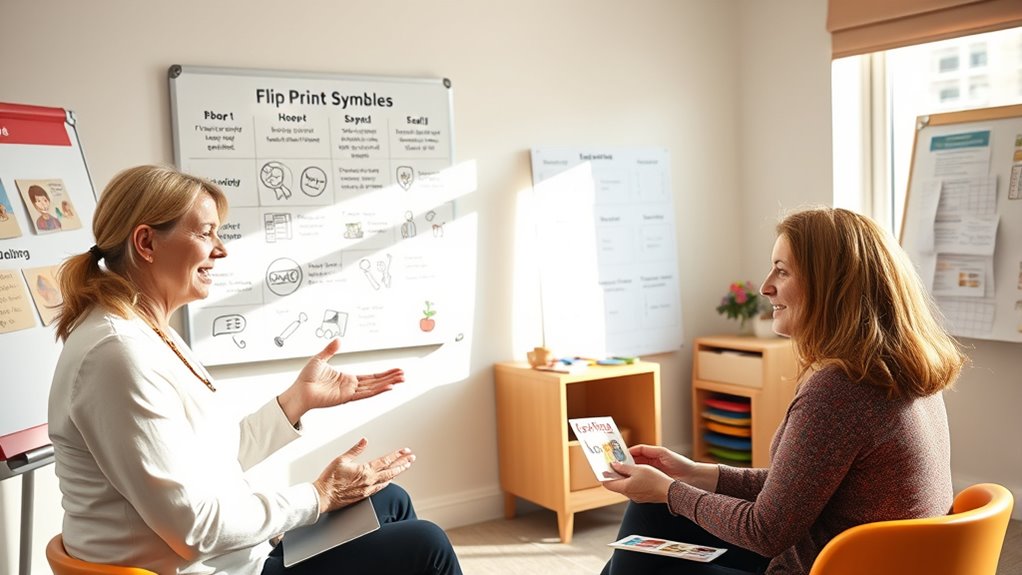

To communicate effectively with someone who has aphasia, use simple sentences, clear speech, and lots of patience. Support your words with natural gestures, visual aids, or objects to reinforce meaning. Pay attention to non-verbal cues like facial expressions or gestures indicating understanding or struggle. Keep your approach consistent but adaptable based on their responses. If you stick with these strategies, you’ll create a more comfortable, supportive environment that helps them express and understand better.
Key Takeaways
- Use simple, short sentences with common words and speak slowly to enhance understanding.
- Incorporate natural gestures alongside speech to reinforce messages visually.
- Utilize visual aids like pictures or written keywords to support comprehension.
- Practice patience, allow extra response time, and observe non-verbal cues for clarity.
- Maintain consistency in cues and adapt strategies based on the individual’s responses.
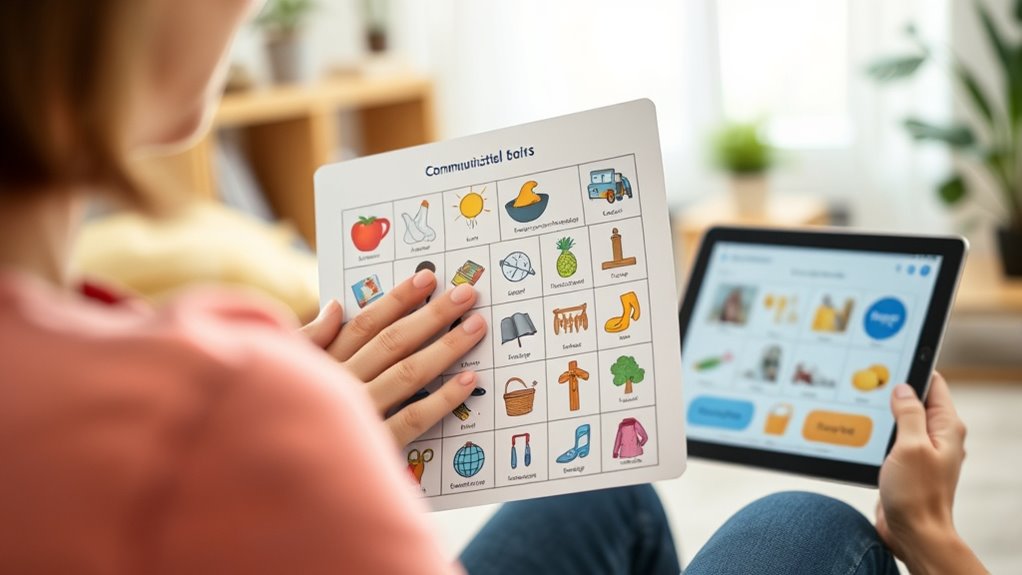
If you’re communicating with someone who has aphasia, using simple and clear strategies can make a big difference. One effective way to do this is by incorporating gesture support alongside simplified language. Gestures can help bridge the gap when words become difficult, providing visual cues that reinforce your message. When you speak, accompany your words with natural gestures—pointing, waving, or miming actions—to give additional context. These gestures act as visual anchors, helping the person understand your message more easily and reducing frustration. Keep your gestures simple, intentional, and relevant to what you’re saying. Avoid overly complicated or rapid movements, which might confuse or overwhelm the person you’re communicating with.
Using natural gestures alongside simple language helps clarify your message and reduces frustration in aphasia communication.
Simplified language plays a vital role in making conversations more accessible. Use short, direct sentences and common words, avoiding jargon or complex phrases. Speak slowly and clearly, giving the person enough time to process what you’re saying. Repetition can also be helpful—restating key points using different words or gestures ensures the message sticks. Remember, the goal is to make your communication as straightforward as possible, so don’t be afraid to pause and check for understanding. You can do this by asking yes/no questions or prompting the person to nod or shake their head, which keeps the interaction engaging and confirms comprehension.
Pausing frequently and giving the person time to respond is essential. This patience allows them to process the information at their own pace, reducing pressure and anxiety. When they struggle to find the right words, try using visual aids like pictures, written keywords, or objects to support your spoken message. These tools work well with gesture support and simplified language, creating a multi-sensory approach that enhances understanding. Be attentive to their non-verbal cues—if they look confused or frustrated, adjust your approach accordingly. Sometimes, a gentle smile or reassuring nod can help create a comfortable environment for communication.
Consistency is key. Keep your gestures and language patterns steady, so the person knows what to expect. Over time, they’ll become more familiar with your cues, which can boost their confidence in sharing their thoughts. Additionally, understanding the importance of attention to detail can help you notice subtle cues and ensure your communication is effective. Remember, your patience and willingness to adapt your communication style make a significant difference. By combining gesture support with simplified language, you foster a more inclusive and supportive conversation that respects their needs and encourages connection.
Top picks for "aphasia friendly communication"
Open Amazon search results for this keyword.
As an affiliate, we earn on qualifying purchases.
Frequently Asked Questions
How Can I Tell if Someone Has Aphasia?
You can tell if someone has aphasia by paying attention to non-verbal cues and emotional expressions. They might struggle to find words, speak in short or jumbled sentences, or repeat phrases. Watch for frustration or confusion, which often accompany communication difficulties. Their facial expressions, gestures, and body language can reveal their feelings. If you notice these signs, it’s likely they have aphasia, and offering patience and support helps them communicate better.
Are There Specific Tools for Aphasia Communication?
Yes, you can use specific tools like gesture cues and visual aids to enhance communication with someone with aphasia. Gestures help convey meaning quickly, while visual aids like pictures or charts clarify messages. These tools turn confusing conversations into clear, connected exchanges, making interactions more comfortable and effective. By incorporating these simple strategies, you help create a supportive space where communication flows freely and confidently.
How Can I Support Someone With Aphasia Daily?
You can support someone with aphasia daily by practicing patience and offering emotional support, helping them feel understood and safe. Encourage speech therapy exercises, participate in communication activities together, and use simple, clear language. Listen attentively and give them time to express themselves. Your consistent support boosts their confidence, making communication easier and more effective, while also fostering emotional well-being during their recovery journey.
What Should I Avoid When Communicating With Aphasia?
You should avoid using complex sentence structures and participating in fast-paced conversations, as these can overwhelm someone with aphasia. Instead, keep your language simple, speak slowly, and give them time to process. Avoid finishing their sentences or correcting their speech too often, as this can cause frustration. Focus on clear, calm communication to help them feel understood and supported without adding stress.
Can Aphasia Improve With Therapy or Practice?
Did you know that about 30% of people with aphasia improve markedly with therapy? Yes, aphasia can get better with consistent speech therapy and communication practice. Your efforts, combined with professional guidance, help rebuild language skills over time. Regular practice enhances progress, enabling better understanding and expression. So, stay committed to therapy and communication exercises, as they play an essential role in recovery and improving your quality of life.
Conclusion
By using simple words, gestures, and patience, you can make communication easier for someone with aphasia. For example, imagine helping a friend who struggles to find words; you smile, point to an object, and speak slowly. This small effort makes a big difference, helping them feel understood and supported. Remember, your patience and creative strategies can foster connection and confidence, making everyday conversations more comfortable for everyone involved.