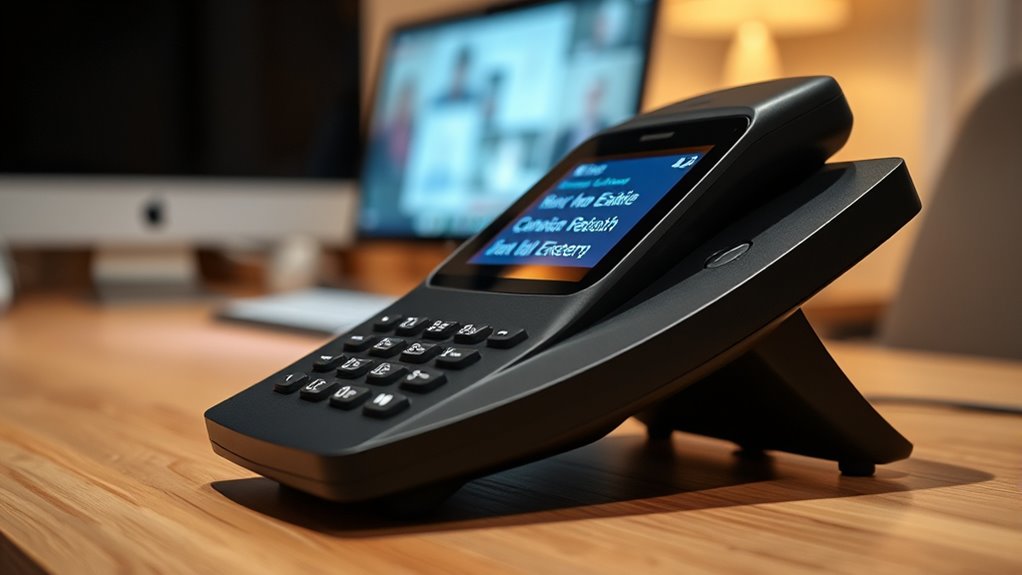

Captioned telephone services help you communicate clearly by providing real-time captions of your phone calls on your device’s screen. When someone speaks, speech recognition technology transcribes their words instantly, so you can read what’s being said without relying solely on hearing. You can customize font size and display options for comfort. If you want to understand more about how these features work together to improve your calls, there’s more to explore below.
Key Takeaways
- Captioned telephone services use speech recognition technology to transcribe spoken words into text in real-time during calls.
- Captions automatically display on the device’s screen, allowing users to read what is being said instantly.
- These services are compatible with hearing aids, cochlear implants, and connect with relay or captioning providers for enhanced accessibility.
- Users can simply answer calls as usual; captions appear automatically, eliminating the need for repetition or lip-reading.
- Features such as adjustable font size and high contrast screens customize the experience for individual accessibility needs.
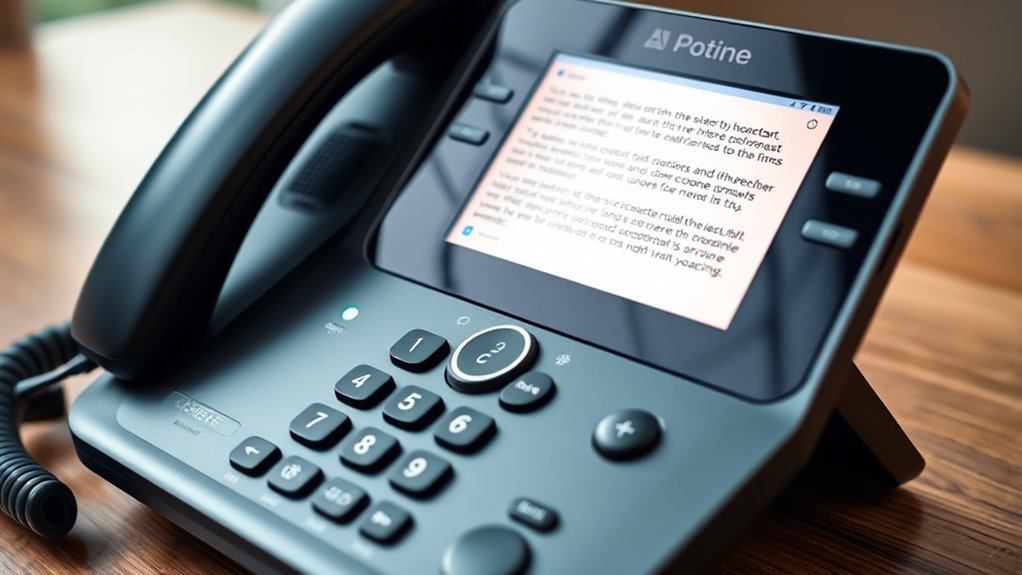
Have you ever struggled to catch every word during a phone call? If so, you’re not alone. Many people find it difficult to understand speech over the phone, especially if they have hearing loss or auditory processing challenges. That’s where captioned telephone services come into play. These services use assistive technology to provide real-time captions of what the other person is saying, making conversations clearer and more accessible. When you use a captioned phone, the device captures the spoken words and instantly displays them on a screen, so you can read along as you listen. This setup helps bridge the gap between hearing and understanding, guaranteeing you don’t miss important details during your calls.
Captioned phones display spoken words in real-time, making calls clearer and more accessible for those with hearing challenges.
The core of captioned telephone services relies on a combination of advanced technology and thoughtful accessibility features. The phone itself is equipped with a speech recognition system that transcribes speech into text in real-time. This technology is continually refined to improve accuracy, even in noisy environments or with speakers who have different accents. The captions appear on the phone’s display, synchronized with the conversation, allowing you to follow along comfortably. Because these services are designed with accessibility in mind, they often include features like adjustable font size, high contrast screens, and customizable display options. These accessibility features are essential—they let you tailor the experience to your preferences, making the conversation easier to read and understand.
Beyond the hardware, many captioned phone services also integrate with other assistive technologies to enhance usability. For example, some systems are compatible with hearing aids or cochlear implants, providing a seamless experience for users with multiple hearing needs. Others may include options for connecting to relay services or third-party captioning providers, further expanding their accessibility reach. These tools work together to guarantee that anyone with hearing difficulties can communicate effectively, whether for personal calls or professional conversations.
Using captioned telephone services is straightforward and designed to be user-friendly. Once set up, all you need to do is answer the call as usual. During the conversation, the captions automatically appear on your screen, so you don’t have to ask the caller to repeat themselves or rely solely on lip-reading. This immediate access to the spoken words makes it easier to stay engaged and understand the conversation fully. Staying informed about legislative changes can help you understand your rights and available assistance programs, enhancing your communication experience. Overall, captioned telephone services leverage assistive technology and accessibility features to provide an essential communication aid, giving you confidence and independence when making and receiving phone calls.

Hamilton CapTel 2400iSPNBT Captioned Telephone, Hearing Impaired Phones, Volume Control with up to 40dB Amplification Gain, Large Touch Screen Display, Wi-Fi Capable, Answering Machine & Speakerphone
Unmatched Accessibility and Convenience: Hamilton CapTel empowers people with hearing loss by transforming everyday calls into clear conversations….
As an affiliate, we earn on qualifying purchases.
As an affiliate, we earn on qualifying purchases.
Frequently Asked Questions
What Equipment Is Needed to Use Captioned Telephone Services?
To use captioned telephone services, you’ll need compatible telephone hardware equipped with accessibility features. This includes a specialized captioned phone or a device with a captioning app, along with a reliable internet connection if needed. Confirm your hardware supports real-time captioning and accessibility options. Once set up, the service transcribes your conversations so you can read the dialogue on your phone screen, making communication clearer and more accessible.
Are Captioned Telephone Services Available for Mobile Devices?
Did you know over 48 million Americans experience hearing loss? Yes, captioned telephone services are available for mobile devices. You can access them through a user-friendly mobile app, making communication easier on the go. Just check device compatibility to guarantee the service works seamlessly with your smartphone or tablet. This way, you stay connected and informed, no matter where you are.
How Do Captioned Telephone Services Differ From Video Relay Services?
You find that captioned telephone services differ from video relay services because they provide real-time transcription of what the other person says, making conversations accessible for those with hearing impairments. While captioned services display text during calls, video relay services involve sign language interpreters via video. Both enhance accessibility features, but captioned phones focus on text, whereas video relay services center around visual sign language communication.
Is There a Cost Associated With Accessing Captioned Telephone Services?
You might wonder if there’s a cost associated with captioned telephone services. In many cases, these services are either free or low-cost, especially for those who qualify due to hearing impairments. For example, a senior in California found that their provider offered the service at little to no expense, making it highly affordable. Always check local or federal programs for cost considerations and service affordability to guarantee you get the help you need without breaking the bank.
Can Captioned Telephone Services Be Used Internationally?
Yes, you can use captioned telephone services internationally, but it depends on the provider’s international accessibility and global compatibility. Not all services support international calls, so you should check if the service functions in your destination country. Some providers offer international options or partnerships, making it easier for you to stay connected. Always verify coverage and compatibility beforehand to ensure seamless communication wherever you are.
Hamilton CapTel 2400iSPNBT Captioned Telephone, Hearing Impaired Phones, Volume Control with up to 40dB Amplification Gain, Large Touch Screen Display, Wi-Fi Capable, Answering Machine & Speakerphone
Unmatched Accessibility and Convenience: Hamilton CapTel empowers people with hearing loss by transforming everyday calls into clear conversations….
As an affiliate, we earn on qualifying purchases.
As an affiliate, we earn on qualifying purchases.
Conclusion
Captioned Telephone Services make communication easier for those with hearing impairments, ensuring you stay connected and engaged. Did you know that over 48 million Americans experience some form of hearing loss? With these services, you can enjoy clear conversations without missing important details. By understanding how they work, you’ll see just how accessible and helpful this technology truly is. Stay informed and take advantage of these tools to improve your communication experience today.
Hamilton CapTel 2400iSPNBT Captioned Telephone, Hearing Impaired Phones, Volume Control with up to 40dB Amplification Gain, Large Touch Screen Display, Wi-Fi Capable, Answering Machine & Speakerphone
Unmatched Accessibility and Convenience: Hamilton CapTel empowers people with hearing loss by transforming everyday calls into clear conversations….
As an affiliate, we earn on qualifying purchases.
As an affiliate, we earn on qualifying purchases.

AT&T CL4940 Corded Standard Phone with Answering System and Backlit Display, White
Simple, corded operation- Reliable, corded operation eliminates the search for a misplaced cordless handset, while sturdy construction ensures…
As an affiliate, we earn on qualifying purchases.
As an affiliate, we earn on qualifying purchases.