College and student volunteer programs offer a great way to give back to your community while developing essential skills for your future. You can lead projects, build your network with peers and professionals, and gain hands-on experience that supports your career goals. These programs are flexible and often integrated into your academic schedule, helping you manage your time effectively. Keep exploring to discover how participating can benefit both your community and your personal growth.
Key Takeaways
- Volunteer programs enable students to serve the community while developing essential skills for future careers.
- Students can take on leadership roles, organizing events and managing teams to build confidence.
- Community service offers networking opportunities with peers, professionals, and industry leaders.
- Programs are flexible, allowing integration into busy academic schedules with short-term or credit-bearing options.
- Volunteer activities help students acquire practical skills and experience applicable to diverse professional fields.
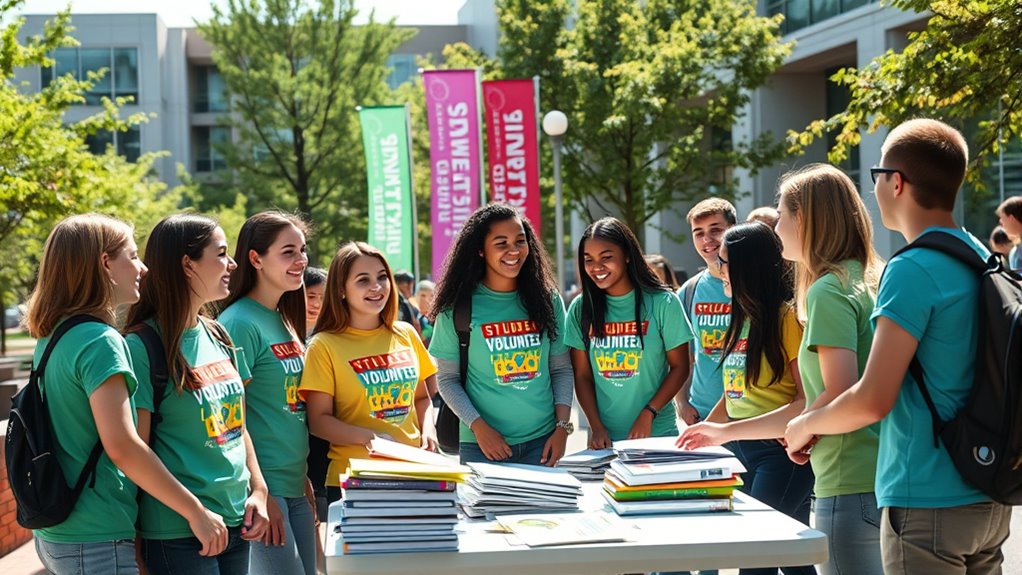
Are you looking for ways to make your college years more meaningful while gaining valuable experience? Getting involved in volunteer programs can be a game-changer. Not only do you contribute to your community through meaningful service, but you also develop pivotal skills that will serve you well beyond graduation. Engaging in community service allows you to connect with people from diverse backgrounds, understand their challenges, and make a tangible difference. Whether you’re helping out at local shelters, tutoring students, or participating in environmental cleanups, you’re actively impacting your surroundings. These experiences foster empathy and social awareness, qualities that define a well-rounded individual.
Getting involved in volunteer programs enriches your college experience and builds skills for lifelong success.
Beyond making an impact, participating in volunteer programs is a powerful way to cultivate leadership development. As you take on responsibilities, coordinate activities, or lead teams, you build confidence in your ability to inspire and guide others. Many programs offer leadership training or mentorship opportunities that prepare you for future roles in your career or community. For example, organizing a charity event or leading a club not only boosts your organizational skills but also teaches you how to motivate a team, delegate tasks, and navigate challenges effectively. These are invaluable lessons that enhance your resume and prepare you for leadership roles after college.
Getting involved in community service through student volunteer programs also expands your network. You meet like-minded peers, community leaders, and industry professionals who share your passion for making a difference. These connections can lead to internships, job opportunities, or mentorships that accelerate your career path. Additionally, volunteering demonstrates your commitment to social responsibility, which many employers value highly. It shows that you’re proactive, compassionate, and capable of balancing multiple priorities.
Most college volunteer programs are flexible, fitting into your busy schedule. Whether you can commit a few hours a week or participate in intensive projects during breaks, there’s an opportunity suited to your availability. Many schools even have service-learning courses that combine academic credit with community engagement, allowing you to integrate your volunteer work into your educational journey. As you gain experience, you’ll also develop time management and organizational skills—traits that are essential in any professional setting. Engaging in hands-on activities like these can also enhance your understanding of practical skills applicable in a variety of careers.
Top picks for "college student volunteer"
Open Amazon search results for this keyword.
As an affiliate, we earn on qualifying purchases.
Frequently Asked Questions
How Do I Find Local Volunteer Opportunities for College Students?
To find local volunteer opportunities for college students, start by exploring community service listings online or on your college’s bulletin boards. Reach out to local organizations like food banks, shelters, and youth programs—they often need volunteers. Attend community events or join student clubs focused on service. Networking with peers and faculty can also lead you to hidden opportunities, making it easier to contribute to your community and gain valuable experience.
Are There Any Scholarships Available for Student Volunteers?
Ever wonder if your volunteer efforts can earn you scholarships? Yes, many organizations offer scholarships based on volunteer work. Check out volunteer grant programs and scholarship eligibility criteria that reward your community involvement. These programs often recognize dedication and service, providing financial aid for students like you. So, keep volunteering; your efforts could open doors to scholarships and future opportunities you might not expect.
Can Volunteering Help Improve My College Application?
Yes, volunteering can remarkably boost your college application by showcasing your community engagement and leadership development. When you dedicate time to meaningful service, you demonstrate responsibility, teamwork, and a commitment to making a difference. These qualities appeal to admissions committees. Highlight your volunteer experiences on your application, emphasizing your leadership roles and community impact, which can set you apart from other applicants and improve your chances of acceptance.
What Skills Can I Gain From Student Volunteer Programs?
Volunteering can boost your skills faster than a rocket to the stars! You’ll develop leadership skills by organizing projects and guiding others. It also sharpens cross-cultural communication, helping you connect with diverse people and understand different perspectives. These experiences make you more adaptable, empathetic, and confident—qualities that stand out on any resume or college application. Embrace the challenge, and watch yourself grow into a well-rounded, impactful individual.
How Do I Balance Volunteering With Academic Responsibilities?
To balance volunteering with your academics, you should focus on effective time management and prioritization strategies. Create a schedule that allocates specific times for volunteering and studying, ensuring neither overlaps. Use tools like calendars and to-do lists to stay organized, and be flexible when needed. By setting clear priorities and managing your time wisely, you can contribute meaningfully without sacrificing your academic performance.
Conclusion
As you volunteer, you’ll find yourself gaining skills and making a difference, but you’ll also discover a deeper sense of purpose. It’s like planting seeds in a garden—your efforts grow into confidence and compassion, shaping who you are. While exams and deadlines surround you, volunteering offers an invigorating contrast, reminding you that even small acts can create big change. Embrace these programs; they’ll transform your college experience in ways you never imagined.