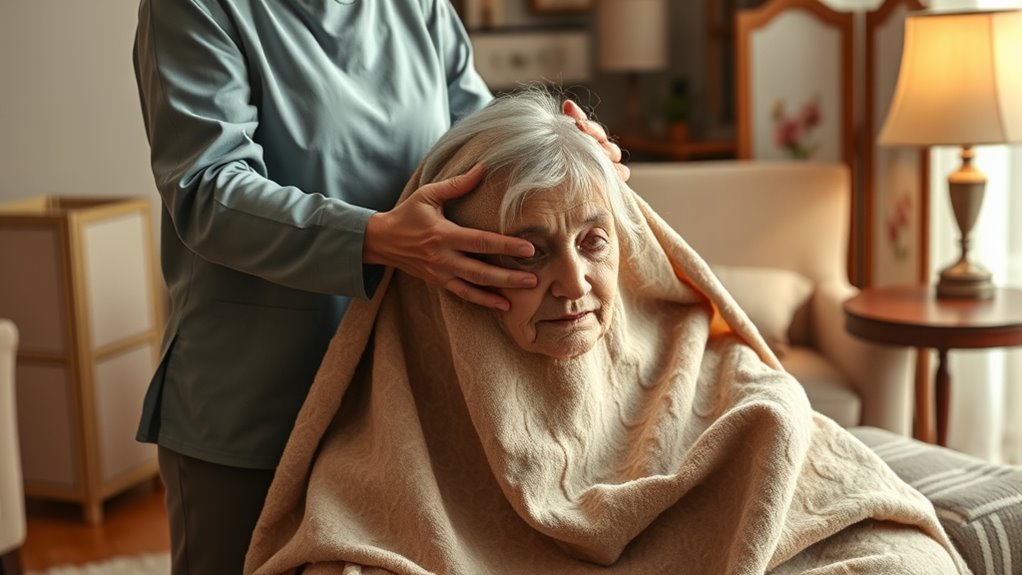

To protect a care recipient’s privacy at home, you should set clear boundaries for remote monitoring, ensuring devices are disabled during private moments. Always inform your loved one about any recordings or sensors, and keep personal spaces secure and accessible only to authorized individuals. Use confidentiality agreements and secure data practices to safeguard personal information. Balancing safety with respect involves open communication and respecting choices, so you can learn how to develop a respectful and secure care environment.
Key Takeaways
- Clearly inform care recipients about remote monitoring devices and obtain their consent before use.
- Disable or adjust monitoring devices during private moments to respect personal boundaries.
- Secure personal spaces and limit access to authorized individuals to protect privacy.
- Use confidentiality agreements with caregivers and providers to ensure data security and privacy rights.
- Maintain open communication, involve care recipients in privacy decisions, and prioritize their dignity and autonomy.
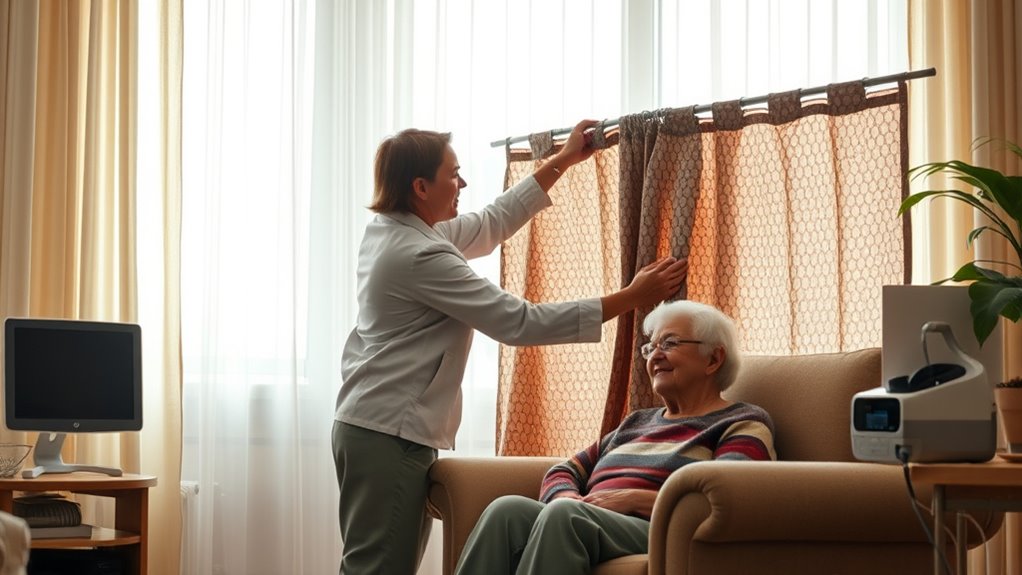
Protecting the privacy of care recipients is vital for maintaining their dignity and trust. When you’re caring for someone at home, it’s easy to focus on their physical needs, but safeguarding their personal information and privacy is just as important. One way to do this is by understanding how remote monitoring can be used responsibly. Remote monitoring involves the use of cameras, sensors, or other technology to keep an eye on your loved one’s safety and well-being. While these tools can help you respond quickly to emergencies or monitor health conditions, they also raise concerns about privacy. To address this, it’s essential to set clear boundaries about when and how monitoring is used. Make sure your loved one understands what is being recorded or observed and why. Keep the monitoring to necessary situations, and turn off or disable devices when privacy is needed, such as during personal hygiene or private conversations. This approach helps prevent feelings of intrusion and preserves their dignity.
Another key step in protecting privacy is establishing confidentiality agreements, especially if you’re working with caregivers, healthcare providers, or technology providers. These agreements clearly outline how personal information will be handled, who has access to it, and the measures in place to prevent unauthorized disclosure. When everyone involved signs a confidentiality agreement, it reinforces the importance of respecting your loved one’s privacy rights. It also provides legal protection if there’s ever a breach of privacy or misuse of information. Be sure to review these agreements carefully and ask questions about data security practices, especially when sensitive health or personal data is involved. Additionally, understanding privacy rights helps caregivers and care recipients advocate for their own protection and makes informed decisions about technology use.
Additionally, consider the physical environment and communication practices. Keep personal items and private spaces secure, and limit access to only those who truly need it. When discussing personal health or sensitive topics, find a private setting where conversations can’t be overheard. Respect your loved one’s preferences for privacy, and involve them in decisions about who can access their information or assist with tasks.
In essence, protecting privacy at home requires a combination of responsible technology use, clear agreements, and respectful communication. By implementing remote monitoring thoughtfully and establishing confidentiality agreements, you ensure your loved one’s safety without compromising their dignity. Always stay informed about your rights and the rights of your care recipient, and prioritize transparency and respect in every aspect of care. This balanced approach helps foster trust, promotes independence, and enhances overall well-being.
Frequently Asked Questions
How Can I Handle Privacy Concerns With Multiple Caregivers?
You can handle privacy concerns with multiple caregivers by setting clear caregiver boundaries and establishing confidentiality agreements. Communicate openly about privacy expectations and make sure everyone understands their role. Regularly remind caregivers to respect personal space and sensitive information. Implement written agreements to reinforce confidentiality. By fostering transparency and accountability, you help protect your loved one’s privacy while maintaining a trustworthy caregiving environment.
What Legal Rights Do Care Recipients Have Regarding Privacy?
You have legal rights to privacy, including controlling who accesses your personal information through consent rights. Care providers must follow confidentiality measures to protect your sensitive data. You can request that your caregivers respect your privacy by setting boundaries and understanding your rights. If these rights are overlooked, you can file a complaint or seek legal advice to ensure your privacy is maintained and respected at all times.
How Do I Balance Safety and Privacy at Home?
Balancing safety and privacy at home is like walking a tightrope over a canyon—you need steady focus. You should set clear privacy boundaries that respect your loved one’s emotional well-being while ensuring their safety. Communicate openly about what’s acceptable and what’s not, and involve them in decisions. This way, you protect their privacy without compromising safety, creating a trusting environment where they feel secure and respected.
Are There Technological Tools to Enhance Privacy?
Yes, smart home devices with data encryption can enhance your privacy. You can install security cameras, motion sensors, or voice assistants that prioritize encryption, ensuring your personal information stays protected. Look for devices with strong privacy controls and transparent data policies. Regularly update your software and review permissions. These tools help you stay connected and safe without compromising your care recipient’s privacy at home.
How Should I Address Privacy Breaches by Caregivers?
When faced with privacy breaches by caregivers, you should enforce strict confidentiality protocols and provide ongoing privacy training. Address the issue directly with the caregiver, emphasizing the importance of respecting your loved one’s privacy. Implement clear policies, document the incident, and seek corrective action if needed. Regularly review privacy practices to prevent future breaches, ensuring everyone understands their responsibilities in safeguarding care recipient confidentiality.
Conclusion
Remember, safeguarding your loved one’s privacy is like tending a delicate garden—you nurture it with respect and gentle care. By being mindful of their personal space and boundaries, you help preserve their dignity and trust. Small acts, like discreetly managing personal items or respecting their routines, make a big difference. When you honor their privacy, you’re creating a safe haven where they can feel truly valued and comfortable, even in the quiet moments of everyday life.