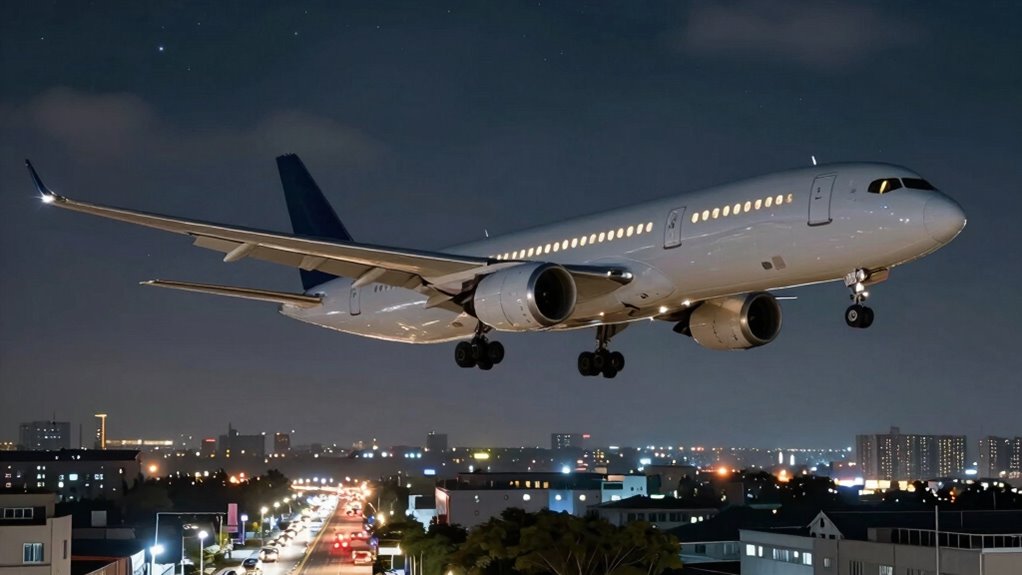

Overnight flights disrupt your body’s internal clock, making your arrival day feel tougher. You might arrive feeling groggy, disoriented, or in need of rest, especially if the flight crosses multiple time zones. Your body’s circadian rhythm still sticks to the previous schedule, causing trouble sleeping and irregular alertness. The direction you travel affects how easily you adjust, but strategic planning can help. Keep exploring to discover how you can better manage these effects and ease your shift.

Get comfort and care essentials delivered free — and shop member deals
- Fast, free delivery on millions of items
- Access to Prime Big Deal Days deals on October 6–7
- Prime Video, Amazon Music and more included
Key Takeaways
- Overnight flights often lead to fatigue upon arrival due to disrupted sleep patterns and circadian misalignment.
- They can cause jet lag symptoms, affecting alertness and sleep quality on the arrival day.
- Traveling overnight may result in arriving feeling tired, with limited energy for activities.
- Adjusting to local time can be delayed, impacting initial day plans and productivity.
- Proper pre-flight planning and exposure to sunlight can help mitigate the effects of overnight travel.

Have you ever wondered how overnight flights influence the day you arrive at your destination? When you choose an overnight flight, you’re fundamentally crossing multiple time zones while sleeping through most of the journey. As a result, your body’s internal clock, or circadian rhythm, gets disrupted, leading to jet lag. This disruption is directly tied to the time zone change you experience during your flight. When you land, your body might still feel like it’s in the previous time zone, even though the clock on your phone or airport displays a new local time. This mismatch can leave you feeling groggy, disoriented, and less alert, especially in the first hours or days after arrival.
The impact of a time zone change can be particularly pronounced on arrival days. Since your internal clock is out of sync with the local schedule, you might find it hard to sleep at night, struggle to eat at regular times, or feel fatigued during daytime activities. If you arrive early in the morning after a long overnight flight, your body may still be craving rest, even if it’s technically daytime at your destination. Conversely, if you arrive in the evening, you might feel wide awake due to jet lag’s effects, making it difficult to fall asleep at a reasonable hour. This misalignment often results in a delayed adjustment period, which can extend your jet lag symptoms into days after arrival. Additionally, understanding how your internal clock responds to travel can help you better manage your symptoms and plan your activities accordingly. Being aware of jet lag symptoms can empower travelers to take appropriate steps to minimize its impact. Recognizing the importance of circadian rhythms can also aid in developing effective strategies for quick adaptation. Furthermore, engaging in light exposure at strategic times can accelerate your adjustment process and reduce discomfort.
Your body’s response to jet lag varies depending on how many time zones you cross and how well you prepare for the change. For instance, if you fly eastward across multiple zones, you might find it harder to fall asleep at night because your body has to adjust to an earlier schedule. Traveling westward, on the other hand, often feels easier because your internal clock is being shifted later, which aligns more naturally with the typical sleep cycle. Regardless of direction, the key to mitigating jet lag involves strategic planning, such as adjusting your sleep schedule before departure, staying hydrated, and getting sunlight upon arrival to help reset your internal clock. Proper planning can significantly reduce the severity of jet lag symptoms and help you adapt more quickly.
As an affiliate, we earn on qualifying purchases.
Frequently Asked Questions
Do Overnight Flights Impact Jet Lag Differently Than Daytime Flights?
Overnight flights do impact jet lag differently than daytime flights because they disturb your sleep and circadian rhythms more. When you fly overnight, you often miss out on restful sleep, leading to sleep disruption that complicates adjusting to new time zones. This disruption hampers your body’s natural circadian rhythms, making it harder to sync with local time, which can intensify jet lag symptoms compared to daytime flights.
How Do Airlines Manage Passenger Comfort on Overnight Flights?
Think of airlines as your caring co-pilots, guiding you through a night sky journey. They manage your comfort by dimming cabin lights, providing cozy blankets, and adjusting temperature settings. In-flight entertainment keeps you entertained like a lullaby, while meal service offers nourishing sustenance to combat fatigue. These thoughtful touches help you relax, making the overnight flight feel less like a marathon and more like a gentle drift into sleep.
Are There Specific Destinations Where Overnight Flights Are More Common?
You’ll find overnight flights more common to major destination hubs, especially with midnight departures. Airlines schedule these flights to optimize connections and maximize aircraft utilization. Popular destinations like New York, London, and Dubai often see these overnight routes, making it convenient for travelers to arrive early the next day. If you’re flying overnight, expect flights to these key hubs, where airlines frequently operate late-night and early-morning services.
What Are the Best Tips to Adjust After an Overnight Flight?
To adjust after an overnight flight, prioritize resetting your sleep schedule by getting sunlight and avoiding naps early on. Stick to local meal timings to help your body adapt faster. Stay hydrated and avoid caffeine or alcohol. Use sleep aids if necessary, but don’t overdo it. These steps will help you recover quicker, minimize jet lag, and enjoy your trip with more energy and alertness.
How Does Baggage Handling Differ on Overnight vs. Daytime Flights?
On overnight flights, baggage handling often differs due to cargo logistics and baggage prioritization. Your luggage may be processed more quickly to guarantee timely delivery for morning arrivals, but it can also face delays if prioritization shifts or cargo logistics are disrupted overnight. You might notice your baggage gets offloaded faster or slower compared to daytime flights, depending on airport staffing and operational focus during nighttime hours.
Conclusion
So, as you set your watch to a different time zone, remember that overnight flights are like the midnight train to Narnia—carrying you to new worlds while blurring the lines of your arrival day. Your body’s clock may whisper stories of fatigue or excitement, but the journey’s magic is in how you embrace each new dawn. In the end, every departure and arrival writes a chapter in your own odyssey, waiting to unfold.
Halloween Picks
halloween
As an affiliate, we earn on qualifying purchases.