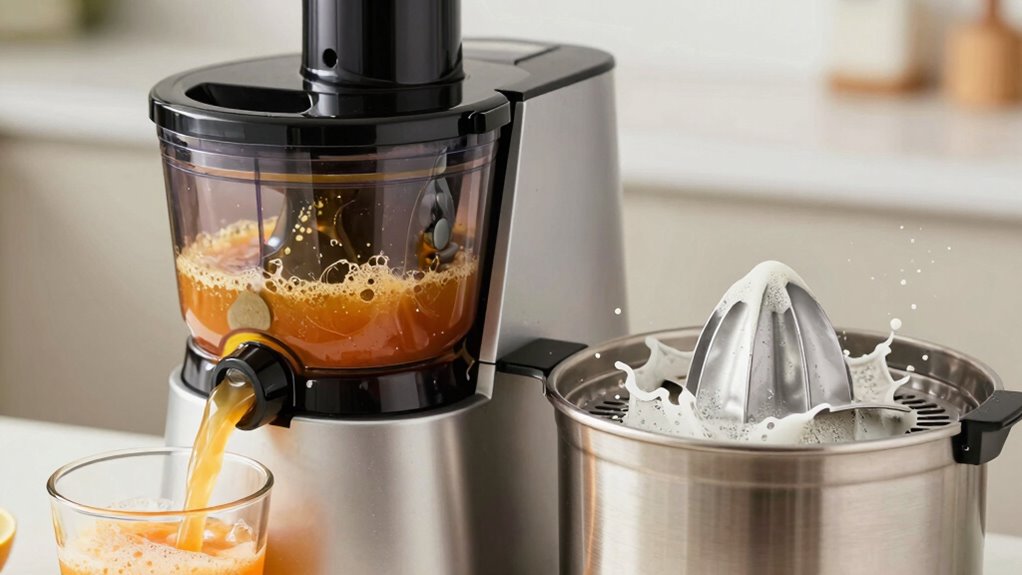

Slow juicers use gentle crushing at low speeds, preserving more nutrients, enzymes, and delicate produce, but they take longer and are quieter. Centrifugal juicers operate at high speeds, producing juice quickly with less effort, but they generate noise and may degrade some nutrients due to heat. If you want better quality juice and don’t mind extra time, a slow juicer is ideal; for speed and convenience, go centrifugal. Keep exploring to find the best fit for you.
Key Takeaways
- Slow juicers use gentle crushing, preserving more nutrients, while centrifugal juicers operate quickly but may degrade some vitamins.
- Centrifugal models provide faster juice extraction, ideal for busy mornings, whereas slow juicers need longer processing times.
- Slow juicers are quieter and better for delicate produce, while centrifugal juicers tend to be noisier but easier to clean.
- Efficiency and juice quality are higher with slow juicers, but centrifugal models have improved in speed and convenience.
- Cleaning is generally easier with centrifugal juicers due to fewer parts, while slow juicers may require more effort.
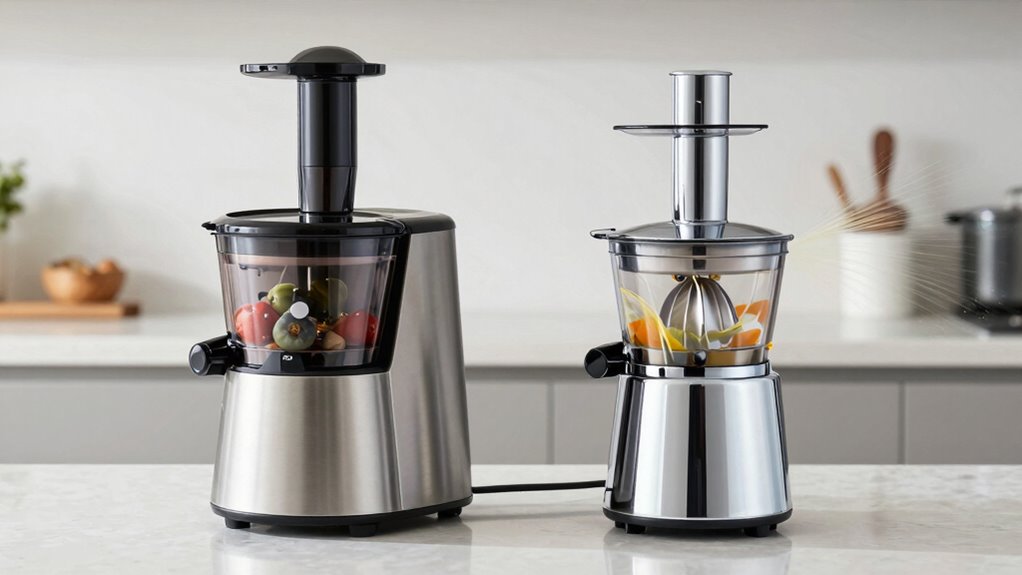
When choosing a juicer, understanding the differences between slow juicers and centrifugal juicers can help you make an informed decision. These two types of juicers operate differently, affecting your overall experience and the quality of your juice. One of the main considerations is nutrient retention. Slow juicers, also known as masticating juicers, use a gentle, crushing action to extract juice. This slow process minimizes heat and oxidation, helping preserve more vitamins, enzymes, and nutrients in the juice. If you’re someone who values the maximum health benefits from fresh produce, a slow juicer might be the better choice. In contrast, centrifugal juicers operate at high speeds, using a rapidly spinning blade to shred fruits and vegetables before spinning the juice out through a strainer. While this method is quick and efficient, the high-speed process can generate more heat and expose the juice to oxygen, which can degrade some nutrients. As a result, centrifugal juicers often produce juice with slightly lower nutrient retention, especially when you’re juicing leafy greens or other delicate produce. Additionally, the operating speed of the juicer can influence both the quality and convenience of your juice preparation. Another key factor to consider is noise levels, which can substantially impact your daily routine. Slow juicers tend to be quieter because they operate at lower speeds and produce less vibration. If you prefer a peaceful morning routine or need to juice in a shared space without disturbing others, a slow juicer offers a considerable advantage. On the other hand, centrifugal juicers are known for their noisy operation. Their high-speed motors and spinning blades create a loud, often disruptive sound, which might be inconvenient if you’re early in the morning or live in a noise-sensitive environment. Speed and convenience are also worth thinking about. Centrifugal juicers excel in this area, delivering juice in just a few seconds and making them ideal for quick mornings or busy households. Slow juicers take longer because of their grinding process, but many users find the extra time worthwhile for the improved juice quality. Additionally, advancements in design and technology have led to quieter and more efficient centrifugal models, although they still tend to be louder than their slow counterparts. Some models now incorporate innovative features to enhance user experience, such as faster assembly or improved juice extraction. Moreover, the availability of different models and brands allows consumers to choose options that best suit their specific needs and preferences. Cleaning can be another consideration; centrifugal juicers often have fewer parts, making them easier to clean, whereas slow juicers may have more components and require a bit more effort to maintain. Additionally, some models incorporate innovative self-cleaning features that can reduce maintenance time. Ultimately, your choice hinges on what matters most to you—whether it’s nutrient-rich juice, a quieter operation, or quick results. Both types have their strengths, but understanding how they differ helps you pick the one that best fits your lifestyle and health goals.

Godspeeds Juicer Machines with 5.8" Large Feed Chute, Slow Masticating Cold Press Juicer for Whole Fruits & Vegetables, Easy to Clean Design, High Juice Yield Home Juicer for Daily Wellness
Whole-Fruit Convenience, Less Prep Time:Designed for busy American households, this juicer features a 5.8-inch wide feed chute that…
As an affiliate, we earn on qualifying purchases.
As an affiliate, we earn on qualifying purchases.
Frequently Asked Questions
Which Juicer Retains More Nutrients in the Juice?
You’ll find that slow juicers retain more nutrients in the juice because they operate at lower speeds, reducing juice oxidation. This gentle process helps preserve vitamins and enzymes, making your juice healthier. Centrifugal juicers, on the other hand, spin quickly, leading to more juice oxidation and nutrient loss. So, if nutrient preservation is your priority, a slow juicer is the better choice for keeping your juice nutrient-rich.
Are Slow Juicers Easier to Clean Than Centrifugal Ones?
You might think slow juicers are easier to clean, but the truth is, their cleaning process can be surprisingly involved. While they often have fewer parts, some components require careful disassembly, making maintenance challenges seem intimidating. Centrifugal juicers, on the other hand, usually have a simpler cleaning process with fewer parts to scrub. The choice depends on whether you prefer a straightforward cleanup or don’t mind a more detailed maintenance routine.
How Does Noise Level Compare Between the Two Types?
Centrifugal juicers tend to be noisier than slow juicers because their motors generate more vibration, which increases noise levels. Slow juicers operate with quieter motors and benefit from noise mitigation features, making them more suitable if you prefer a peaceful kitchen environment. If noise is a concern, you’ll likely appreciate the calmer operation of a slow juicer, especially during early mornings or late nights.
Can Both Juicer Types Handle Leafy Greens Effectively?
Both juicer types can handle leafy greens, but they do so differently. Slow juicers gently coax juice from leafy greens, preserving nutrients and delivering a smooth, rich extract. Centrifugal juicers, on the other hand, spin at high speeds to quickly extract juice, though leafy greens may sometimes be a bit more challenging, leading to a slightly less efficient juice extraction. For the best results, slow juicers are often preferred for leafy greens.
Which Juicer Is More Durable and Long-Lasting?
You’ll find that slow juicers tend to be more durable and long-lasting because their durability factors include fewer moving parts and gentler operation, reducing wear and tear. Centrifugal juicers, while faster, often require more maintenance considerations, like cleaning and replacing parts more frequently. If longevity matters most, a slow juicer is a better choice due to its sturdy build and easier maintenance, ensuring it stays in great shape over time.

KOIOS 1300W Centrifugal Juicer Machines, High Juice Yield Juice Extractor with 3 inch Wide Feed Chute, Full Copper Motor & Titanium-Plated Filter, Easy Clean, 3 Speeds, BPA Free, Stainless Steel
Amazing Juice Yield and Professional-Grade Power: Say Goodbye to Waste, Extract Every Drop of Nutrient.The 1300W all-copper motor…
As an affiliate, we earn on qualifying purchases.
As an affiliate, we earn on qualifying purchases.
Conclusion
Choosing between slow and centrifugal juicers is like picking the right brush for a masterpiece—you need the right tool for the job. Slow juicers, with their gentle squeeze, preserve nutrients like a hidden treasure, while centrifugal juicers, with their quick spin, deliver instant refreshment. Consider your needs, budget, and lifestyle. Whichever you choose, remember that your decision shapes the vibrant, healthy tapestry of your daily routine—your very own symphony of wellness.

Cold Press Juicer Machine, 6.5" Large Feed Chute Masticating Extractor, Easy to Clean for Whole Fruits & Vegetables, High Yield
【3-in-1 Versatility】 100% BPA-Free. One smart strainer does it all! No switching needed to make pure juice, nut…
As an affiliate, we earn on qualifying purchases.
As an affiliate, we earn on qualifying purchases.

Juicer Machine, 800W Centrifugal Juicer Extractor with Wide Mouth for Fruit Vegetable, Easy to Clean, Stainless Steel, BPA-free (Black)
Upgraded 800W Motor – Centrifugal juicer machine with upgraded 800W high speed motor, more efficient and powerful than…
As an affiliate, we earn on qualifying purchases.
As an affiliate, we earn on qualifying purchases.