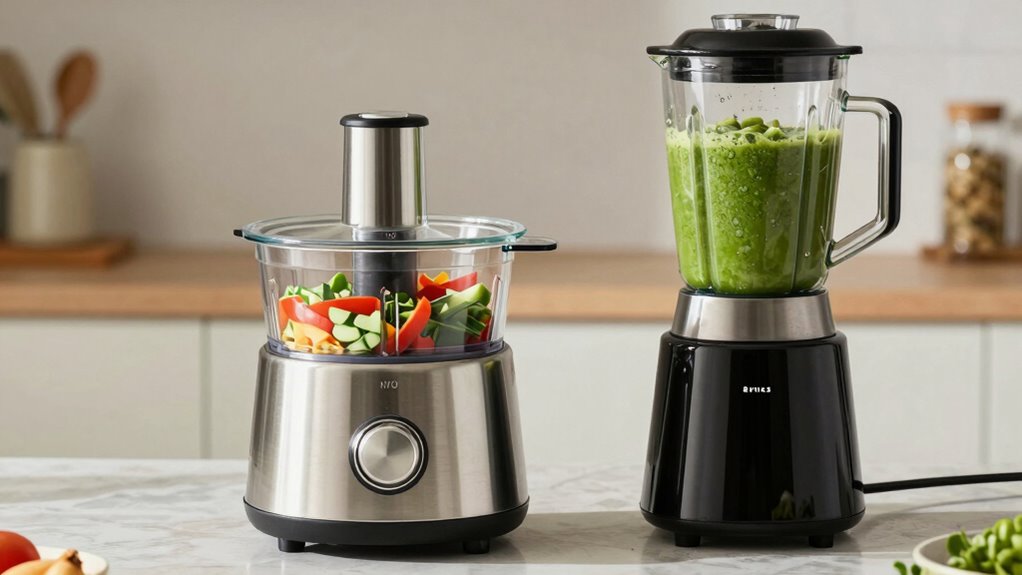

A food processor is best for heavy chopping, shredding, kneading dough, and handling dense ingredients like nuts and raw vegetables. In contrast, high-end blenders excel at creating smooth purees, smoothies, and silky liquids, thanks to their powerful motors. While both appliances are durable, their tasks differ considerably. If you want to know more about how each tool fits various recipes and uses, keep exploring to find out more.

Turn quiet afternoons into listening time
- Thousands of audiobooks, podcasts and originals
- Listen on your phone, tablet or Echo — also offline
- Cancel anytime
Key Takeaways
- Food processors excel at chopping, shredding, kneading, and heavy-duty mixing, while high-end blenders are best for smooth purees and liquids.
- Blenders produce silky textures for smoothies, soups, and sauces, whereas food processors handle bulkier, denser ingredients.
- Food processors are more versatile for multiple prep tasks; blenders focus on creating uniform, smooth textures.
- Blenders are designed for continuous, high-torque blending, suitable for tough ingredients like nuts and ice.
- Food processors are better for tasks requiring multiple attachments, such as slicing and kneading dough.
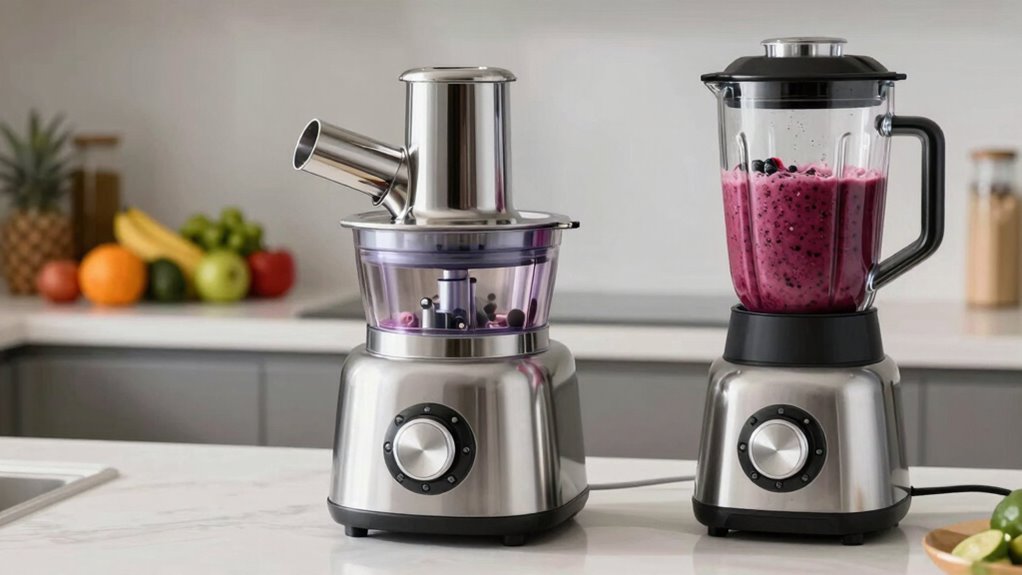
Wondering whether a food processor or a high-end blender is the right choice for your kitchen? It all depends on the types of tasks you want to tackle and how much you value certain features. When it comes to cooking versatility, a food processor generally shines. Its sharp blades and multiple attachments make it ideal for chopping, slicing, shredding, kneading dough, and even grating cheese. If you love preparing a variety of ingredients quickly and efficiently, a food processor offers the flexibility to handle multiple prep tasks with one appliance. It’s especially useful if you often cook recipes that require heavy chopping or mixing, saving you time and effort.
On the other hand, a high-end blender is designed to produce smooth, uniform textures, making it perfect for blending liquids, smoothies, purees, and even nut butters. Its powerful motor and sharp blades can pulverize tough ingredients into fine, velvety consistencies. If your focus is on creating silky soups, sauces, or smoothies, a high-end blender provides superior performance. However, when it comes to appliance durability, both appliances tend to be built to last, but in different ways. Food processors are typically more robust in handling dense, hard ingredients like nuts or raw vegetables, thanks to their sturdy blades and motor. They’re constructed to endure frequent chopping and kneading without wearing out quickly.
High-end blenders excel at creating smooth, velvety textures, perfect for soups, sauces, and smoothies.
High-end blenders, especially those with advanced motor technology, are designed to withstand continuous use, particularly when blending tough ingredients. Their durable jar materials, often BPA-free plastic or glass, contribute to longevity. Still, they might not handle heavy-duty kneading or slicing the way a food processor would. It’s important to reflect on that high-end blenders tend to be more delicate with certain attachments but excel at maintaining consistent performance over time when used within their intended scope. Additionally, some high-end blenders incorporate specialized technology that enhances blending efficiency and durability. Proper maintenance and care instructions are crucial for extending the lifespan of either appliance. Furthermore, understanding the durability and longevity of each appliance can help you make a more informed decision based on your expected usage. Recognizing the quality of materials used in construction can also influence your choice, especially for appliances that will see frequent use.
Furthermore, considering user reviews and real-world experiences can provide valuable insights into the long-term reliability of these appliances. Ultimately, the tasks you plan to do most often will determine which appliance suits you better. If you need an all-in-one device that can handle chopping, shredding, and kneading, a food processor offers greater cooking versatility. If your main goal is to create smooth, textured blends with a focus on liquids and purees, then a high-end blender is likely your best option. Both appliances are durable enough to last years with proper care, but understanding their specific strengths ensures you choose the right one for your culinary needs.
food processor with multiple attachments
As an affiliate, we earn on qualifying purchases.
As an affiliate, we earn on qualifying purchases.
Frequently Asked Questions
Which Appliance Is Better for Making Nut Butters?
A high-end blender is better for making nut butters because it can achieve a smoother, creamier nut butter texture due to its powerful motor and blade design. While a food processor offers more appliance versatility for chopping and shredding, the blender’s superior processing ability makes it ideal for creating consistently smooth nut butters. You’ll enjoy a better texture and fewer remaining nut pieces when using a high-end blender.
Can a High-End Blender Replace a Food Processor Entirely?
A high-end blender can’t fully replace a food processor because they excel at different tasks. While a blender offers great cooking versatility for smoothies and purees, it lacks the appliance durability needed for chopping, slicing, or kneading dough. If you need a versatile kitchen tool, keep both. A food processor handles more varied prep tasks, whereas a high-end blender is best for liquid-based recipes and sauces.
Are There Specific Recipes That Require Both Appliances?
Yes, some recipes benefit from both appliances because of their ingredient versatility and appliance versatility. For example, making pastry dough often needs a food processor to quickly cut in butter, while a high-end blender is perfect for smooth, creamy sauces or smoothies. Using both guarantees you get the best results, as each appliance excels at different tasks, enhancing your cooking and baking experience.
How Do Cleaning Guidelines Differ Between the Two?
Ironically, cleaning a high-end blender is easier than a food processor, despite its fancy reputation. You’ll find that cleaning frequency for blenders is less demanding—just rinse and occasionally deep clean. Detergent effectiveness matters more for food processors, which need thorough scrubbing due to their multiple parts and stubborn food residues. So, if you’re lazy, opt for the blender; if you love a challenge, go for the processor.
What Are the Energy Consumption Differences?
You’ll find that high-end blenders often have higher power consumption due to their powerful motors, which can use more energy during operation. Food processors typically consume less energy, making them more energy-efficient for tasks like chopping or slicing. If you’re conscious about energy efficiency, a food processor may be the better choice, especially for frequent use. However, for blending tough ingredients, a high-end blender’s power guarantees better performance.
Conclusion
In the battle of food processor versus high-end blender, the choice boils down to your culinary needs. While a food processor is a powerhouse for chopping and slicing, a high-end blender can turn ingredients into silky smooth masterpieces. If you’re serious about kitchen versatility, investing in both may feel like wielding a culinary superhero’s toolkit. Don’t settle for less—equip yourself with the ultimate kitchen duo and conquer any recipe that comes your way!
Halloween Picks
halloween
As an affiliate, we earn on qualifying purchases.