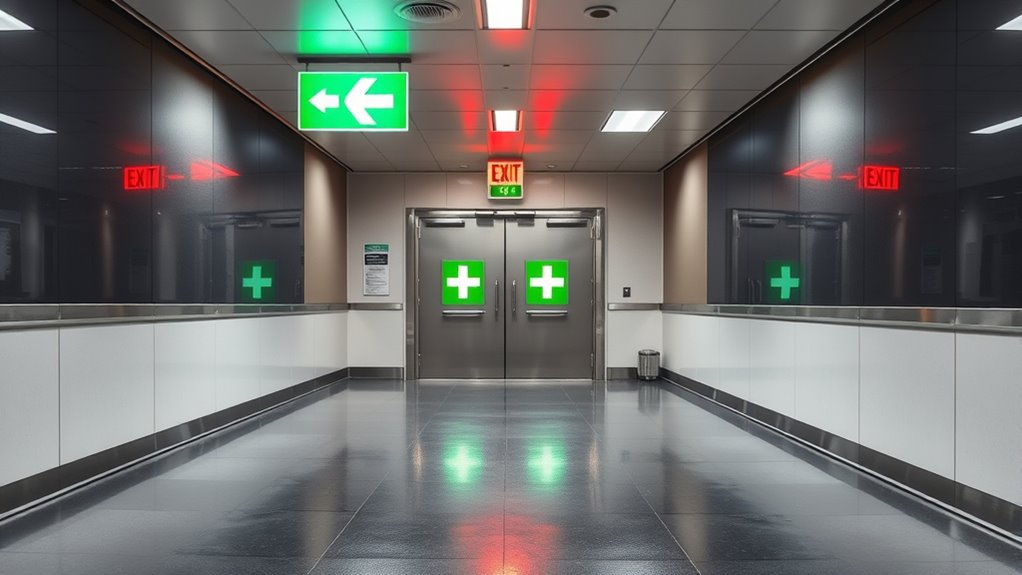

Ensuring your building has clear pathways and accessible emergency exits is vital for safety during emergencies. Make sure exits are well-marked, unobstructed, and easy to reach, with proper lighting and signage. Regularly check for clutter or hazards that could block escape routes, and keep doors unlatched or easy to open. Following these standards not only protects lives but also keeps you compliant with regulations. Keep going to discover more essential safety tips.
Key Takeaways
- Ensure emergency exits are clearly marked, unobstructed, and well-lit for quick identification during emergencies.
- Maintain minimum pathway widths—at least 32 inches for corridors and 36 inches for doors—to facilitate safe evacuation.
- Regularly inspect and clear pathways of clutter, ensuring stairwells, doorways, and hallways remain free of obstructions.
- Use illuminated, visible signage to guide occupants to exits, especially in smoke-filled or power-outage situations.
- Implement safety policies, conduct drills, and train staff to ensure proper evacuation procedures and quick response.

Ensuring emergency exits and clear pathways are always accessible is essential for safety in any building. When it comes to fire safety, having unobstructed routes can be the difference between a safe evacuation and chaos. Building regulations emphasize the importance of clear pathways and properly marked emergency exits to safeguard occupants during emergencies. As someone responsible for safety, you need to understand that these regulations are designed to minimize hazards, prevent injuries, and facilitate quick evacuations. Ignoring these standards not only puts lives at risk but can also lead to legal consequences if violations are found during inspections or incidents.
Accessible emergency exits and clear pathways save lives during fires and prevent legal issues.
You should regularly inspect your building to guarantee all emergency exits are free from obstructions. This means keeping stairwells, doorways, and hallways clear of clutter, furniture, or any items that could hinder movement. Fire safety isn’t just about having alarms and extinguishers; it’s also about making certain people can reach these safety devices and escape routes without delay. Building regulations specify minimum widths for pathways and exits, often recommending at least 32 inches of clear width for corridors and 36 inches for doors to accommodate quick evacuations. You need to verify that these dimensions are maintained and that exits are easy to locate, especially in crowded spaces.
Proper signage plays a vital role in fire safety. Clearly marked emergency exits with illuminated signs help occupants identify escape routes, even in smoke-filled environments. You should check that these signs are visible, unobstructed, and functioning correctly. Regular drills are equally important—they reinforce the importance of knowing evacuation routes and help identify potential bottlenecks or hazards. Keeping pathways well-lit ensures visibility at all times, especially during power outages, which can be common during fires.
Incorporating building regulations into your safety plan involves routine maintenance and proactive measures. This might include implementing policies for immediate clearance of any debris or obstructions, making certain doors and exits are unlocked or easily accessible, and training staff or occupants on evacuation procedures. Fire safety is a shared responsibility, and compliance with local building codes not only protects lives but also helps you avoid penalties and legal liabilities. Additionally, ensuring clear pathways meet the required minimum widths and are free of obstructions is crucial for compliance and safety. Ultimately, the goal is to create a safe environment where everyone can evacuate swiftly and safely, without confusion or delay, when it matters most.
emergency exit signage illuminated
As an affiliate, we earn on qualifying purchases.
As an affiliate, we earn on qualifying purchases.
Frequently Asked Questions
How Often Should Emergency Exit Routes Be Inspected?
You should inspect emergency exit routes at least monthly to guarantee safety. Regular inspections help identify issues like blocked pathways or damaged signage. During these checks, you should also conduct evacuation drills to confirm everyone knows the routes. Additionally, maintain and update signage as needed to keep it visible and clear. Consistent inspections and drills ensure that your exit routes remain safe, accessible, and compliant with safety regulations.
What Materials Are Best for Clearly Marking Pathways?
You should use high-quality signage materials like durable, weather-resistant signs with bright colors and clear symbols to mark pathways. Reflective tapes are excellent for enhancing visibility, especially in low-light conditions. Apply reflective tapes along the edges of pathways and stairs to ensure they’re easily seen. Regularly check that signage materials stay intact and visible, replacing them as needed to keep pathways clearly marked and safe for everyone.
Are There Legal Requirements for Emergency Exit Lighting?
A stitch in time saves nine, so you must guarantee compliance with lighting regulations for emergency exit lighting. Legally, you’re required to provide sufficient emergency lighting that meets signage standards, ensuring exits are visible even during power outages. Local building codes often specify brightness levels, backup power sources, and placement. Ignoring these requirements can lead to fines or unsafe conditions, so stay informed and keep your emergency pathways well-lit and compliant at all times.
How Can I Train Staff on Emergency Evacuation Procedures?
You should conduct regular evacuation drills to effectively train your staff on emergency evacuation procedures. During these drills, demonstrate how to quickly and safely exit the building, emphasizing clear pathways and emergency exits. Reinforce key safety protocols and encourage open communication with your team. Consistent staff training guarantees everyone knows their roles, reduces panic, and improves overall safety during an actual emergency. Regular practice is essential for preparedness.
What Are Common Obstacles That Block Emergency Pathways?
Imagine your emergency pathways as crucial arteries that keep safety flowing smoothly. Common obstacles like clutter, misplaced equipment, or poorly maintained signage can block this flow. You need to prioritize obstruction removal, clearing debris and hazards, and guarantee signage maintenance to keep exits visible and accessible. Regular inspections help catch obstructions early, so your pathways remain open, guiding everyone safely out when it counts most.
Conclusion
So, next time you see an emergency exit blocked or a pathway cluttered, remember—you’re just helping everyone enjoy a little “adventure” during a crisis. Who needs smooth escapes anyway? After all, chaos is half the fun, right? Keep those exits clear and pathways open, or enjoy the thrilling game of “Find Your Escape Route.” Because, really, what’s safety compared to a good dose of adrenaline? Stay responsible, or stay trapped—your choice!