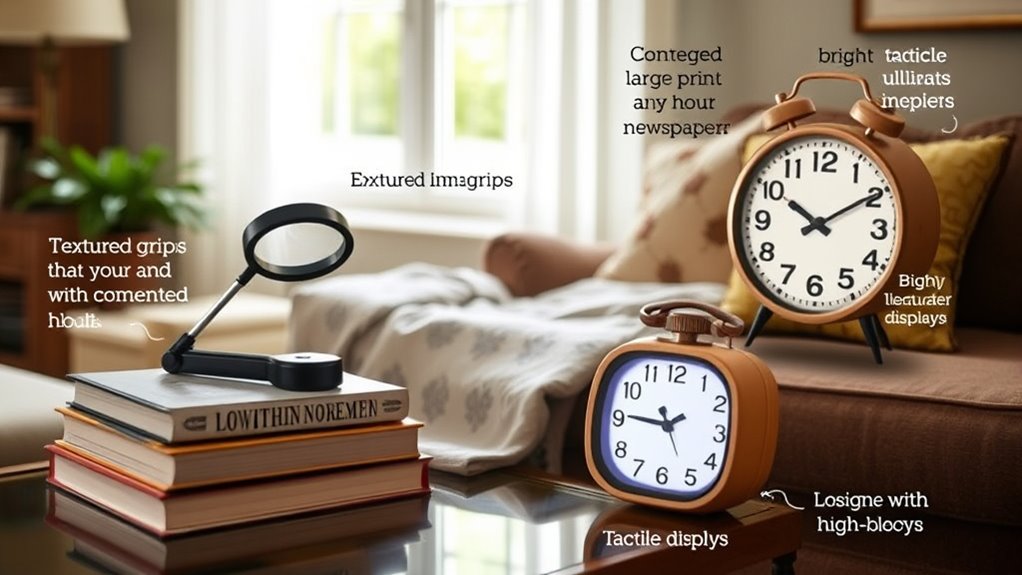

Low-vision aids around your home, like magnifying glasses and talking clocks, help you see better and handle daily tasks more independently. Magnifiers come in handheld and stand-mounted styles, often with built-in lights to improve visibility, while talking clocks announce the time aloud. Placing these devices where you need them most makes everyday activities easier and reduces frustration. Keep exploring to find out more ways to make your home environment more accessible and comfortable.
Key Takeaways
- Place magnifying glasses near reading areas, kitchens, and workspaces for quick access during daily tasks.
- Use stand-mounted magnifiers for detailed work like crafting or reading small print comfortably.
- Keep talking clocks in bedrooms and living rooms to easily check the time without visual strain.
- Ensure devices are within reach and integrated into routines to promote independence and reduce frustration.
- Combine magnifiers and talking clocks to improve task accuracy, navigation, and overall daily living experiences.
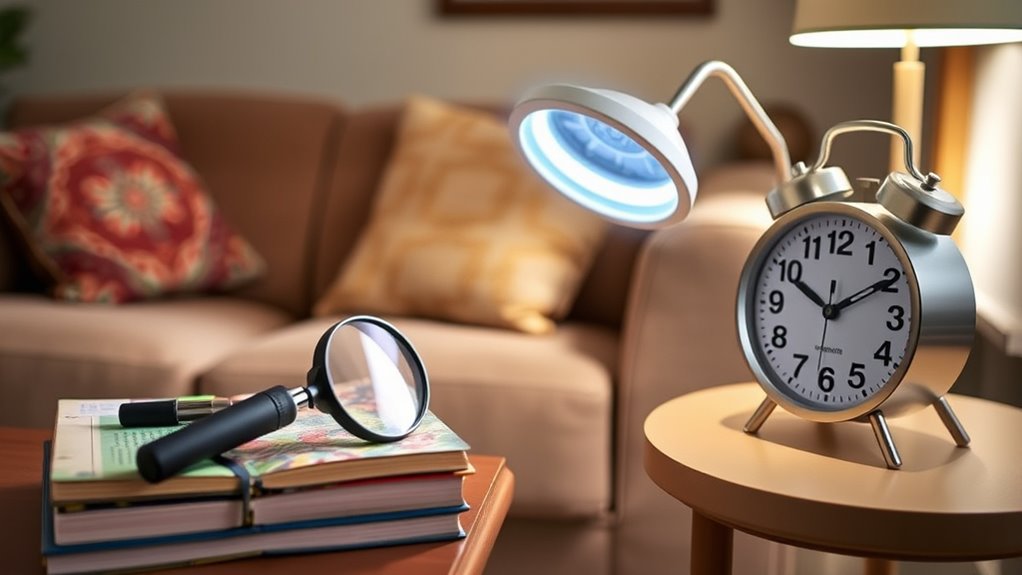
Living with low vision can make everyday tasks at home challenging, but the right aids can make a substantial difference. When it comes to reading labels, instructions, or small print, magnifying glasses are invaluable. They come in various styles, from handheld to stand-mounted, allowing you to focus on details more clearly. Using a magnifying glass, you can read menus, prescription bottles, or even craft instructions without straining your eyes. These tools boost confidence and independence, helping you manage daily routines more comfortably. Additionally, many magnifying glasses feature built-in lights, which further enhance visibility by illuminating the area you’re examining. With consistent use, they can considerably reduce eye fatigue and frustration. Proper lighting and magnification can also improve color contrast perception, making it easier to distinguish objects and text.
Another essential aid for those with low vision is a talking clock. Traditional clocks can be difficult to read, especially if your vision deteriorates further. Talking clocks eliminate that problem by announcing the time aloud at the press of a button or at preset intervals. This feature allows you to keep track of time without relying solely on visual cues, which can be unreliable. Some talking clocks also include larger, high-contrast display screens, providing a visual reference for those who prefer to see the time as well as hear it. Using a talking clock helps you stay organized and punctual, whether you’re managing daily appointments or simply keeping track of your schedule. It reduces the need for constant assistance from others, fostering independence.
To maximize the benefits of these aids, place magnifying glasses in spots where you frequently perform close-up tasks—by your reading chair, kitchen counter, or workspace. Keep your talking clock within easy reach in your bedroom or living room, so you can check the time at any moment. The key is to integrate these devices seamlessly into your daily routine, making them accessible and easy to use. As you become more accustomed to these tools, you’ll notice a decrease in frustration and an increase in your ability to complete routine activities with confidence. Over time, these aids can become integral parts of your daily life, helping you navigate your environment more comfortably and independently. Remember, adapting your home with the right low-vision aids isn’t just about seeing better; it’s about reclaiming your independence and enhancing your quality of life.
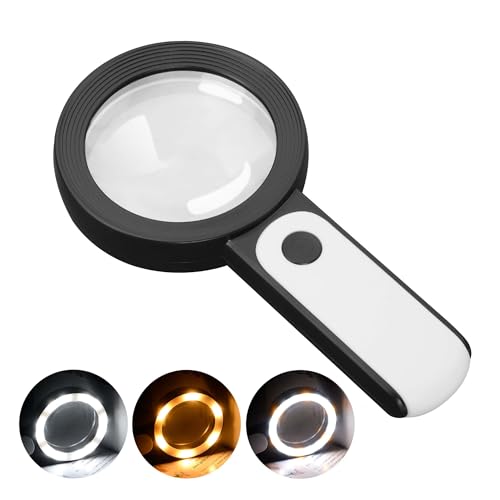
JMH Magnifying Glass with Light, Handheld Large Magnifying Glass 18LED Cold and Warm Light with 3 Modes, Illuminated Lighted Magnifier for Seniors Reading, Coins, Jewelry
- High Power Magnification: Optical magnification for low vision reading
- 18 LED Lights with 3 Modes: Bright, dimmable cold, warm, mixed lighting
- Energy-Saving LED Illumination: Ensures clear viewing in dark environments
As an affiliate, we earn on qualifying purchases.
As an affiliate, we earn on qualifying purchases.
Frequently Asked Questions
How Do I Choose the Best Low-Vision Aid for My Specific Needs?
To select the best low-vision aid, consider your personal preferences and daily needs. Think about the tasks you want to improve and how comfortable you feel using different devices. Check device compatibility with your existing tools or technology. Test options if possible, and consult with an eye care professional for personalized advice. This approach guarantees you pick a device that fits your lifestyle and enhances your independence effectively.
Are Low-Vision Aids Affordable and Covered by Insurance?
Imagine opening a window to clearer vision—low-vision aids can be more affordable than you think. Many options have cost coverage through insurance, making them accessible to those who need them most. Affordability options like discounts, grants, or payment plans help ease the financial burden. You don’t have to let cost hold you back; explore your insurance benefits and community resources to find the support you need to see better.
Can I Use Low-Vision Aids for Outdoor Activities?
Yes, you can use low-vision aids for outdoor activities to improve outdoor safety and mobility enhancement. These aids help you see better in varied lighting and weather conditions, making walking, crossing streets, or orienting yourself in unfamiliar areas safer. You might consider binoculars, magnifiers, or specialized glasses designed for outdoor use. Always choose aids suited to your specific needs, and consult with a specialist to guarantee optimal safety and mobility during your outdoor adventures.
How Do I Maintain and Clean My Low-Vision Devices?
Think of your low-vision devices as delicate flowers that need gentle care. To maintain their device durability, clean them regularly with a soft, damp cloth and avoid harsh chemicals. Keep them free of dust and debris by storing them in a safe, dry place. Use appropriate cleaning techniques to guarantee peak performance, and always follow the manufacturer’s instructions to extend their lifespan and keep your aids functioning like new.
Are There Any Training Programs to Help Me Adapt to New Aids?
Yes, there are training workshops available to help you adapt to new low-vision aids. These programs often focus on teaching adaptation techniques, ensuring you feel confident using your devices. You can find local community centers, vision rehabilitation clinics, or online resources offering these workshops. Attending these sessions allows you to learn practical tips, ask questions, and improve your independence with your aids, making daily tasks easier and more manageable.
Conclusion
By using simple low-vision aids around your home, you can regain independence and confidence. Imagine Sarah, who struggles to read her medication bottles; after adding a magnifying glass, she now easily identifies her pills. Small adjustments make a big difference. Don’t wait—try a few aids today and see how much easier daily tasks become. With the right tools, you’ll enjoy a safer, more comfortable home, every single day.