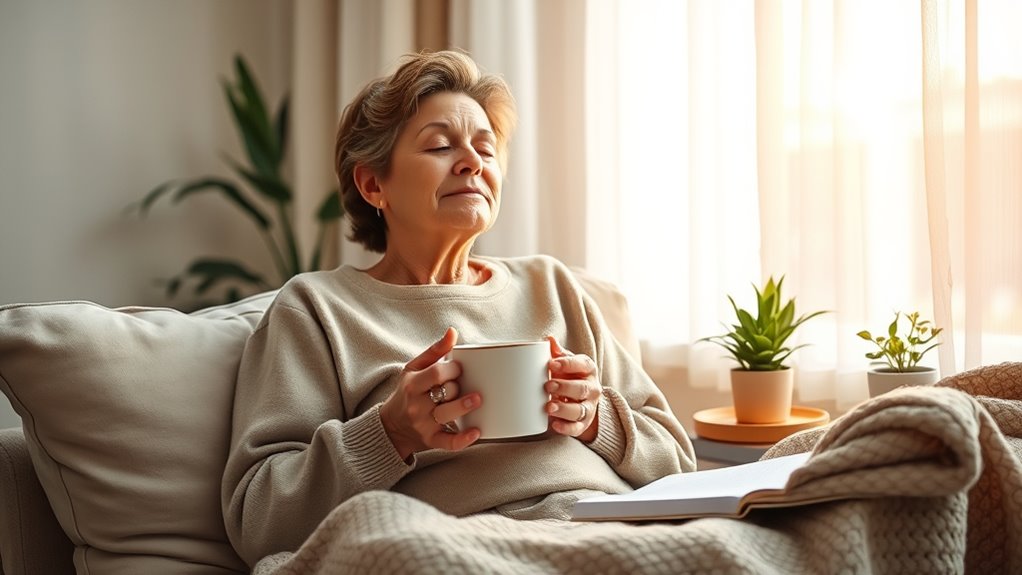

As a busy caregiver, managing anxiety starts with incorporating quick stress relief techniques like deep breathing, meditation, or stretching into your day. Set clear boundaries to avoid burnout and prioritize what truly matters. Connect with support networks to share your feelings and gain reassurance. Remember to practice self-compassion and focus on your physical health through exercise and proper sleep. Staying resilient involves consistent effort, and you’ll discover more practical ways to stay balanced ahead.
Key Takeaways
- Incorporate brief stress reduction techniques like deep breathing or stretching during daily routines.
- Connect with support networks to share feelings and reduce emotional burden.
- Prioritize tasks and set boundaries to prevent burnout and conserve energy.
- Practice self-compassion to manage feelings of exhaustion and maintain resilience.
- Use evidence-based strategies such as meditation or mindfulness for quick, effective anxiety relief.
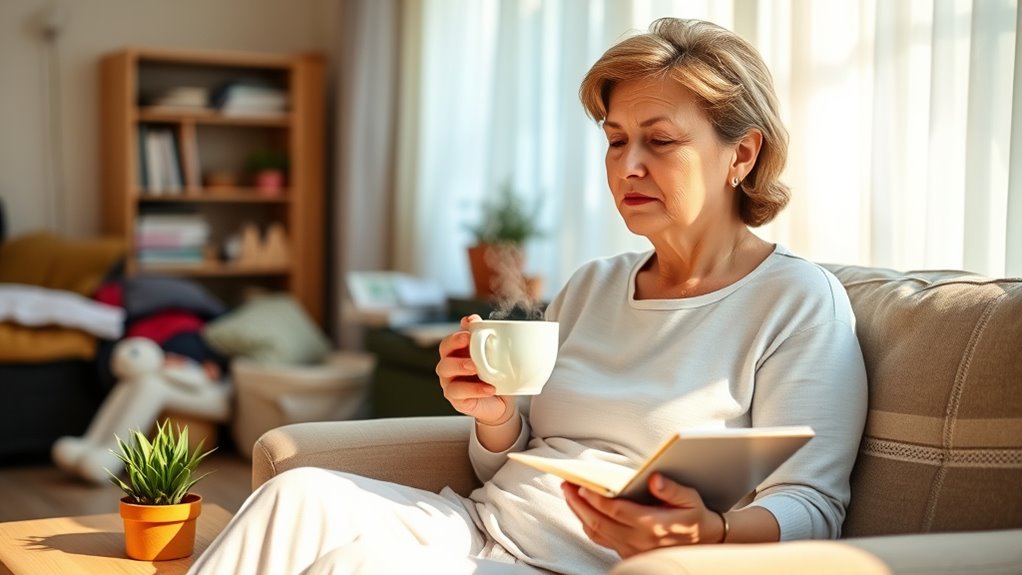
Caring for someone can be incredibly rewarding, but it often comes with significant stress and anxiety. As a caregiver, you’re constantly balancing responsibilities, juggling appointments, and handling emotional ups and downs. It’s easy to feel overwhelmed, but focusing on stress reduction techniques can make a real difference. When you actively work to lower your stress levels, you not only protect your mental health but also strengthen your emotional resilience. This resilience helps you bounce back from setbacks and stay present for your loved one, even during the toughest days.
One of the best ways to reduce stress is to develop a routine that includes moments of calm. Even a few minutes of deep breathing, meditation, or stretching can help clear your mind and reduce feelings of anxiety. Incorporate these practices into your daily schedule, especially during stressful times, so they become a natural part of your life. Additionally, don’t hesitate to take short breaks when things feel overwhelming. Stepping away for a moment enables you to regain a sense of control and prevents stress from piling up.
Building emotional resilience is equally critical. It means strengthening your ability to cope with challenges without becoming overwhelmed. To do this, acknowledge your feelings without judgment; acceptance helps you process emotions more effectively. Connect with support networks—whether it’s family, friends, or caregiver groups—because sharing your experiences can lighten your emotional load. Remember, you’re not alone, and talking about your worries often reduces anxiety and provides fresh perspectives.
Acknowledging feelings and connecting with support networks strengthens emotional resilience and lightens your caregiving journey.
Maintaining your physical health is another key element. Regular exercise, proper sleep, and balanced nutrition boost your overall well-being and help manage stress. When your body feels good, your mind becomes more resilient to daily pressures. Setting boundaries is also essential. Know your limits and communicate them clearly, so you don’t overextend yourself. Prioritize tasks and let go of perfectionism; sometimes, doing enough is enough.
Lastly, practice self-compassion. Recognize that caregiving is demanding, and it’s okay to feel anxious or exhausted. Treat yourself with kindness and patience, just as you would a loved one. Engaging in evidence‑based stress reduction techniques can further support your mental health and emotional resilience. By actively engaging in stress reduction strategies and building your emotional resilience, you create a more sustainable caregiving experience. This approach not only benefits your mental health but also enhances the quality of care you provide, making the journey a little easier for both you and your loved one.

Breathing Lamp Guided Visual Meditation Tool for Mindfulness,Anxiety Relief&Calm Your Mind for Stress&Visual Relaxation and Restful Sleep,478 Seconds Breathing Rate Change 3 Colors,Gift for Kids
Breathing Lamp Function: A mindful breathing lamp is a powerful and effective tool that can help you reduce…
As an affiliate, we earn on qualifying purchases.
As an affiliate, we earn on qualifying purchases.
Frequently Asked Questions
How Can Caregivers Find Time for Self-Care Daily?
You can find time for self-care daily by incorporating quick mindful breathing exercises and journaling practices into your routine. Take just a few minutes to focus on your breath, helping reduce stress. Keep a journal nearby to jot down thoughts or gratitude moments during small breaks. Prioritize these moments, even if brief, to recharge your mental health and stay resilient despite your busy schedule.
Are There Quick Relaxation Techniques for Immediate Anxiety Relief?
When anxiety hits, try quick breathing exercises by inhaling deeply for four seconds, holding, then exhaling slowly for four seconds. You can also practice progressive muscle relaxation by tensing each muscle group for a few seconds and then releasing. These techniques can provide immediate relief, helping you feel calmer and more centered, even during busy moments. Make them a part of your routine for quick, effective anxiety management.
What Resources Are Available for Caregiver Mental Health Support?
Support groups connect you with others who understand your challenges, providing emotional relief and practical advice. Online therapy offers flexible, professional help tailored to your busy schedule. Together, these resources empower you to manage stress effectively. While caregiving can be overwhelming, reaching out through support groups and online therapy gives you a lifeline, helping you stay resilient and cared for. Prioritize your mental health—you deserve that support.
How Do I Balance Work Responsibilities With Caregiving Duties?
To balance work responsibilities with caregiving duties, focus on effective time management by prioritizing tasks and creating a flexible schedule. Set clear boundaries to protect your personal time and avoid burnout. Communicate openly with your employer about your caregiving needs, and don’t hesitate to seek support from family or community resources. Remember, maintaining boundaries and managing your time wisely helps you stay present and effective both at work and as a caregiver.
What Signs Indicate I Need Professional Help for Anxiety?
If you notice persistent symptoms like overwhelming worry, difficulty sleeping, or physical signs such as rapid heartbeat, it’s time to seek professional help. Recognize these as key symptom recognition cues. If your help-seeking behaviors include avoiding activities, withdrawing from loved ones, or feeling unable to manage daily tasks, don’t hesitate to reach out to a mental health professional. Addressing these signs early can improve your well-being and caregiving ability.

Vive Squeeze Balls for Hand Therapy, Exercise, Arthritis (w/Rehab Video App) – Grip Strengthener Occupational Equipment for Finger, Wrist, Carpal Tunnel, Pain Relief, Stress – Resistance Strength
STRENGTHENS HANDS Improve grip strength, dexterity and mobility in the hands, fingers, wrists and forearms
As an affiliate, we earn on qualifying purchases.
As an affiliate, we earn on qualifying purchases.
Conclusion
Taking care of yourself is essential, and managing your anxiety helps you stay strong for those who depend on you. Remember, studies show that 60% of caregivers experience high stress levels, but small daily practices like deep breathing or brief breaks can make a big difference. You don’t have to do it all at once—just prioritize your well-being. By doing so, you’ll not only feel better but also provide better care for your loved ones.

Glowco CalmCarry Sleep Aid Device – Handheld Microcurrent Relaxation Tool, Supports Calm, Focus & Gentle Relief, USB Rechargeable, Portable Wellness Device for Adults & Kids | Teal Calm Carry
【Original Glowco CalmCarry – Natural Calm & Gentle Relief】Experience the original the Glowco/ the Glow company calm carry—crafted…
As an affiliate, we earn on qualifying purchases.
As an affiliate, we earn on qualifying purchases.

Breathing Exercise Device for Lungs, Lung Exerciser Device – 5000ml Volumetric Deep Breathing Trainer with Flow Rate Indicator for Respiratory Health & Recovery
Large 5000ml Capacity for Gradual Breathing Training – This breathing exercise device for lungs offers a maximum volume…
As an affiliate, we earn on qualifying purchases.
As an affiliate, we earn on qualifying purchases.