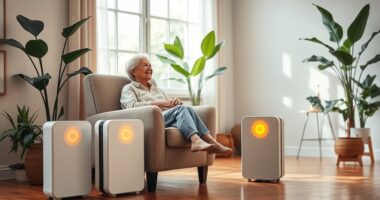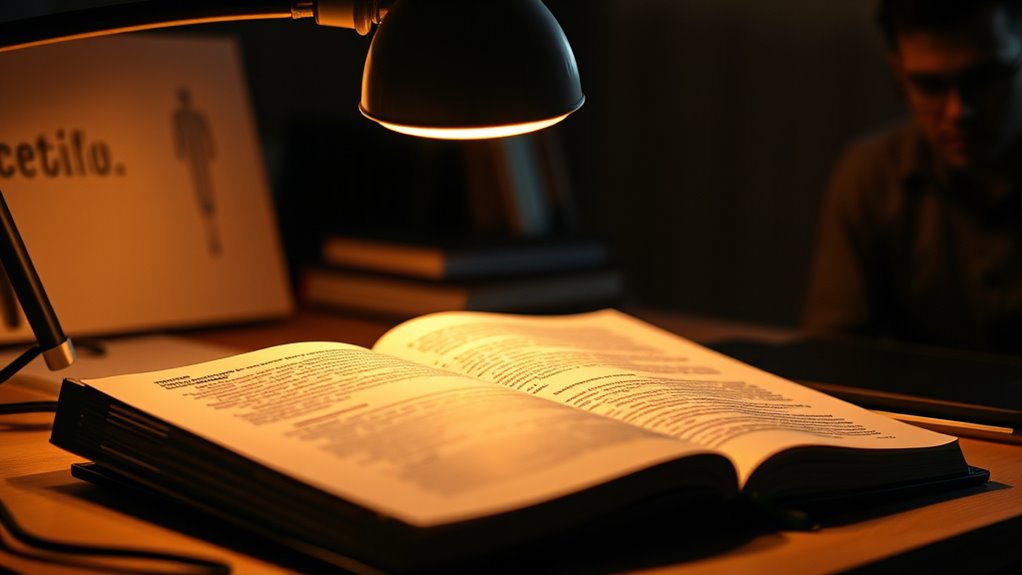

To improve visibility with low vision, focus on adaptive lighting that lets you adjust brightness and color temperature to your needs. Use glare reduction techniques like diffusers, shades, and indirect lighting to ease eye strain. Position lights carefully around your workspace to eliminate shadows and avoid direct glare. Incorporate task lighting where needed, and choose fixtures designed for comfort and customization. Continuing will reveal more tips to create an environment that enhances your independence and comfort.
Key Takeaways
- Implement adaptive lighting to customize brightness and color temperature for individual visual needs.
- Use glare reduction techniques like diffusers, shades, and indirect lighting to minimize discomfort.
- Position task lighting to evenly illuminate work areas, avoiding shadows and direct glare.
- Choose appropriate color temperatures—cooler tones for detail, warmer tones for comfort.
- Incorporate specialized fixtures and adjustable systems to optimize environment lighting for low vision.
If you have low vision, proper lighting can make a vital difference in your daily life. One of the most effective strategies is to use adaptive lighting, which allows you to adjust the brightness and color temperature of your environment to suit your needs. Adaptive lighting systems can be controlled via switches, dimmers, or smart devices, giving you the flexibility to create ideal conditions whether you’re reading, cooking, or doing other tasks. By customizing your lighting, you can reduce eye strain and improve visibility, making everyday activities easier and more comfortable.
Glare reduction is another essential aspect of effective lighting for low vision. Bright, harsh lights can cause discomfort and make it difficult to see clearly, especially if you’re sensitive to light. To combat this, incorporate fixtures with diffusers or shades that soften the light and spread it evenly across your space. Position lights so they don’t shine directly into your eyes or reflect off shiny surfaces, which can intensify glare. Using indirect lighting—such as lamps that bounce light off ceilings or walls—can further minimize glare and create a more comfortable visual environment.
In addition to choosing the right fixtures, consider the placement of your lighting. Avoid placing lights directly behind or above your head, as this can create shadows and cause glare. Instead, aim for lighting that illuminates your work area evenly, providing consistent and shadow-free visibility. Task lighting, like adjustable desk lamps or reading lights, can be particularly helpful because they focus light exactly where you need it. These lights should be bright enough to see clearly but not so intense that they cause discomfort or glare.
It’s also wise to pay attention to the color temperature of your lights. Cooler, bluish tones tend to enhance contrast and detail, which can be beneficial for low vision. However, if you find these lights too harsh, warmer tones can create a softer environment while still providing sufficient illumination. Experimenting with different lighting setups will help you find what feels most comfortable and effective for your specific needs.
Additionally, incorporating appropriate lighting fixtures designed for glare reduction can significantly improve your visibility.
Ultimately, combining adaptive lighting with glare reduction techniques can greatly improve your ability to see and perform daily tasks. When you make your environment adaptable and gentle on your eyes, you’ll notice less fatigue and greater independence. Proper lighting isn’t just about brightness; it’s about creating a tailored visual landscape that supports your comfort and clarity every day.
Frequently Asked Questions
How Can I Adjust Lighting for Different Activities at Home?
To adjust lighting for different activities at home, you should use task lighting to brighten specific areas, like reading or cooking, ensuring enough illumination without glare. Combine this with ambient illumination to create a comfortable overall brightness. Switch between dimmer switches or add adjustable lamps to customize lighting levels. This setup helps you see clearly and reduces eye strain, making every activity safer and more comfortable.
Are There Specific Lighting Products Recommended for Low Vision?
You should consider using LED bulbs and task lighting to improve visibility. LED bulbs provide bright, consistent light that reduces shadows and glare, making it easier to see details. Task lighting, such as adjustable desk lamps or under-cabinet lights, directs illumination exactly where you need it most. These products are specifically recommended for low vision because they enhance contrast and reduce eye strain, helping you navigate your environment more comfortably.
How Does Natural Light Impact Low Vision Visibility?
Natural light acts like a double-edged sword for low vision, illuminating your world but also causing glare that hampers visibility. You can improve your experience by using glare reduction techniques and enhancing color contrast, making objects stand out more clearly. Proper natural lighting minimizes eye strain and boosts contrast, but be mindful of harsh sunlight. Adjust window coverings or position yourself strategically to maximize benefits and reduce potential discomfort.
Can Lighting Improvements Reduce the Need for Glasses?
Lighting improvements can reduce your dependence on glasses by enhancing visibility through glare reduction and better color contrast. When you improve lighting, you see details more clearly without straining, which may lessen the need for corrective lenses. Focus on reducing glare and increasing contrast around your environment. While lighting alone might not eliminate glasses entirely, it considerably improves your overall vision and comfort, making everyday tasks easier and less tiring.
What Safety Precautions Should I Take With Enhanced Lighting?
You should prioritize emergency preparedness by keeping flashlights and extra batteries accessible in case of power outages. To avoid accidents, manage glare by using adjustable lighting and matte finishes that reduce reflections. Always guarantee pathways are well-lit, and avoid direct glare into your eyes. Regularly check your lighting setup to maintain safety, and consider consulting a specialist for personalized advice on perfect lighting arrangements tailored to your needs.
Conclusion
By implementing these lighting strategies, you can turn the tide on low vision challenges and make daily tasks easier. Good lighting isn’t just a small change; it can make a big difference in your independence and confidence. Remember, when it comes to creating a brighter environment, a little effort goes a long way. Don’t wait for things to get worse—take charge now and see how these simple steps can truly illuminate your world.